
Buddhist Art in Japan: Pre-Edo to Contemporary Art
Lee Jay Walker
Modern Tokyo Times
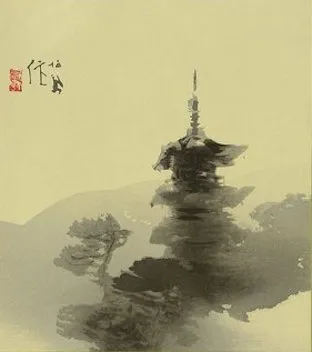
The flow of Buddhism — despite indigenous Shintoism and the profound influence of Confucianism and Taoism — continues today, just as it did yesterday, in the land of the rising sun. This enduring flow can be felt in the beauty of Japanese art, stretching from pre-Edo Japan to contemporary artistic expression. Across the centuries, spiritual thought, nature, philosophy, and artistic refinement have remained deeply intertwined within Japan’s cultural landscape.
Above is a stunning art piece by Takeuchi Seihō (1864-1942). Born in the cultural city of Kyoto shortly before the end of the Edo Period, Seihō came of age during the dramatic transformation of the Meiji Period (1868-1912). Thus, the modernizing influences of the new era shaped his artistic vision, while the rich culture, traditions, and spiritual heritage of old Japan remained deeply embedded within his work.
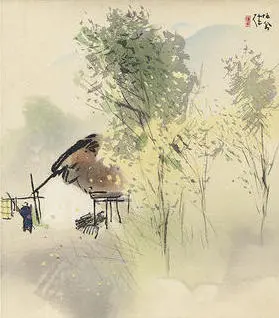
The Umi-Mori Art Museum says, “The painter Takeuchi Seiho (1864-1942) was born in Kyoto and he was active in Kyoto from the Meiji period (1868-1912) to before the Second World War. He created a new style by applying Western forms of realism to traditional Kyoto painting. In doing so, he helped to modernize the Japanese painting scene. This museum’s collection includes the monumental ‘Historic Spot of Rome’ alongside numerous paintings, letters, sketches and other material from each stage of the great master’s life.” In this sense, Seihō represents an important cultural bridge: the meeting of Western artistic observation with the long-established aesthetic traditions of Kyoto.
Tenshō Shūbun, the next artist, was inspired by a rich array of cultural influences connected to China. In the realm of art, this notably applies to Xia Gui and Ma Yuan, whose landscapes and poetic treatment of nature profoundly influenced East Asian artistic traditions. Other important currents relate to Confucianism and the natural flows of various Buddhist schools of thought, which united many powerful cultural and philosophical traits during this period. Accordingly, the world of Tenshō Shūbun was enriched by the depth of Chinese culture, and this heritage is clearly apparent when viewing his art.
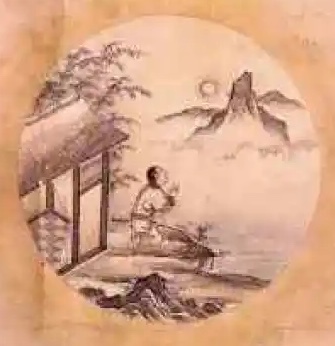
Shūbun died in the fifteenth century, long before the Edo Period began in the early seventeenth century. Yet the passage of time did not sever the artistic conversation with the past. Tenshō Shūbun continued to draw inspiration from classical masters such as Xia Gui and Ma Yuan, who themselves had died in the earlier part of the thirteenth century. Thus, across generations and centuries, Japanese art remained part of a wider East Asian cultural dialogue in which landscapes, spirituality, philosophy, and human reflection could transcend time.
With quiet intensity, the final three art pieces are by Sawako Utsumi, a contemporary Japanese artist from northern Japan. She fuses land and spirit, setting a wandering Buddhist monk against the vast stillness of Japan’s bleak midwinter. Snow-laden fields and muted skies do not merely frame the figure; they breathe with him, turning the landscape itself into a silent participant in his journey. The scene feels suspended in time, where footsteps echo not only across frozen earth, but through layers of memory, belief, and introspection.
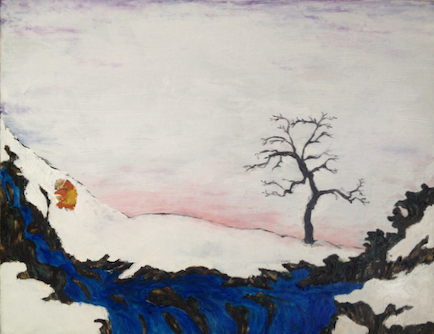
Religion, in its many forms — Buddhism, Christianity, and Shintoism — surfaces repeatedly in Utsumi’s work, not as doctrine, but as presence. Faith appears through gesture, atmosphere, silence, and quiet endurance, woven into the rhythms of human movement and the natural world. Her vision resists rigid boundaries, allowing spiritual traditions to converse rather than compete. In this respect, her contemporary work echoes an older Japanese cultural tendency: the ability to absorb, reinterpret, and bring different philosophical and religious traditions into a continuing artistic conversation.
Nichiren (1222-1282) said, “To accept is easy; to continue is difficult. But Buddhahood lies in continuing faith.”
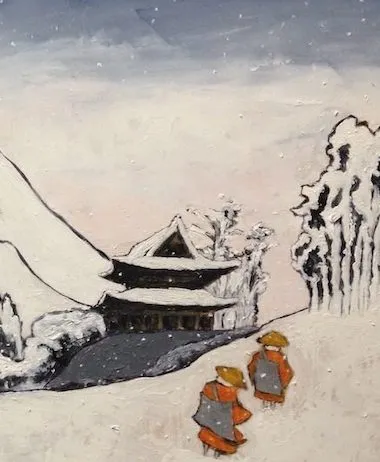
Accordingly, irrespective of whether these two Buddhist monks are returning home, as depicted in the art above by Utsumi, or are undertaking a religious pilgrimage, they accept the difficulties before them without flinching from the path. The journey becomes both physical and spiritual, while the surrounding landscape quietly reinforces the themes of endurance, impermanence, and reflection.
The Buddha said, “The root of suffering is attachment.”
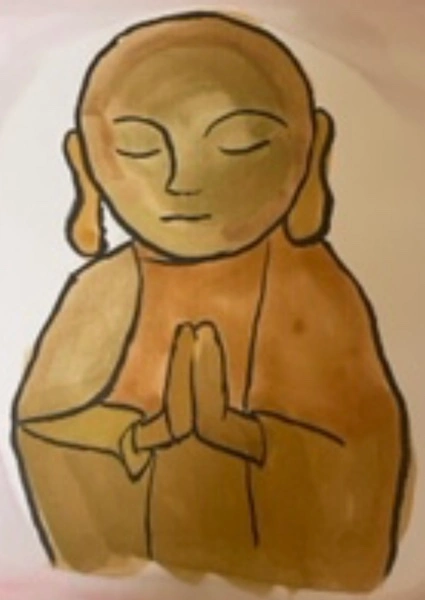
Henjō (816-890) wrote beautifully:
On his way to leave the world, a man
Comes to rest
Beneath the trees
But he finds no shade
For every Autumn leaf has fallen.
https://moderntokyonews.com/?s=Art Past articles about ART via MODERN TOKYO NEWS (Modern Tokyo Times group)
MODERN TOKYO TIMES – MODERN TOKYO NEWS – please check https://moderntokyonews.com
Please check Modern Tokyo News at https://moderntokyonews.com for articles going back over 12 years. Sadly, Modern Tokyo Times got hacked and lost 14 years of articles…
Art links by Sawako Utsumi below (website is http://sawakoart.com ):
https://fineartamerica.com/featured/jizo-in-contemplation-buddhism-sawako-utsumi.html Jizo in Contemplation (Buddhism)
https://fineartamerica.com/featured/the-blossoming-of-life-before-the-shadow-sawako-utsumi.html The Blossoming of Life before the Shadow
https://fineartamerica.com/featured/japanese-buddhist-holy-men-in-the-deep-winter-sawako-utsumi.html Japanese Buddhist Holy Men in the Deep Winter

Modern Tokyo News is part of the Modern Tokyo Times group
http://moderntokyotimes.com Modern Tokyo Times – International News and Japan News
http://sawakoart.com – Sawako Utsumi and Modern Tokyo Times artist
https://moderntokyonews.com Modern Tokyo News – Tokyo News and International News
PLEASE JOIN ON FACEBOOK
https://www.facebook.com/moderntokyotimes