Greece Hostility to Russia Negates the Historical Legacy (Energy to Odessa)
Kanako Mita, Sawako Utsumi, and Lee Jay Walker
Modern Tokyo Times
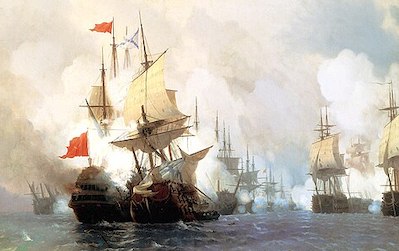
Historically, relations between the Greeks and Russians were shaped not merely by diplomacy, but by a deep civilizational bond rooted in Eastern Orthodoxy and centuries of shared struggle against Ottoman domination. From the era of Catherine the Great to the Greek War of Independence in the nineteenth century, the Russian Empire frequently cast itself as a protector of Orthodox Christian peoples living under Ottoman rule. Russian volunteers, intellectuals, and statesmen viewed the Greek cause not simply as a geopolitical matter, but as part of a broader historical and spiritual mission tied to Byzantium and the Orthodox world.
It is therefore striking that modern Greece — despite Turkey’s continuing occupation of Northern Cyprus, where tens of thousands of Orthodox Christians were displaced following the Turkish intervention of 1974 — has increasingly aligned itself with strongly anti-Russian positions in a conflict that does not directly involve Greek national survival. To many observers, this marks a profound historical reversal: Athens now stands politically closer to the Western strategic bloc than to the Orthodox power that once championed Greek aspirations against Ottoman authority.
This transformation became even more pronounced last year when Greece entered a new strategic chapter by signing an agreement with Ukraine to supply U.S. liquefied natural gas (LNG). Beginning in January, this energy corridor is expected to flow through pipelines connected to the Greek port of Alexandroupolis toward Odessa — the historic Black Sea city founded under Catherine the Great that flourished within the Russian Empire and long served as a vital center of Russian commerce, culture, and imperial strategy. Even today, Odessa retains deep symbolic resonance in the Russian historical imagination, standing as one of the great cities associated with the era of Novorossiya and Imperial Russia’s southern expansion.
Yet this decision is not without danger. In Moscow, such a development may be interpreted not merely as an economic arrangement, but as part of a broader Western encroachment into a region Russia has historically regarded as central to its security and identity. For Russian hardliners, the symbolism is especially potent: a NATO-aligned Greece facilitating American LNG exports into Odessa — a city deeply intertwined with Russian imperial history — could be viewed as a deliberate geopolitical intrusion into the Black Sea sphere.
If interpreted as a provocation, the agreement may strengthen voices within Russia arguing that Odessa is too strategically important to remain vulnerable to expanding Western influence. In that sense, what appears today as an energy partnership could, in the longer arc of history, be remembered as a geopolitical miscalculation — one that reshaped perceptions, intensified nationalist sentiment, and altered the strategic balance in the Black Sea region.
Greek Prime Minister Kyriakos Mitsotakis and Ukraine’s Volodymyr Zelensky pressed ahead with the agreement between DEPA and Naftogaz despite the swirl of economic scandals and corruption allegations that continue to surround Ukraine and generate concern across parts of Europe.
Standing alongside them, Kimberly Guilfoyle served as a symbolic reminder of Washington’s guiding influence, underscoring the extent to which Greece now operates firmly within the American geopolitical orbit. The message was unmistakable: Athens has chosen its alignment, and that alignment reaches far beyond ceremonial agreements and energy infrastructure.
As AP News observed, “Greece will supply Ukraine with natural gas to cover its needs for the coming winter and to make up for damage to its energy infrastructure from Russian attacks.”
Meanwhile, Northern Cyprus remains an unresolved national trauma for Greece and the wider Hellenic world — an open wound that many critics argue has been quietly subordinated to broader NATO and European strategic priorities. To such observers, the willingness of Greek political elites to immerse themselves in the Ukraine conflict while a decades-old dispute persists closer to home appears historically contradictory and strategically unbalanced.
All of this unfolds as Russian forces continue to intensify operations across the Donbass and the territories historically referred to as Novorossiya — lands that Russian nationalists frequently invoke through the language of imperial memory and historical continuity. With the military balance shifting on the ground, Greece’s deeper entanglement in the conflict risks drawing Athens into a far more dangerous geopolitical contest than many within the country may fully appreciate.
The Odessa dimension, in particular, adds a volatile new layer to the war. Within the Russian Federation, it is likely to embolden militant factions within the armed forces and hardline political circles that have long argued Odessa represents a vulnerable frontier exposed to NATO influence. For these factions, the Greek-Ukrainian energy arrangement may be seized upon as confirmation of longstanding fears that Western powers are steadily tightening their strategic presence around the Black Sea.
How Vladimir Putin ultimately responds remains uncertain. Yet one reality is increasingly difficult to ignore: pressure inside Russia to prioritize Odessa as a strategic objective will almost certainly intensify. What may once have been viewed in Moscow as a distant geopolitical concern could now be interpreted as an immediate and intolerable provocation — one capable of shaping the next and potentially more dangerous phase of the conflict.
MODERN TOKYO TIMES – MODERN TOKYO NEWS – please check https://moderntokyonews.com
Please check Modern Tokyo News at https://moderntokyonews.com for articles going back over 10 years. Sadly, Modern Tokyo Times got hacked and lost 14 years of articles…

Modern Tokyo News is part of the Modern Tokyo Times group
http://moderntokyotimes.com Modern Tokyo Times – International News and Japan News
http://sawakoart.com – Sawako Utsumi and her website – Modern Tokyo Times artist
https://moderntokyonews.com Modern Tokyo News – Tokyo News and International News
PLEASE JOIN ON TWITTER
https://twitter.com/MTT_News Modern Tokyo Times
PLEASE JOIN ON FACEBOOK