
Nigeria and Takfiri Islamist Bloodletting (Boko and ISWAP)
Kanako Mita, Sawako Utsumi, and Lee Jay Walker
Modern Tokyo Times
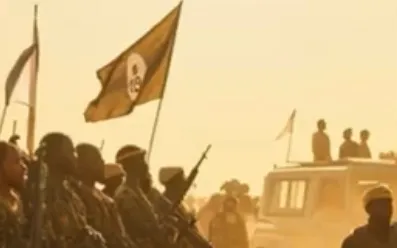
These cycles of bloodshed have tormented Nigeria for well over a decade. Simultaneously, Fulani Muslim attacks on Christian villages have claimed countless lives, further deepening sectarian tensions and communal mistrust. Ethnic and religious fault lines — combined with entrenched political corruption that continues to plague the country — have steadily eroded the fragile fabric of Nigerian society.
Fighting between Boko Haram and ISWAP frequently intensifies across the volatile Lake Chad region, where Cameroon, Chad, Niger, and Nigeria all endure the deadly consequences of Islamist terrorism. Yet it must be noted that Chad’s armed forces have often demonstrated greater resolve and professionalism in confronting the Takfiri threat.
Late last year, approximately 200 Islamist Takfiris were reportedly killed near the village of Dogon Chiku. Such bloodletting rarely remains isolated, however, as violence spills into neighboring areas and perpetuates the seemingly endless cycle of revenge, insurgency, and instability that continues into 2026.
The Institute for Security Studies (ISS) reports: “The role of Lake Chad-based leader Bakura Doro in supplying weapons to JAS wings and coordinating group activities has been key to JAS’ revival, according to local sources. Niger announced it had killed Doro in a mid-August airstrike, but no evidence was provided, and according to multiple ISS sources, he is still alive.”
ISWAP emerged in 2016 following deep divisions within Boko Haram. Since then, violent confrontations between the two Takfiri movements have erupted periodically as both seek control over territory, resources, recruitment networks, and sources of revenue. Consequently, northern Nigeria and the wider Lake Chad Basin remain trapped in a climate of chronic terrorism and insecurity.
The Guardian reports: “In May 2021, Iswap launched an offensive on Sambisa, the forest enclave that was Boko Haram’s longtime base, and where it kept abducted schoolgirls. It is believed that Abubakar Shekau, the infamous leader of Boko Haram, killed himself during a clash with ISWAP in Sambisa.”
The Lake Chad Basin — spanning Nigeria, Chad, Niger, and Cameroon — remains the epicenter of jihadist Islamist violence in the region. Here, Boko Haram and ISWAP compete for supremacy over lucrative smuggling routes, fishing grounds, criminal enterprises, and taxation networks that bankroll their insurgencies and sustain their campaigns of terror.
While renewed infighting may temporarily weaken both organizations, it also carries a darker consequence. As each faction seeks to demonstrate strength and legitimacy, vulnerable civilian populations often become the primary victims. History shows that periods of Islamist fragmentation frequently generate fresh massacres as rival groups attempt to outbid one another in brutality.
Adding to Nigeria’s mounting challenges, President Donald Trump recently warned the Nigerian government that he is “tired” of the massacres targeting Christians and would halt American assistance unless meaningful action is taken.
In a strongly worded statement, Trump declared: “If the Nigerian Government continues to allow the killing of Christians, the U.S.A. will immediately stop all aid and assistance to Nigeria, and may very well go into that now disgraced country, ‘guns-a-blazing,’ to completely wipe out the Islamic Terrorists who are committing these horrible atrocities.”
Nigeria remains blighted by Islamist terrorist movements that massacre innocent civilians, undermine state authority, and in some regions operate as a state within a state. Consequently, while clashes between Boko Haram and ISWAP may be quietly welcomed in certain corridors of power, they simultaneously expose the enduring inability of the Nigerian state to establish lasting security and effective governance across vast swathes of the country.
For countless Christian and Muslim communities alike, centralized authority remains more aspiration than reality. They continue to bear the crushing burden of terrorism, sectarian violence, ethnic massacres, and lawlessness, while systemic corruption obstructs meaningful reform. Nigeria therefore requires nothing less than a national renewal movement capable of transcending ethnic, regional, and religious divisions. Without such a transformation, the nation risks continued fragmentation, for the cycle of violence, mistrust, and hatred shows little sign of abating under the existing political order.
https://moderntokyonews.com/?s=terrorism Past articles on TERRORISM at Modern Tokyo News
MODERN TOKYO TIMES – MODERN TOKYO NEWS – please check https://moderntokyonews.com
Please check Modern Tokyo News at https://moderntokyonews.com for articles going back over 12 years. Sadly, Modern Tokyo Times got hacked and lost 14 years of articles…

http://moderntokyotimes.com Modern Tokyo Times – International News and Japan News
http://sawakoart.com – Sawako Utsumi’s website and Modern Tokyo Times artist
https://moderntokyonews.com Modern Tokyo News – Tokyo News and International News
https://twitter.com/MTT_News Modern Tokyo Times
PLEASE JOIN ON FACEBOOK
https://www.facebook.com/moderntokyotimes