
Japan Novelist and the Communist Martyr: Takiji Kobayashi (1903-1933)
Lee Jay Walker
Modern Tokyo Times
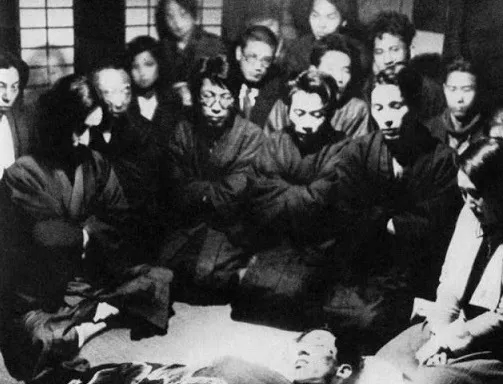
The Japanese novelist Takiji Kobayashi (1903–1933) did not die quietly, nor was his death an accident. He was systematically broken — his body transformed into a warning—because he dared to stand beside the voiceless and the oppressed.
His crime was neither violence nor conspiracy, but solidarity: an unwavering commitment to Japan’s workers, fishermen, and the impoverished. In a nation tightening its grip beneath authoritarian rule, Kobayashi’s pen was judged more dangerous than any rifle. His words pierced illusions, exposed injustice, and threatened a system sustained by fear and silence.
For years, socialist and communist ideals burned within him — not as abstract doctrine, but as an expression of profound human compassion. That conviction marked him for destruction in the eyes of the Tokkō (Special Higher Police, Tokubetsu Kōtō Keisatsu), the ruthless instrument of state repression. To them, Kobayashi was not merely a novelist. He was a contagion capable of infecting the imperial order with dangerous ideas of justice and human dignity.
In his writing, Kobayashi transformed exploitation into unforgettable imagery. He portrayed Hokkaido not as a frontier of national progress, but as a vast cemetery built upon human sacrifice: “Each railroad tie in Hokkaido was nothing but the bluish corpse of a worker… laborers sick with beriberi buried alive like the ancient ‘human pillars.’”
Workers were reduced to “octopus”—creatures driven by such desperation that they consume their own limbs to survive. It was a devastating metaphor for capitalism stripped of every illusion: primitive, merciless, and grotesquely profitable. Exploitation was glorified as “national development.” Murder was sanctified as patriotism. Men were beaten, starved, and worked to death in the name of the empire, while wealth and privilege flowed upward, untouched by the blood from which they sprang.
On February 20, 1933, Kobayashi walked unknowingly into a carefully prepared trap. Expecting to meet a fellow member of the Japanese Communist Party, he instead encountered a police informant working for the Tokkō. Identified in Tokyo’s Akasaka district, he was immediately arrested and taken to Tsukiji Police Station. He would never emerge alive.
His final hours became an ordeal of calculated brutality. Subjected to relentless interrogation and savage torture, Kobayashi’s body was methodically destroyed under the cold efficiency of the state’s security apparatus. The terror wielded by the Tokkō reached so deeply into society that hospitals, fearful of official retaliation, refused to intervene. By the time his broken body was returned to his family, there could be no disguising the truth. His face was grotesquely swollen beyond recognition, his flesh torn and blackened, and the marks of prolonged torture covered his body. The regime attempted to silence a writer—but in doing so, it created one of the most enduring martyrs in the history of modern Japanese literature.
https://moderntokyonews.com/category/japan-culture/ Past JAPAN CULTURE articles via MODERN TOKYO NEWS
MODERN TOKYO TIMES – MODERN TOKYO NEWS – please check https://moderntokyonews.com
Please check Modern Tokyo News at https://moderntokyonews.com for articles going back over 12 years. Sadly, Modern Tokyo Times got hacked and lost 14 years of articles…

Modern Tokyo News is part of the Modern Tokyo Times group
http://moderntokyotimes.com Modern Tokyo Times – International News and Japan News
http://sawakoart.com – Sawako Utsumi’s website and Modern Tokyo Times artist
https://moderntokyonews.com Modern Tokyo News – Tokyo News and International News
PLEASE JOIN ON TWITTER
https://twitter.com/MTT_News Modern Tokyo Times
PLEASE JOIN ON FACEBOOK
https://www.facebook.com/moderntokyotimes