Japanese Novelist and Takuboku Ishikawa (1886-1912): Influence of Pyotr Kropotkin
Lee Jay Walker
Modern Tokyo Times
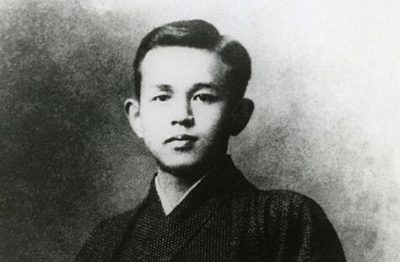
The Japanese poet Takuboku Ishikawa lived briefly, painfully, and intensely. Tuberculosis claimed his life while his ideals were still unfolding, still searching for a language equal to the suffering he witnessed. In youth he leaned toward naturalism; with experience, hunger, and injustice, his heart turned toward socialism. His idealism did not harden into doctrine—it evolved, shaped by the convulsions of the Meiji Period (1868–1912), an age of violent transformation and moral contradiction.
Meiji Japan raced to imitate the great imperial powers of the world—British, French, Ottoman, Persian—absorbing not only their technologies and institutions, but also their darker ambitions. Empire became aspiration; colonialism, a measure of national success. This momentum would continue through the Taishō and Shōwa eras, ending only with defeat in 1945.
Yet empire, wherever it rose, fed upon unseen lives. As in Britain’s vast expansion, the foundations of industrial power were laid by the labor of children and the exhaustion of the poor. Even in the United Kingdom, the indigenous working classes were denied the vote until the upheavals of the First World War forced reform. Beyond Europe, in the lands of Mecca, human beings were still being bought and sold into the early 1960s concerning traditional Islamic realities. Such realities remind us that words like empire, colonialism, and imperialism often conceal an inner truth: mass exploitation within society itself.
This was the world Takuboku inhabited. Japan expanded outward and tightened inward. While flags multiplied and victories were proclaimed, countless people slipped further into poverty. Takuboku was not an observer standing apart—he was among the struggling multitudes. His poetry therefore turned away from nationalist grandeur and toward the quiet desperation of ordinary life, seeking not conquest abroad but liberation at home.
He wrote with devastating simplicity:
I’ve worked harder than the hardest
Yet I am no better off;
I only look down at my bony hands.
The Asia-Pacific Journal (Japan Focus) captures this reality with clarity and compassion: this journal writes, “Takuboku wrote about the downtrodden because he saw himself as one of them. Life for him, with a wife, daughter and mother to support, was a struggle for bare survival… the lack of job security, the necessity to move from place to place, the anxiety of being shunned for opposing injustice, the tightening restrictions on freedom, and the growing oppression of those deemed ‘radical.’”
Among the voices that reached him across borders and oceans, Pyotr Kropotkin spoke most directly to his lived experience. In The Conquest of Bread, Kropotkin asked: “In our civilized societies we are rich. Why then are the many poor? Why this painful drudgery for the masses? Why… this uncertainty for the morrow, in the midst of all the wealth inherited from the past?”
And elsewhere, with brutal clarity: “Everywhere you will find that the wealth of the wealthy springs from the poverty of the poor.”
For Takuboku, these were not abstractions. They were mirrors. His own hunger, instability, and fear were reflected in Kropotkin’s words, binding him to a global fellowship of the dispossessed.
Kropotkin pointedly said (an echo of truth that continues today): “In fact, we know full well today that it is futile to speak of liberty as long as economic slavery exists.”
He was not alone in this awakening. Artists like Yumeji Takehisa (1884–1934) carried similar wounds. Accordingly, the execution of Takehisa’s friend Kōtoku Shūsui (1871–1911)—a leading figure in Japan’s socialist and anarchist movements—never left his soul.
Poverty marked Takehisa’s early years, and the death of Kōtoku deepened his sympathy for the oppressed. Takuboku, Takehisa, and many others were shaken by the events of 1910–1911, when state violence extinguished voices of dissent and hope.
For Takuboku, the final years descended into unrelieved sorrow. In 1911—the year of Kōtoku’s execution—he was rushed to hospital, his body already failing. His mother, too, was consumed by tuberculosis. Meanwhile, poverty never loosened its grip.
In 1912, his mother died first; Takuboku followed within a month. He departed this world having endured the ultimate cruelty: watching his mother perish from the same illness he knew would soon claim him.
He wrote before leaving this world, “What shall I do with this ageing me? Neither floating nor sinking, I drift, tossed by the waves of years.”
Thus ended a life brief yet luminous—a poet who carried the weight of an age within his fragile body, who wrote not for empire or glory, but for those who looked down, as he did, at their own bony hands.

Modern Tokyo News is part of the Modern Tokyo Times group
http://moderntokyotimes.com Modern Tokyo Times – International News and Japan News
http://sawakoart.com – Sawako Utsumi’s website and Modern Tokyo Times artist
https://moderntokyonews.com Modern Tokyo News – Tokyo News and International News
PLEASE JOIN ON TWITTER
https://twitter.com/MTT_News Modern Tokyo Times
PLEASE JOIN ON FACEBOOK