
Japanese Author in a World of Military Might
Lee Jay Walker
Modern Tokyo Times
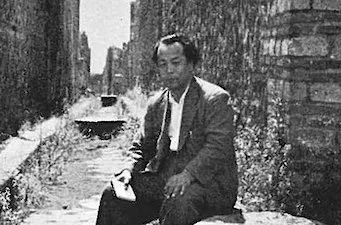
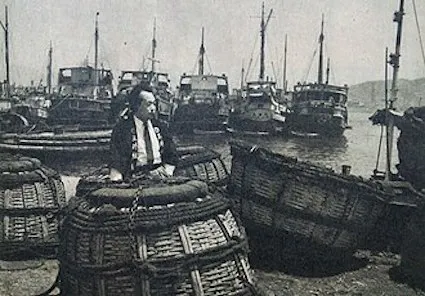
The Japanese novelist Ashihei Hino was not merely shaped by his era — he was consumed by it. In his youth he leaned left, drawn to ideals of justice and reform. But as Japan marched toward militarism, he was swept into its ranks, becoming a writer who humanized empire even as he served it.
After 1945, the very establishment that had championed militarism hastened to accommodate the American occupation, and Hino — once celebrated as a patriotic author—became politically expendable. For many ordinary Japanese soldiers, who had fought a war directed by political and military elites, this dramatic reversal was yet another bitter disillusionment.
For post-war generations, untouched by Soviet terror, Nazi annihilation, or the brutal realities of European and Islamic imperial expansion, the world Hino inhabited is often reduced to moral certainties. Yet history is rarely so simple. Slavery endured in parts of the Arabian Peninsula until the early 1960s. European empires partitioned continents with little regard for the peoples they ruled. Faced with this international order, the Meiji leadership concluded that Japan must modernize rapidly or risk sharing the fate of much of Africa, Southeast Asia, and an increasingly fragmented China. Japan entered the age of empire within a world already dominated by imperial powers.
Hino lived within this geopolitical reality. His journey from youthful leftist sympathies to imperial soldier mirrored the trajectory of countless Japanese whose lives were redirected by forces beyond their control. Serving with the Imperial Japanese Army in China and later in the military information corps, he became both participant and chronicler of Japan’s turbulent age.
His novels Fun’nyōtan (The Excrement and Urine Tale) and Mugi to Heitai (Wheat and Soldiers) achieved extraordinary popularity, with Wheat and Soldiers selling well over one million copies. Rather than depicting distant strategy or political ideology, Hino focused on the ordinary infantryman. As he wrote, “I simply wrote the soldiers as they were.”That human-centered approach helped make his work enormously influential while also serving the state’s broader wartime narrative.
Even as Japan’s fortunes declined, Hino expressed an unwavering sense of loyalty to the men with whom he had served. He wrote, “My heart’s belief in the greatness of the Japanese soldier remains unchanged… those who rest eternally should be the spiritual foundation of the Japanese people.” The statement reflected not simply nationalism, but his enduring respect for ordinary soldiers who had endured the hardships of war.
The tragedy Hino witnessed extended beyond the battlefield. Militarists suppressed leftists; the post-war authorities marginalized prominent wartime nationalists; and the Allied occupation reshaped Japan’s political and cultural landscape. For Hino, ideological victory often meant the silencing of yesterday’s voices. Those who had once been praised could rapidly become objects of condemnation.
He died at the age of fifty-three. In later works such as Hana to Ryū (Flowers and Dragons) and Kakumei Zengo (Before and After the Revolution), his writing became increasingly reflective. Echoing the phrase made famous by Ryūnosuke Akutagawa, he referred to a “vague anxiety” (bonyari shita fuan) that seemed to shadow his later years. Whether rooted in personal struggle, political disillusionment, or Japan’s transformed post-war identity, it reflected the burden of belonging to a generation caught between two irreconcilable worlds.
Ultimately, Ashihei Hino was a casualty of an age that left little room for neutrality. Swept along by the competing tides of empire, occupation, loyalty, and political retribution, he became both witness and victim of history. His Wheat and Soldiers remains one of the most compelling literary portraits of the ordinary Japanese soldier—not as a symbol of ideology, but as an individual engulfed by the immense forces of twentieth-century geopolitics.
https://moderntokyonews.com/category/japan-culture/ Past JAPAN CULTURE articles via MODERN TOKYO NEWS
MODERN TOKYO TIMES – MODERN TOKYO NEWS – please check https://moderntokyonews.com
Please check Modern Tokyo News at https://moderntokyonews.com for articles going back over 12 years. Sadly, Modern Tokyo Times got hacked and lost 14 years of articles…

Modern Tokyo News is part of the Modern Tokyo Times group
http://moderntokyotimes.com Modern Tokyo Times – International News and Japan News
http://sawakoart.com – Sawako Utsumi’s website and Modern Tokyo Times artist
https://moderntokyonews.com Modern Tokyo News – Tokyo News and International News
PLEASE JOIN ON TWITTER
https://twitter.com/MTT_News Modern Tokyo Times
PLEASE JOIN ON FACEBOOK
https://www.facebook.com/moderntokyotimes