
Japan Art: Kobayashi Kokei (1883–1957) and Okuyama Gihachiro (1907–1981)
Lee Jay Walker
Modern Tokyo Times
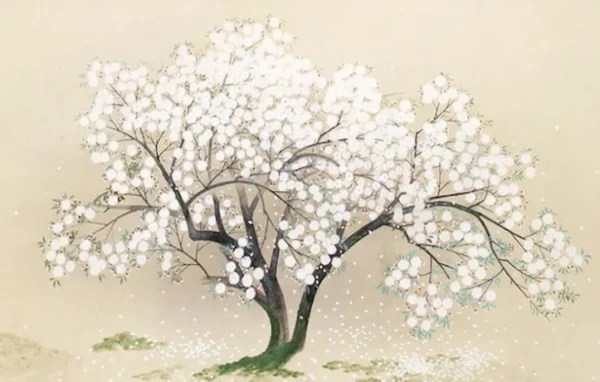
The Japanese artist Kobayashi Kokei (1883–1957) was born in Niigata Prefecture, a region renowned for its shifting skies, deep snows, expansive landscapes, and austere beauty. Such surroundings formed part of the cultural landscape of his childhood and quietly resonate with the sensitivity that would later emerge through his art. From an early age, Kokei possessed a natural affinity for drawing, gradually gravitating toward Nihonga—Japanese-style painting rooted in centuries of tradition while remaining open to refinement and renewal.
Yet his childhood was marked by profound sorrow. His mother died when he was only four years old, followed soon afterward by the deaths of his younger brother and father. By the age of thirteen, Kokei and his surviving sister were left to navigate life with little protection. These experiences of loss became part of the emotional landscape from which his artistic sensibility developed.
At sixteen, Kokei moved to Tokyo, carrying both ambition and grief. The capital offered a radically different environment from rural Niigata, but art provided something deeper than a profession. Painting became an inner sanctuary—a means through which order, beauty, and meaning could be sought amid the uncertainties of life. His commitment to art was therefore shaped not simply by ambition, but by an intense personal need to create.
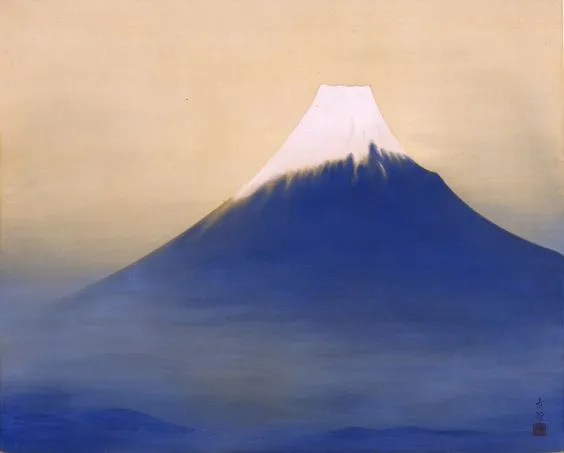
In this sense, Kokei’s journey reflects an important dimension of Japanese artistic culture: beauty is not necessarily separated from impermanence, sorrow, or solitude. Rather, these experiences can become part of the artistic vocabulary through which the world is observed. The quiet emotional gravity of his early life consequently forms an important backdrop to understanding his devotion to Nihonga.
Okuyama Gihachiro (1907–1981) was born during the Meiji Period (1868–1912) in Yamagata Prefecture. Like Kokei, his early environment connected him to the distinctive landscapes of northern Japan. Yet his artistic path would take him into the increasingly diverse visual culture of twentieth-century Japan, particularly through printmaking and design.
Okuyama studied under Kosaka Gajin, absorbing established artistic traditions while gradually developing his own visual language. During the 1920s, he initially worked in poster design and other commercial artistic fields before establishing his own advertising business. These activities were more than commercial occupations: they placed him within a changing world of graphic design, composition, typography, and mass visual culture. Beneath the practical demands of commercial art, his fascination with design and the visual language of Japanese life continued to mature.
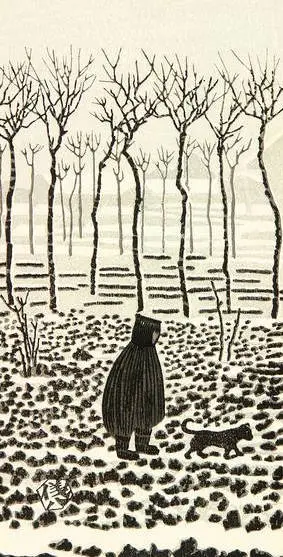
Okuyama became particularly associated with captivating black-and-white prints, including evocative depictions of snow-covered landscapes. In such works, winter becomes more than a season. Snow transforms the familiar landscape, simplifying forms, altering the relationship between light and darkness, and creating an atmosphere of stillness. His preference for black and white could therefore produce a striking visual economy, allowing composition, contrast, texture, and mood to carry the artistic expression.
His artistic journey unfolded against the considerable turbulence of twentieth-century Japan. The economic difficulties of the late 1920s and early 1930s were followed by the profound disruptions of the war years. Yet printmaking and design continued to evolve, and the post-war period created new opportunities for Japanese prints to reach audiences both within Japan and overseas.
Importantly, Okuyama did not remain confined to a single artistic vocabulary. He explored different approaches to printmaking, drawing influence from movements including German Expressionism and Constructivism. These influences introduced different possibilities concerning form, structure, movement, abstraction, and visual intensity. Rather than abandoning Japanese artistic traditions, his work demonstrates how Japanese artists could absorb ideas arriving from abroad while continuing to develop distinctive forms of expression.
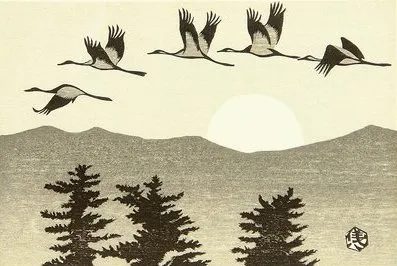
Kokei and Okuyama consequently belong to different generations and artistic circumstances, yet both reveal something important about Japanese art. One turned toward Nihonga amid personal tragedy and the search for beauty; the other moved through design, advertising, printmaking, and international artistic influences while repeatedly returning to the visual possibilities of Japanese life and landscape.
Their respective works also remind us that Japanese art cannot be understood solely through the division between tradition and modernity. The conversation is more subtle. Ancient artistic sensibilities, regional landscapes, personal memory, new technologies, international movements, and changing social realities could coexist within the same cultural space.
https://moderntokyonews.com/?s=Art Past articles about ART via MODERN TOKYO NEWS (Modern Tokyo Times group)
MODERN TOKYO TIMES – MODERN TOKYO NEWS – please check https://moderntokyonews.com
Please check Modern Tokyo News at https://moderntokyonews.com for articles going back over 12 years. Sadly, Modern Tokyo Times got hacked and lost 14 years of articles…

Modern Tokyo News is part of the Modern Tokyo Times group
http://moderntokyotimes.com Modern Tokyo Times – International News and Japan News
http://sawakoart.com – Sawako Utsumi’s website and Modern Tokyo Times artist
https://moderntokyonews.com Modern Tokyo News – Tokyo News and International News
PLEASE JOIN ON FACEBOOK
http://facebook.com/moderntokyotimes