
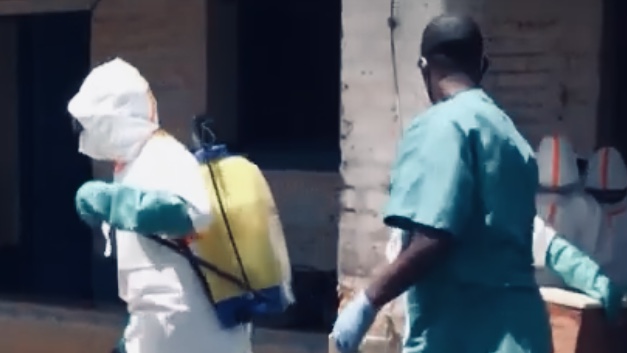
DRC Ebola Deaths Mount (2,300 Deaths Reported)
Michiyo Tanabe, Kanako Mita, and Sawako Uchida
Modern Tokyo Times
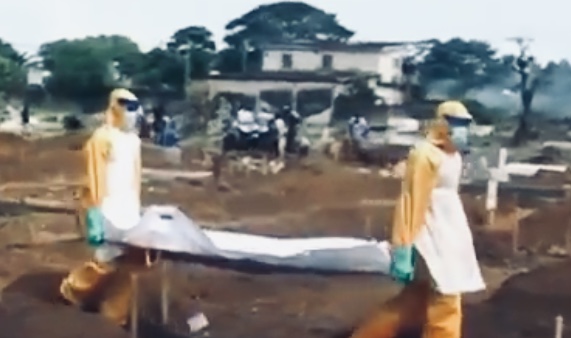
The Democratic Republic of the Congo (DRC) remains gripped by a devastating Ebola crisis, as one of the world’s most fragile humanitarian environments confronts the lethal convergence of epidemic disease, armed conflict, hunger, and institutional breakdown. In the country’s troubled east, decades of ethnic, political, and religious violence have repeatedly shattered communities, displaced populations, weakened healthcare systems, and created conditions in which infectious diseases can spread with terrifying speed.
Now, Ebola has added another layer to an already profound catastrophe.
More than 2,300 people have reportedly lost their lives in the current outbreak, with little indication that the epidemic is approaching containment. The scale and speed of the outbreak underline an uncomfortable reality: Ebola does not require a vacuum of humanity to spread — it requires a vacuum of security, healthcare capacity, resources, and political stability.
The BBC reports: “There is currently no approved vaccine available for the Bundibugyo species that has caused the current epidemic but several are in development, including one based on technology used to develop the AstraZeneca Covid-19 vaccine.”
The absence of an approved vaccine for the Bundibugyo species presents an especially formidable challenge. In a region already struggling with insecurity and limited medical infrastructure, the ability to rapidly identify cases, trace contacts, isolate patients, protect healthcare workers, and sustain public-health surveillance is indispensable. Every weakness in that chain potentially becomes another opening for the virus.
And the Ebola emergency cannot be separated from the wider security crisis.
Tensions with neighboring Rwanda remain acute amid persistent allegations that Kigali continues to support the Tutsi-led M23 insurgency fighting the Congolese state — allegations Rwanda has repeatedly denied. Meanwhile, eastern Congo remains fragmented by a complex constellation of ethnic, political, religious, and armed groups, alongside wider regional rivalries and competing national interests.
Thus, the Congolese population is confronting not one crisis, but a series of interconnected emergencies in which conflict continually undermines the ability to confront disease.
AP News reports: “The outbreak unfolding in one of Congo’s most vulnerable regions is the fastest-growing Ebola outbreak ever, with 4,945 cases including 2,325 deaths, according to government data released overnight into Monday.”
The warning from Doctors Without Borders (MSF) is equally stark. Trish Newport, MSF’s Emergency Coordinator, said: “We rapidly need to scale up to be able to prevent more deaths from happening, more families and communities from being impacted.”
Those words capture the urgency of the moment. Ebola cannot be defeated through medical intervention alone when the very infrastructure required to deliver that intervention is being weakened by conflict, poverty, hunger, and political instability.
Healthcare workers in Ebola-ravaged Ituri Province — which accounts for roughly 90% of confirmed Ebola cases — have reportedly staged strikes over unpaid salaries in Bunia. Their plight represents another devastating paradox: those entrusted with protecting communities from one of the world’s most dangerous infectious diseases are themselves struggling to survive.
France 24 reports: “In Ituri province, the epicentre of the outbreak, families said many frontline workers have gone on strike, worsening access to healthcare that was already challenged by rebel conflict in one of DR Congo’s most remote and vulnerable areas.”
When healthcare workers cannot be paid, hospitals cannot function properly, surveillance systems weaken, and frightened communities lose access to trusted medical personnel, an epidemic can acquire an even more dangerous momentum.
Meanwhile, hunger is deepening the crisis.
The World Food Programme warns: “In eastern DRC, nearly 10 million people are already facing crisis or emergency levels of hunger. Ituri remains one of the country’s most severe hunger hotspots with 1.9 million people facing crisis levels of food insecurity or worse.”
This is where the Ebola emergency becomes inseparable from the wider humanitarian catastrophe.
Malnutrition weakens already vulnerable populations. Conflict displaces families from farms and livelihoods. Displacement overcrowds communities. Poverty restricts access to healthcare. Disease further undermines household survival. Hunger then makes populations more vulnerable to infection and makes recovery increasingly difficult.
It becomes a vicious circle in which war feeds hunger, hunger magnifies disease, disease overwhelms healthcare, and the collapse of healthcare leaves communities even more exposed to war and deprivation.
Beyond Ebola, eastern DRC is simultaneously confronting a cascade of other deadly diseases, including cholera, malaria, measles, m-pox, tuberculosis, and numerous additional infectious illnesses. The cumulative burden is immense. For families already living amid insecurity and food shortages, another outbreak can be the difference between survival and tragedy.
Yet the greatest danger may be the normalization of suffering.
Lee Jay Walker (Modern Tokyo Times analyst) says, “Eastern DRC has endured conflict for decades, and repeated humanitarian emergencies risk becoming background noise to an international community confronted by crises across the globe. But the people of Ituri and neighbouring provinces cannot afford to become another forgotten population.”
The DRC is therefore confronting something considerably larger than an Ebola outbreak.
It is confronting a humanitarian catastrophe in which war, epidemic disease, hunger, displacement, poverty, and institutional fragility are reinforcing one another.
Without sustained regional diplomacy, stronger international engagement, reliable financing, protection for healthcare workers, and a substantial expansion of humanitarian assistance, millions of Congolese remain at risk of being abandoned to this deadly convergence.
The international community must therefore look beyond the immediate Ebola statistics. Behind every case is a family; behind every death is a community; and behind every overwhelmed hospital is a healthcare system struggling against forces far greater than disease alone.
The tragedy of eastern Congo is that Ebola is only one manifestation of a much deeper crisis.
If the guns continue to roar, hunger continues to spread, and healthcare systems continue to fracture, containing Ebola will become infinitely harder. The battle against the virus is consequently also a battle for peace, human dignity, food security, and the survival of communities already pushed to the brink.
The people of the DRC deserve more than another cycle of international concern followed by international silence. They deserve sustained solidarity—and, above all, the chance to live without war, hunger, and epidemic disease determining the boundaries of their future.
https://moderntokyonews.com/?s=DRC Past DRC articles via MODERN TOKYO NEWS
MODERN TOKYO TIMES – MODERN TOKYO NEWS – please check https://moderntokyonews.com
Please check Modern Tokyo News at https://moderntokyonews.com for articles going back over 12 years. Sadly, Modern Tokyo Times got hacked and lost 14 years of articles…

Modern Tokyo News is part of the Modern Tokyo Times group
http://moderntokyotimes.com Modern Tokyo Times – International News and Japan News
http://sawakoart.com – Sawako Utsumi and her website – Modern Tokyo Times artist
https://moderntokyonews.com Modern Tokyo News – Tokyo News and International News
PLEASE JOIN ON FACEBOOK
http://facebook.com/moderntokyotimes