Japanese Art and Mount Fuji by Hokusai
Lee Jay Walker
Modern Tokyo Times
Mount Fuji rises not merely as a mountain, but as a symbol etched into the world’s imagination. Even those who know little of Japan instinctively recognize its name. Utter Tokyo, Kyoto, or Mount Fuji, and the landscape of Japan immediately forms in the mind — serene, powerful, and timeless. Fuji stands alone, a sacred presence where geography meets myth.
In much the same way, Katsushika Hokusai (1760–1849) towers over the world of Japanese printmaking. Alongside Andō Hiroshige (1797–1858), he remains one of the most internationally revered artists of the ukiyo-e tradition. This article turns its gaze toward Hokusai and his enduring fascination with Mount Fuji — a subject through which he revealed both technical brilliance and spiritual depth.
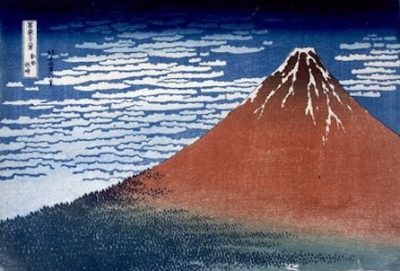
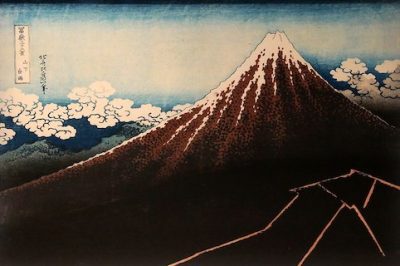
The Metropolitan Museum of Art eloquently captures this duality in its description of two iconic works:“Juxtaposed here with the clear brilliant calm of ‘South Wind, Clear Sky’ (the ‘Red Fuji’), the ‘Storm Below Fuji’ reveals the expressive range and power of Hokusai’s vision. Forking across the inky base, a bolt of white lightning dramatizes the sudden change from a cloud-filled summer sky to the murky violence that obscures all below Fuji’s magnificent cone.”
In these images, Fuji is constant, yet endlessly transformed — serene in one moment, menacing in the next — mirroring the shifting rhythms of nature and human perception.
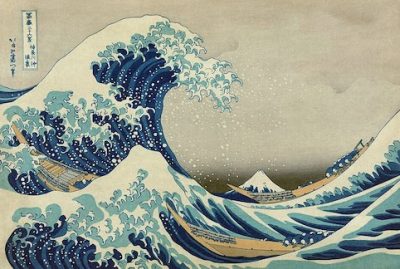
The Metropolitan Museum of Art (art above) says: “The breathtaking composition of this woodblock print, said to have inspired Debussy’s La Mer (The Sea) and Rilke’s Der Berg (The Mountain), ensures its reputation as an icon of world art. Hokusai cleverly played with perspective to make Japan’s grandest mountain appear as a small triangular mound within the hollow of the cresting wave. The artist became famous for his landscapes created using a palette of indigo and imported Prussian blue.”
Interestingly, Hokusai’s life was one of perpetual reinvention. Known by more than thirty art names, he never ceased to experiment, refine, and challenge the boundaries of visual expression.
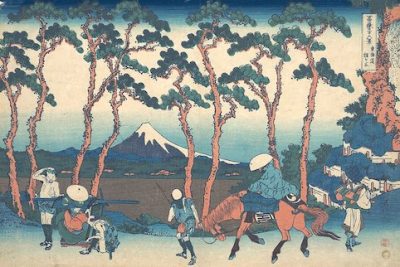
The British Museum further situates Hokusai within the vast lineage of Japanese art, noting: “Renowned painter and print artist of the ukiyo-e school… The leading ukiyo-e artist of the later Edo period, Hokusai had the longest career of any of them — more than seventy years — and during this time changed his style many times, making unique contributions in all fields.”
In the end, Hokusai’s many visions of Mount Fuji — alongside his rich explorations of daily life, mythology, and the natural world — remain profoundly alive. They speak across centuries, continuing to captivate modern audiences with their vitality, humility, and quiet grandeur. Through Hokusai, Mount Fuji becomes eternal.

Modern Tokyo News is part of the Modern Tokyo Times group
http://moderntokyotimes.com Modern Tokyo Times – International News and Japan News
http://sawakoart.com – Sawako Utsumi’s website and Modern Tokyo Times artist
https://moderntokyonews.com Modern Tokyo News – Tokyo News and International News
PLEASE JOIN ON TWITTER
https://twitter.com/MTT_News Modern Tokyo Times
PLEASE JOIN ON FACEBOOK