Kyoto Art and Culture – Richness of History
Lee Jay Walker
Modern Tokyo Times

Few cities in the world carry an artistic memory as refined and continuous as Kyoto. Its temples, workshops, academies, and quiet streets have long nurtured artists who balanced reverence for tradition with the courage to transform it. The artists gathered here were not merely residents of Kyoto—they were shaped by its atmosphere, its seasons, and its philosophical insistence on beauty through restraint.
The first and fourth works belongs to Inagaki Toshijiro (1902–1963), a master of katazome—the meticulous art of stencil dyeing using resist paste. Inagaki’s art embodies Kyoto’s devotion to craftsmanship: patient, rhythmic, and quietly radical. His patterns feel timeless, yet they pulse with modern sensibility, transforming fabric into a contemplative surface where tradition and abstraction converse in whispers rather than declarations.

The second piece is by Ogo Tomonosuke (1898–1962), an artist whose work radiates individuality and poetic abstraction. Born in Kyoto, Ogo moved fluently between Japanese-style and Western-style painting before dedicating himself to dye art. As described by the Kyoto City KYOCERA Museum of Art, his work evolved into bold wax-resist compositions marked by strong color contrasts, thick outlines, and abstracted forms drawn from natural phenomena. After the war, his art matured into something deeply lyrical—nature distilled not as scenery, but as sensation and rhythm. His works feel like visual haiku: sparse, confident, and emotionally resonant.
The final piece is by Takeuchi Seihō (1864–1942), born as the Edo period flickered into history. Seihō stood at a pivotal crossroads in Japanese art, navigating the tension between preservation and innovation. According to the MOA Museum of Art, he trained in the Shijō school yet fearlessly absorbed influences from the Kano school, literati painting, and European realism. Rather than dilute tradition, Seihō expanded it—crafting a personal style that revolutionized Kyoto’s painting circles and redefined nihonga for a new era.
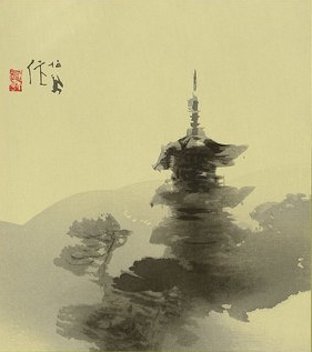
Throughout his life, Seihō challenged himself relentlessly, embodying Kyoto’s deeper artistic ethic: that tradition is not static inheritance, but a living force—one that must be questioned, refined, and reimagined by every generation.
Together, these artists reveal Kyoto not as a museum of the past, but as a living, breathing cultural ecosystem—where dye, line, color, and philosophy intertwine, and where art becomes an act of quiet devotion.

Modern Tokyo News is part of the Modern Tokyo Times group
http://moderntokyotimes.com Modern Tokyo Times – International News and Japan News
http://sawakoart.com – Sawako Utsumi’s website and Modern Tokyo Times artist
https://moderntokyonews.com Modern Tokyo News – Tokyo News and International News
PLEASE JOIN ON TWITTER
https://twitter.com/MTT_News Modern Tokyo Times
PLEASE JOIN ON FACEBOOK