Malnutrition in Sudan (SAF, RSF, Darfur, and Kordofan)
Kanako Mita, Sawako Utsumi, and Lee Jay Walker
Modern Tokyo Times
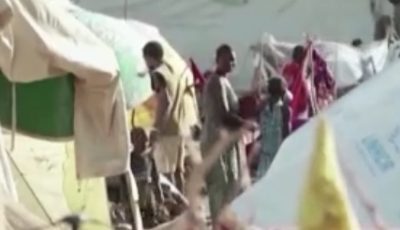
The war in Sudan grinds on with merciless force, tearing the country apart and reducing it to a fractured battleground divided between rival centres of power. The result is not merely political paralysis, but a humanitarian implosion unfolding in slow motion. On one side stands the Rapid Support Forces (RSF) and allied militias, widely implicated in systematic atrocities against non-Arab communities across multiple regions. Opposing them are the Sudanese Armed Forces (SAF), whom the United Arab Emirates accuses of harbouring pro–Muslim Brotherhood sympathies. Caught between these forces, Sudan’s civilians are being crushed.
UN News warns with chilling clarity: “Relentless violence, famine and disease are fuelling a rising death toll among children in Sudan, while attacks on healthcare and a lack of aid access hamper efforts to help them.” This is not collateral damage — it is the systematic dismantling of survival itself.
During a previous UN fact-finding mission into atrocities and human rights violations, expert Mona Rishwami concluded that both the RSF and the SAF have committed grave abuses against civilians. Meanwhile, millions now face acute food insecurity, with the worst-case trajectory pointing toward mass starvation. Reports of more than two dozen children dying from malnutrition in Kordofan, alongside the catastrophic collapse of life in Darfur, underscore the brutal reality: famine is no longer a warning — it is here.
In Kordofan, children have quietly starved to death in recent months. In Darfur, massacres targeting non-Arab communities continue with terrifying regularity. Across the country, executions of captured fighters persist, while drone strikes and shelling repeatedly hit food convoys, hospitals, markets, mosques, and schools. These are not accidents. These are patterns. These are crimes. These are among the darkest days in Sudan’s modern history.
AP News reported late last year: “Kadugli, the capital of South Kordofan province, is where famine was declared earlier this month… The RSF has besieged the town for months, trapping tens of thousands as it seeks further territorial gains.”
Siege warfare has once again become a weapon of starvation.
Ricardo Pires, spokesperson for UNICEF, stated starkly: “Extreme hunger and malnutrition come for children first — the youngest, the smallest, the most vulnerable.”
Solemnly, he added: “In Sudan, it’s spreading… These are children between six months and five years old. They are running out of time.”
Across Greater Darfur and Greater Kordofan, entire regions now hover on the edge of famine. Remote rural communities are cut off from aid, displacement camps are buckling under impossible strain, and new famine hotspots have emerged in East Darfur and South Kordofan. Places such as Um Baru and Kernoi have already crossed newly reported famine thresholds. Communities living on the margins are now collapsing altogether.
Elsewhere, RSF and allied Arab militias broke the siege of El Fasher late last year — an event immediately followed by credible reports of mass killings. The pattern is grimly familiar and repeated across Sudan: military advances followed by ethnic violence.
Darfur first burned itself into the world’s conscience during the 2003–2005 conflict, when Arab militias carried out campaigns of ethnic cleansing against Black African communities — including the Fur, Masalit, and Zaghawa — leaving hundreds of thousands dead. Today, history is not merely echoing; it is repeating itself. Since the outbreak of the current war, ethnically driven attacks have returned with chilling precision.
Famine has gripped El Fasher since August 2024. Kordofan continues to deteriorate under daily warfare and massacres. Yet, unlike Gaza or the war between the Russian Federation and Ukraine, the catastrophic humanitarian crises in the Democratic Republic of the Congo, Ethiopia, Myanmar, Sudan, Yemen, and elsewhere rarely receive sustained global attention. They are sidelined by geopolitics, diluted by selective language, or buried beneath narratives that obscure suffering while disproportionately fixating on select conflicts.
This imbalance exposes a brutal truth: some humanitarian catastrophes dominate headlines, while others — no less devastating — are permitted to rot in obscurity.
Catherine Russell, Executive Director of UNICEF, issued one of the most harrowing warnings of the conflict: “Children as young as one being raped by armed men should shock anyone to their core and compel immediate action… Sexual violence is being used as a tactic of war. This is an abhorrent violation of international law and could constitute a war crime. It must stop.”
Sudan’s past offers a grim warning. After decades of war marked by mass killings, slave raids, and systematic violence against non-Arab populations, South Sudan ultimately broke away. Today, Sudan again risks disintegration — sliding toward de facto partition, not unlike Libya, even if its borders remain formally intact.
UN News reports that nearly three years into the war, 13.6 million people have fled their homes, including 9.1 million internally displaced. This is one of the largest displacement crises on Earth — and one of the most neglected.
The message is unavoidable. Regional powers, Gulf states, and the wider international community must act decisively to force meaningful negotiations and impose accountability. Without a sustained, enforceable peace, Sudan’s descent will continue — defined by ethnic massacres, starvation, sexual violence, and the erasure of entire communities.
Sudan cannot survive further fragmentation. The price of inaction is already being paid — in children’s graves, emptied villages, and a nation pushed relentlessly toward the abyss.
Sudan must break free from this cycle of death, impunity, and collapse. Yet today, millions of ordinary people remain trapped in the convulsions of war — abandoned, starving, and unheard — standing at the very edge of catastrophe.

Modern Tokyo News is part of the Modern Tokyo Times group
http://moderntokyotimes.com Modern Tokyo Times – International News and Japan News
http://sawakoart.com – Sawako Utsumi and her website – Modern Tokyo Times artist
https://moderntokyonews.com Modern Tokyo News – Tokyo News and International News
PLEASE JOIN ON TWITTER
https://twitter.com/MTT_News Modern Tokyo Times
PLEASE JOIN ON FACEBOOK