

Japan Art and Sōami (Muromachi period)
Lee Jay Walker
Modern Tokyo Times
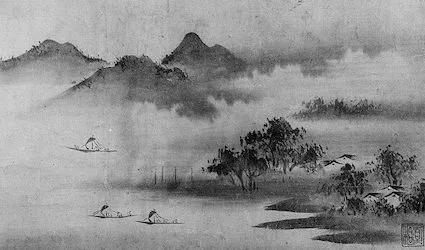
Sōami remains one of Japan’s most revered artistic figures from the Muromachi period, and despite the passage of five centuries, his legacy continues to occupy a distinguished place within the nation’s cultural heritage. Painter, garden designer, connoisseur, and aesthete, Sōami helped shape the refined ideals of Japanese high culture that still resonate today.
The exact year of his birth remains uncertain, although it is generally accepted that he died in 1525. Living during an era when Japan absorbed and transformed many elements of Chinese civilization, Sōami embraced the Southern School of Chinese painting. Yet rather than merely imitating continental traditions, he infused them with a distinctly Japanese sensitivity, helping to forge an artistic language that reflected both cultural inheritance and creative independence.
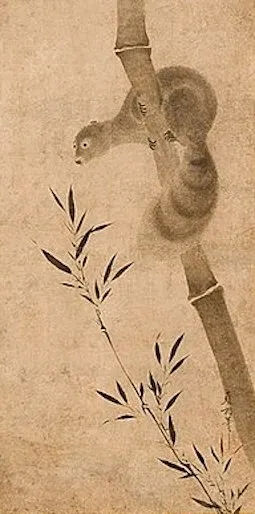
Zen Buddhism formed the spiritual foundation of Sōami’s life and artistic vision. The Zen pursuit of inner tranquillity, disciplined simplicity, and direct contemplation found expression throughout his paintings, gardens, and aesthetic philosophy. Rather than seeking grandeur or ornamentation, Sōami celebrated silence, emptiness, and the subtle beauty found in nature — qualities that encourage the observer to look beyond the visible world and cultivate inner awareness.
Chinese ink painting, Chan (Zen) Buddhist philosophy, and the sophisticated culture of the Higashiyama period collectively nurtured his artistic soul. Within this cultural environment, painting became more than a visual exercise; it evolved into a spiritual practice in which brushwork reflected the artist’s state of mind. Every measured stroke sought harmony between humanity, nature, and the Buddhist understanding of impermanence.
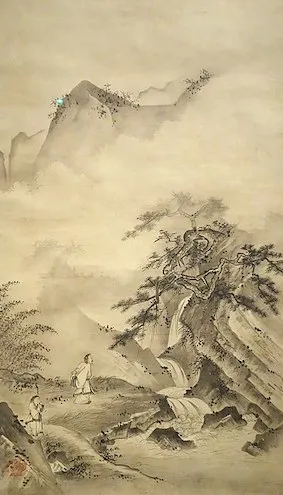
Sōami’s influence extended beyond painting into the design of contemplative Zen gardens, where stone, moss, water, and carefully arranged empty space invited meditation rather than spectacle. His association with the celebrated gardens of Ryōan-ji and Daisen-in reflects an aesthetic in which every element possesses symbolic meaning. These landscapes were conceived not simply as beautiful places but as sacred environments where the rhythms of nature, the passage of time, and the quiet discipline of Zen Buddhism encouraged reflection and spiritual awakening.
Through his paintings and gardens alike, Sōami helped define an enduring Japanese aesthetic founded upon restraint, balance, and harmony. His work illustrates how Buddhism, Chinese scholarship, and Japan’s own cultural imagination converged to create an artistic tradition in which beauty serves not merely to delight the eye, but also to deepen the spirit.
https://moderntokyonews.com/?s=Art Past articles about ART via MODERN TOKYO NEWS (Modern Tokyo Times group)
MODERN TOKYO TIMES – MODERN TOKYO NEWS – please check https://moderntokyonews.com
Please check Modern Tokyo News at https://moderntokyonews.com for articles going back over 12 years. Sadly, Modern Tokyo Times got hacked and lost 14 years of articles…

Modern Tokyo News is part of the Modern Tokyo Times group
http://moderntokyotimes.com Modern Tokyo Times – International News and Japan News
http://sawakoart.com – Sawako Utsumi’s website and Modern Tokyo Times artist
https://moderntokyonews.com Modern Tokyo News – Tokyo News and International News
PLEASE JOIN ON TWITTER
https://twitter.com/MTT_News Modern Tokyo Times
PLEASE JOIN ON FACEBOOK
http://facebook.com/moderntokyotimes