
Japan Novelist and the Influence of Pyotr Kropotkin: Takuboku Ishikawa (1886-1912)
Lee Jay Walker
Modern Tokyo Times
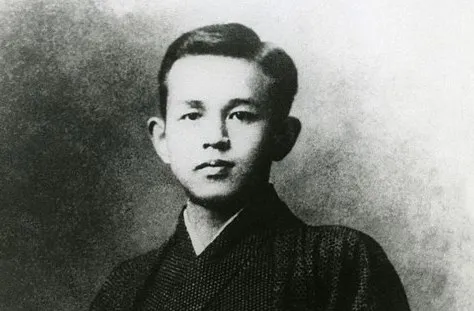
The life of the Japanese poet Takuboku Ishikawa was brief, yet his poetry continues to echo with remarkable emotional power. Born during the transformative years of the Meiji Period (1868–1912), Takuboku witnessed a nation racing toward modernity while countless ordinary people struggled beneath its glittering achievements. His literary path gradually moved from naturalism toward socialism — not through abstract ideology, but through the hardship he encountered every day.
The Meiji state embraced Western models of industrialization and empire, enabling Japan to emerge as a major power. Yet, as with the great European empires, national prosperity often masked profound social inequality. While the nation expanded its influence abroad, many labourers, farmers, and urban families endured poverty at home. Takuboku belonged to this overlooked Japan, and his poetry became the voice of those left behind by modernization rather than those celebrating imperial ambition.
He captured his own despair with heartbreaking simplicity:
“I’ve worked harder than the hardest
Yet I am no better off;
I only look down at my bony hands.”
Among the strongest intellectual influences upon Takuboku was Russian literature, whose moral and philosophical depth found a receptive audience in late Meiji Japan. Russian writers explored the dignity of ordinary people, spiritual suffering, social injustice, and the search for compassion within an unequal world. Their works offered Japanese readers not merely foreign ideas, but a mirror through which they could better understand the upheavals transforming their own society.
Within this intellectual current, the writings of the Russian anarchist Pyotr Kropotkin struck Takuboku with particular force. Kropotkin’s words seemed less like political theory than a direct conversation with those living through poverty and insecurity. In The Conquest of Bread, he asked: “In our civilized societies we are rich. Why then are the many poor?… Why this painful drudgery for the masses?… Why… this uncertainty for the morrow… when the powerful means of production could ensure comfort to all?”
Elsewhere he wrote with equal clarity: “Everywhere you will find that the wealth of the wealthy springs from the poverty of the poor.”
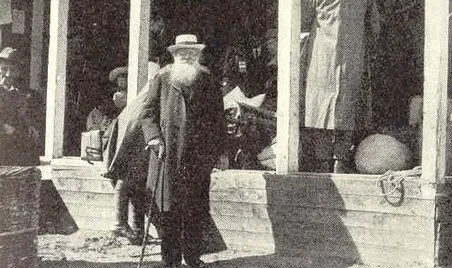
For Takuboku, these were not distant observations from Russia but a description of his own existence. Russian literature therefore became more than an imported cultural influence. It offered many Japanese writers and artists a language through which they could express both personal sorrow and wider social injustice. Across national boundaries, literature created a quiet fellowship between individuals confronting remarkably similar questions about poverty, dignity, and humanity.
The execution of Kōtoku Shūsui in 1911 profoundly shocked Japan’s literary and socialist circles. In another article concerning the artist Yumeji Takehisa, I wrote: “The execution of his friend, Kōtoku Shusui (1871–1911), who played an important role in the socialist and anarchist movements of the day, always remained in his soul. Thus Takehisa—who struggled against poverty during the infancy of his artistic career—felt warmth to the socialist cause and the downtrodden working classes.” Takuboku likewise witnessed the narrowing of intellectual freedom, and Kropotkin’s observations appeared increasingly prophetic as political repression deepened.
His final years unfolded with heartbreaking inevitability. Hospitalized with tuberculosis in 1911, weighed down by poverty, and grieving over the execution of Kōtoku, he also watched his beloved mother succumb to the same disease. She died in the spring of 1912, and scarcely a month later Takuboku followed her into death at only twenty-six years of age.
Yet death did not silence his voice. Like the Russian authors who had stirred his conscience, Takuboku transformed personal suffering into literature that speaks across generations. His poems remain a quiet reminder that the true measure of a nation’s greatness is found not in empire or military triumph, but in the dignity, compassion, and humanity afforded to its ordinary people.
https://moderntokyonews.com/category/japan-culture/ Past JAPAN CULTURE articles via MODERN TOKYO NEWS
MODERN TOKYO TIMES – MODERN TOKYO NEWS – please check https://moderntokyonews.com
Please check Modern Tokyo News at https://moderntokyonews.com for articles going back over 12 years. Sadly, Modern Tokyo Times got hacked and lost 14 years of articles…

Modern Tokyo News is part of the Modern Tokyo Times group
http://moderntokyotimes.com Modern Tokyo Times – International News and Japan News
http://sawakoart.com – Sawako Utsumi’s website and Modern Tokyo Times artist
https://moderntokyonews.com Modern Tokyo News – Tokyo News and International News
PLEASE JOIN ON TWITTER
https://twitter.com/MTT_News Modern Tokyo Times
PLEASE JOIN ON FACEBOOK
http://facebook.com/moderntokyotimes