Japanese Art and Kawabata Gyokusho
Lee Jay Walker
Modern Tokyo Times
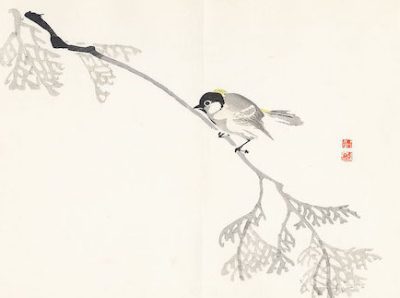
Kawabata Gyokusho (1842–1913) was born beneath the waning lantern light of the late Edo Period and departed this world as the early Taishō era was taking its first breath. His artistic soul, however, reached full flowering during the Meiji Period (1868–1912), an age defined by rupture, reinvention, and the quiet struggle between inheritance and transformation.
At the remarkably young age of eleven, Gyokusho entered formal study under Nakajima Raishō in the early 1850s. From these formative years onward, he absorbed the refined sensibilities of the Shijō and Maruyama schools—traditions that prized naturalism, elegance, and emotional restraint. Yet Gyokusho did not confine himself solely to inherited forms. With intellectual curiosity and artistic courage, he also explored Western-style painting, sensing that new winds were reshaping the horizons of Japanese art.
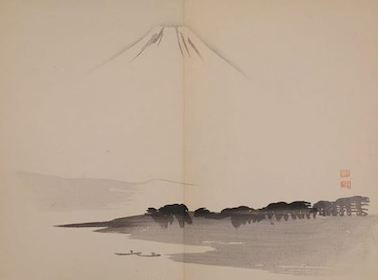
In the works left to us by this esteemed master, simplicity reigns supreme. His compositions are often restrained, uncluttered, and calm—yet within this apparent spareness lies profound cultural depth. Each brushstroke seems to breathe with quiet confidence, reflecting an upbringing steeped in Kyoto’s aesthetic discipline and spiritual awareness. His art does not shout; it murmurs. And in that murmur, one hears echoes of tradition, patience, and reverence for the natural world.
As the Birmingham Museum of Art eloquently notes: “Kawabata Gyokusho was born in Kyoto but moved to Tokyo in 1866 to briefly study Western-style painting with the English artist Charles Wirgman (1832–1891). In 1890 he was appointed professor at the Tokyo School of Fine Arts where he taught the traditional Japanese Shijō style of painting.”
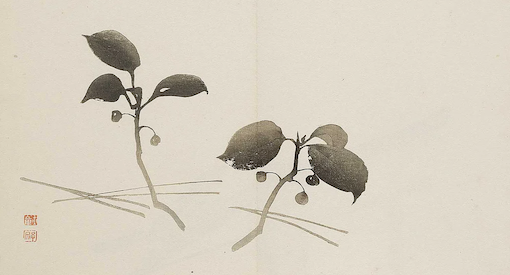
Thus, Gyokusho stood at a crossroads of civilizations—learning from the West, yet teaching Japan how to safeguard its own artistic soul. He became both student and steward, absorbing change while anchoring continuity.
His life and art resonate deeply with the timeless wisdom of the revered Buddhist monk Nichiren (1222–1282), who taught: “That which you give to another will become your own sustenance;
if you light a lamp for another, your own way will be lit.”
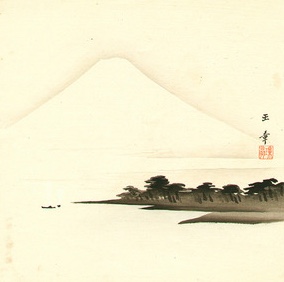
In illuminating the path for his students and preserving the grace of traditional painting during an era of upheaval, Kawabata Gyokusho ensured that his own way—like a softly glowing lamp—would continue to shine long after his passing.

Modern Tokyo News is part of the Modern Tokyo Times group
http://moderntokyotimes.com Modern Tokyo Times – International News and Japan News
http://sawakoart.com – Sawako Utsumi’s website and Modern Tokyo Times artist
https://moderntokyonews.com Modern Tokyo News – Tokyo News and International News
PLEASE JOIN ON TWITTER
https://twitter.com/MTT_News Modern Tokyo Times