
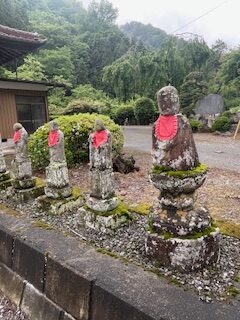
Voice of Meiji Japan: Novelist Natsume Sōseki and Poet Masaoka Shiki
Lee Jay Walker
Modern Tokyo Times
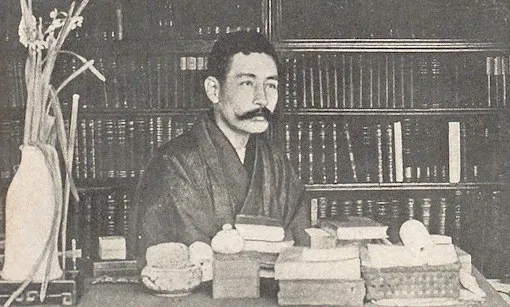
The celebrated Japanese novelist Natsume Sōseki (1867–1916) was born in the first year of the Meiji era—a period when Japan was undergoing one of the most extraordinary transformations in its history. The old Tokugawa order had collapsed, the emperor had been restored to political prominence, and the country was moving with astonishing speed toward industrialization, Western education, modern science, constitutional government, and a new conception of the individual.
Sōseki’s life and literature would become inseparable from this turbulent transformation. He was not simply a novelist who happened to live during the Meiji period; he became one of its most perceptive observers, capturing the psychological cost of a civilization racing between inherited traditions and the unfamiliar demands of modernity.
Yet the child who would eventually become one of Japan’s greatest literary figures began life amid profound emotional uncertainty.
Born as the sixth child to aging parents who had not expected another child—his mother was already forty—Sōseki was initially given away to Shiobara Masanosuke and his wife, a couple who longed for a child. Although adoption in nineteenth-century Japan could have practical and social dimensions quite different from modern Western assumptions, the experience nevertheless left a deep psychological impression upon him.
When Sōseki was nine, the marriage of his adoptive parents collapsed, and he was returned to his biological family. He consequently grew up with an unsettling sense of displacement, belonging simultaneously to a family from which he had been separated and to another family that had ultimately returned him.
The emotional consequences would remain with him.
His mother, who had provided him with affection after his return, died when Sōseki was only fourteen. Two of his elder brothers subsequently died in 1887. In a Japan where early death remained an ever-present reality, such losses were devastating. For Sōseki, they contributed to an early consciousness of impermanence, solitude and the fragility of human attachment.
These experiences would later resonate through his fiction. Naturally, the force shaping Sōseki included the dynamics of Meiji modernity.
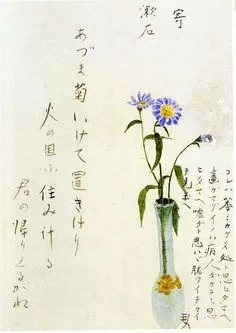
Japan was changing at extraordinary speed. Railways crossed landscapes once travelled slowly by foot or horse. Newspapers and mass education expanded. Western literature and philosophy entered intellectual life. Tokyo became increasingly modern, while traditional hierarchies and assumptions were challenged by new ideas about individualism, education, social mobility and personal freedom.
For many Japanese intellectuals, this transformation was exhilarating. However, for Sōseki, it was also deeply unsettling.
His novels repeatedly examine the lonely individual caught between competing worlds. The traditional bonds of family and community could no longer be taken for granted, yet Western-style individualism could produce isolation rather than liberation. Beneath the comedy, satire and elegance of his writing lies a fundamental question of Meiji Japan: what happens to the human soul when society changes faster than the individual can comprehend?
This tension gives works such as I Am a Cat, Botchan, Kusamakura and Kokoro their extraordinary cultural importance.
I Am a Cat uses humour and the observations of a highly opinionated feline narrator to expose the absurdities of modern Japanese society. Botchan explores the clash between personal integrity and the hypocrisy of institutions. Kusamakura retreats toward an aesthetic world where nature and art offer temporary refuge from the pressures of ordinary existence. And Kokoro penetrates even more deeply into the psychological consequences of modernity, examining loneliness, guilt, friendship and the painful transformation of traditional values.
Sōseki therefore stands at a remarkable cultural crossroads.
He understood the literary heritage of Japan while engaging intensely with Western thought. He studied English literature, travelled to Britain, and returned to Japan carrying both admiration and reservations concerning the Western model that Meiji leaders were importing so rapidly.
His genius lay partly in recognizing that modernization was never merely technological. Accordingly, it transformed the inner life.
The Meiji period produced railways, factories, universities, newspapers and new political institutions—but it also produced new anxieties. The individual increasingly found himself detached from older communal certainties. Sōseki transformed that unease into literature.
And standing beside him was another extraordinary figure of Meiji culture: Masaoka Shiki (1867–1902).
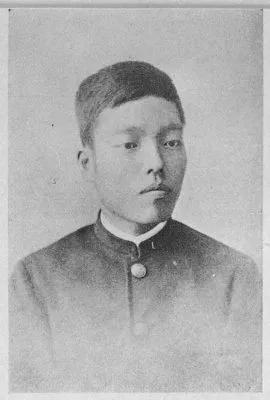
Born in the same year as Sōseki, Shiki became one of Japan’s great literary reformers. He sought to rejuvenate Japanese poetry, most famously through his advocacy of shasei — an approach often translated as “sketching from life.” His influence helped reshape modern haiku and tanka, bringing observation of the ordinary world into sharper literary focus.
Shiki and Sōseki shared more than an age because both belonged to a generation that had been born into the old Japan but came of age within the radically transformed Meiji nation. They witnessed the collision of Japanese tradition with Western ideas, and both sought new artistic languages capable of expressing that changing reality.
Shiki recognised Sōseki’s literary potential and encouraged him to write. Their friendship became one of the significant intellectual relationships of Sōseki’s early life.
Yet Shiki’s own life was tragically brief. Sadly, tuberculosis ravaged his body, confining him increasingly to his sickbed. Nevertheless, he transformed illness into an extraordinary form of literary observation. His writings, including A Drop of Ink, Stray Notes While Lying on My Back and A Six-Foot Sickbed, reveal a mind refusing to surrender its curiosity even while the body was failing.
His reflections upon Zen are particularly poignant: “Until now I had mistaken the ‘Enlightenment’ of Zen: I was wrong to think it meant being able to die serenely under any conditions. It means being able to live serenely under any conditions.”
This was not merely a philosophical statement. It was the reflection of a young man confronting mortality while living through one of the most transformative periods in Japanese history.
Shiki also wrote: “Even lying ill in bed, I am still the captain of my soul.”
The sentiment captures something profound about Meiji culture: the emergence of the individual consciousness. Japan was becoming modern, but what did it mean to be an individual within this new Japan?
Shiki answered through poetry and observation. Sōseki answered through fiction, satire and psychological introspection.
Their artistic responses were different, yet both were concerned with the same fundamental problem—the relationship between the individual and a rapidly changing society.
Shiki’s final years also demonstrate the enduring Japanese sensitivity toward impermanence. His famous line, “The falling of cherry blossoms — I have no strength to rise and see them” contains extraordinary poignancy. The cherry blossom, long associated with beauty, transience and mortality, becomes an intimate symbol of the poet’s own approaching death.
There is no need to romanticize his suffering. Shiki endured terrible physical pain. Yet his ability to observe the world around him remained remarkably alive. The cherry blossoms continued to fall whether he could rise from his bed or not. Nature remained indifferent to human suffering, but precisely because of this, the moment became intensely beautiful.
This sensibility connects Shiki to a much older Japanese cultural tradition while simultaneously belonging to the modern Meiji world.
Sōseki likewise remained fascinated by the tension between permanence and change. His characters inhabit a society in which old moral structures are weakening and new values have not yet fully taken their place. His unfinished Light and Darkness carries this psychological exploration toward the end of his life, leaving behind a haunting testament to a writer still probing the mysteries of human consciousness.
Ultimately, Sōseki and Shiki should not be viewed merely as two tragic literary personalities. They were children of Meiji Japan.
Their lives illuminate the extraordinary cultural transformation that followed the Meiji Restoration: the encounter between tradition and modernity, Japanese aesthetics and Western thought, communal obligation and individual freedom, inherited values and psychological uncertainty.
Sōseki transformed the anxieties of modern Japan into some of its most enduring novels. Meanwhile, Shiki transformed physical suffering and the observation of everyday life into a renewed poetic language.
Both demonstrated that modernization does not simply alter cities, institutions and technology. It changes how human beings understand themselves. And perhaps this is why their voices remain so powerful.
In the twilight of the Meiji era, Sōseki and Shiki stood upon the threshold between two Japans. Behind them lay centuries of inherited culture; before them stretched an uncertain modern world. One carried his loneliness into the novel, the other carried his mortality into poetry.
Their lives were brief.
Their Meiji world disappeared.
But their words remained — quietly reminding subsequent generations that amid the noise of progress, the deepest cultural questions remain profoundly human: Who are we? Where do we belong? What does it mean to live—and how can beauty survive when everything must eventually pass?
That is the enduring cultural legacy of Sōseki and Shiki: two luminous voices of Meiji Japan who transformed the anxieties of an age into art that continues to speak across time.
https://moderntokyonews.com/category/japan-culture/ Past JAPAN CULTURE articles via MODERN TOKYO NEWS
MODERN TOKYO TIMES – MODERN TOKYO NEWS – please check https://moderntokyonews.com
Please check Modern Tokyo News at https://moderntokyonews.com for articles going back over 12 years. Sadly, Modern Tokyo Times got hacked and lost 14 years of articles…
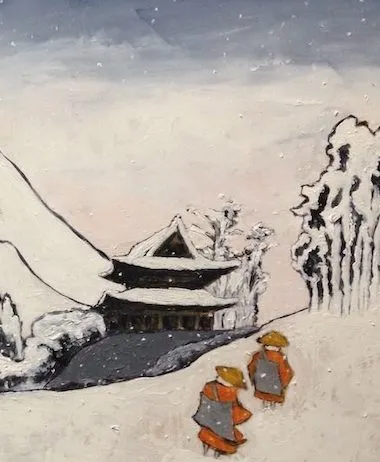
https://fineartamerica.com/featured/japanese-buddhist-holy-men-in-the-deep-winter-sawako-utsumi.html Japanese Buddhist Holy Men in the Deep Winter

Modern Tokyo News is part of the Modern Tokyo Times group
http://moderntokyotimes.com Modern Tokyo Times
http://sawakoart.com – Sawako Utsumi’s website and Modern Tokyo Times artist
https://moderntokyonews.com Modern Tokyo News
PLEASE JOIN ON FACEBOOK
http://facebook.com/moderntokyotimes