America Captures President Maduro of Venezuela: Democracy Needed
Noriko Watanabe and Lee Jay Walker
Modern Tokyo Times
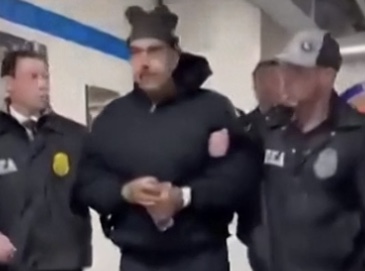
President Nicolás Maduro of Venezuela has been captured by the security forces of the United States. This humiliating denouement for a once-entrenched strongman almost certainly signals many years behind bars. His fall is ignominious, abrupt, and historically seismic.
Yet even as Maduro’s most ardent supporters denounce America’s action as an assault on Venezuelan democracy, a harsher truth remains unavoidable: Maduro governed through corruption, cronyism, repression, and fear. His rule hollowed out institutions, weaponised the judiciary, and impoverished a once-prosperous nation. On these points, there is no serious dispute.
However, moral clarity about Maduro’s crimes does not confer a blank cheque on Washington.
It is incumbent upon President Donald Trump to rein in his rhetoric concerning Venezuela’s natural resources. Failure to do so risks replacing Maduro’s corrupt patronage networks with the unmistakable language—and logic—of colonial entitlement. Venezuela must not be forced to trade domestic authoritarianism for external exploitation. America must put the Venezuelan people first, not American corporate or strategic interests.
The trajectory toward confrontation was clear months ago. In late November 2025, Trump dramatically declared Venezuelan airspace closed, issuing sweeping warnings to “Airlines, Pilots, Drug Dealers, and Human Traffickers.”
The language was deliberately theatrical and conspicuously vague. It displaced diplomacy with spectacle, constructing a narrative of omnipresent external threats emanating from Venezuela—one that primed domestic audiences for escalation rather than negotiation.
Against this backdrop, Maduro’s capture seemed increasingly inevitable—despite the existence of far more brutal and repressive leaders elsewhere who remain untouched. Selective enforcement is never morally neutral. It invites the unavoidable question: how do Venezuela’s internal legal and political failures justify direct American intervention against its head of state?
Yes, Venezuela’s record is grim. Due-process violations are systemic. Courts routinely rubber-stamp executive power. A United Nations Human Rights Council fact-finding mission has documented these abuses in damning detail. But documentation is not authorization, and exposure is not endorsement of military action. The leap from condemnation to capture is a dangerous one.
As The Guardian reported: “The US attacked Venezuela and captured its long-serving president Nicolás Maduro on Saturday, with Donald Trump promising to put the country under American control for now, even as Venezuelan officials vowed defiance.”
Trump declared: “We will run the country until such time as we can do a safe, proper and judicious transition.”
Yet it was his subsequent remarks that stripped away any remaining pretence of altruism. Trump openly stated that Venezuela’s oil infrastructure would serve American interests in the short term while the country remains under Washington’s control. This framing is profoundly troubling. Democracy belongs to the Venezuelan people alone—and so do their natural resources. Any arrangement that suggests otherwise fatally undermines the moral case for intervention.
Trump went further still: “We’re going to have our very large US oil companies, the biggest anywhere in the world, go in, spend billions of dollars, fix the badly broken infrastructure, the oil infrastructure, and start making money for the country—and we are ready to stage a second and much larger attack if we need to do so.”
Such statements openly mock the so-called “rules-based international order” that the G7 and European Union invoke against the Russian Federation.
Principles cannot be selectively applied. One cannot condemn resource-driven aggression in Eastern Europe while normalising it in Latin America. Sovereignty, if it means anything at all, must be universal.
Irrespective of Maduro’s corruption and misrule, it is incumbent upon all nations to determine their own political destiny. Even in the worst-case scenario of external involvement—outside of recognised geopolitical wars—the seizure of natural resources and the temporary commandeering of political authority sets a deeply dangerous precedent.
Venezuelan Vice President Delcy Rodríguez captured this defiance succinctly, declaring that Venezuela “will never again be anyone’s colony—neither of old empires, nor of new empires, nor of empires in decline.”
She denounced America’s actions as an “unprecedented military aggression” aimed squarely at the “seizure of our energy, mineral and natural resources.”
Venezuela does indeed need democracy—but not democracy delivered through coercion, extraction, and threats of further bombardment. What is required is a genuine reset: one that rejects Maduro’s internal corruption while also repudiating the colonial instincts embedded in Trump’s words and actions.
Swapping one form of domination for another is not liberation. It is merely the recycling of injustice under a different flag.

Modern Tokyo News is part of the Modern Tokyo Times group
http://moderntokyotimes.com Modern Tokyo Times – International News and Japan News
http://sawakoart.com – Sawako Utsumi’s website and Modern Tokyo Times artist
https://moderntokyonews.com Modern Tokyo News – Tokyo News and International News
PLEASE JOIN ON TWITTER
https://twitter.com/MTT_News Modern Tokyo Times
PLEASE JOIN ON FACEBOOK