
Colombia Earthquake Deaths set to Mount
Kanako Mita and Sawako Utsumi
Modern Tokyo Times
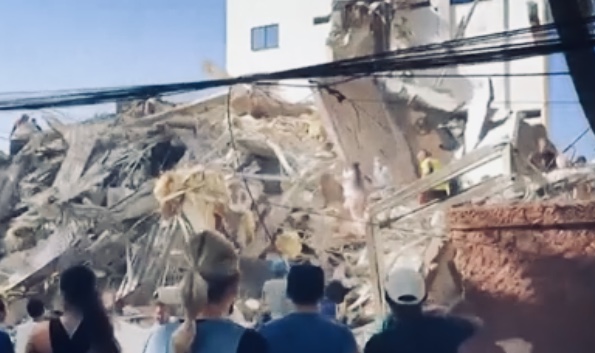
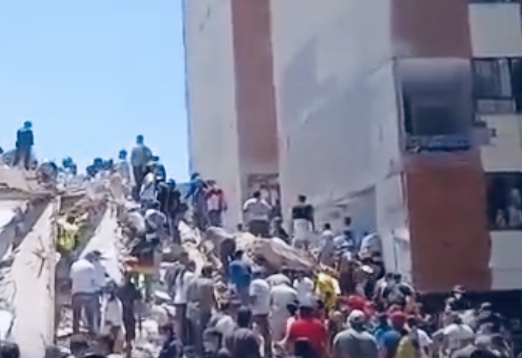
Colombia has scarcely had time to witness the inauguration of its new president, Abelardo de la Espriella, before the nation was plunged into a devastating humanitarian emergency. Only days into his presidency, a powerful 7.4-magnitude earthquake ripped through western Colombia, killing at least 132 people, injuring more than 570, and leaving a vast trail of destruction across several departments. With rescue operations still unfolding, the human toll could yet rise.
The earthquake struck at 07:34 local time on August 10, with its epicenter near San José del Palmar in Chocó, approximately 103 kilometres beneath the surface. Its force was felt across an enormous swathe of Colombia, while buildings collapsed, roads were damaged and emergency services struggled to reach some of the worst-affected communities.
The BBC reported: “The magnitude 7.4 quake struck at 07:34 (12:34 GMT) at a depth of 103km (64 miles) in Chocó province.”
The tremor was felt across hundreds of miles, transforming what should have been the opening days of a new political administration into a national crisis.
Pereira, in Colombia’s coffee-growing heartland, has suffered particularly severe loss of life, while devastation has also struck Cali, Manizales, Quibdó, Armenia, Chocó and parts of Valle del Cauca. More than 1,600 buildings have reportedly been damaged, with dozens completely collapsing. Remote communities in Chocó have proven especially difficult to assess because damaged infrastructure and disrupted communications are complicating the emergency response.
Remarkably, despite extensive damage around the epicentral area, no deaths have initially been reported in San José del Palmar itself. Yet the absence of fatalities there provides little comfort amid the wider devastation. The full picture will only emerge as rescue teams reach isolated communities, inspect damaged structures and account for those still missing.
President de la Espriella has declared a national state of emergency, seeking to mobilise the country’s resources rapidly as Colombia confronts its most powerful earthquake of the twenty-first century.
The president stated: “The national government has all of its capabilities deployed to protect lives, assist affected communities and deliver aid wherever it is needed.”
He added: “Colombia has a president whose heart aches for his people and who will do everything in his power to help them in the most difficult moments.”
Such words now face their greatest test: turning presidential promises into immediate assistance for families trapped beneath rubble, people who have lost their homes and communities struggling without normal infrastructure.
The response is equally urgent in Cali, one of Colombia’s largest cities. Mayor Alejandro Eder warned residents: “Right now, we are trying to map out what has happened, firstly to protect lives and secondly to be able to push ahead with any kind of rescue that might be necessary.”
He issued a stark warning to residents whose buildings may have been compromised: “If you do not feel safe, if you see very large cracks, please leave the building.”
The Guardian reported that de la Espriella visited Quibdó and promised rent subsidies for people who had lost their homes before travelling to Cali. Authorities in Cali, Armenia and Manizales also introduced curfews amid concerns about looting, while additional police and military personnel were deployed. The president subsequently promised another 1,000 security personnel for Cali.
Yet Colombia’s tragedy cannot be viewed in isolation.
Only weeks earlier, Venezuela was devastated by twin earthquakes measuring 7.2 and 7.5, which struck within seconds of one another on June 24. The catastrophe has since claimed more than 6,000 lives, according to the latest reported Venezuelan figures, while enormous numbers of homes and vital infrastructure have been damaged.
The geographical proximity and extraordinary timing of these disasters are deeply unsettling. Two neighbouring South American nations have endured catastrophic seismic shocks within a matter of weeks, leaving thousands dead and countless families displaced.
For Colombia, however, the immediate priority is painfully simple: save lives.
Behind every statistic is a family waiting for news, a parent searching for a child, a household suddenly without a home and a community confronting the terrifying uncertainty that follows a major earthquake.
The rubble can eventually be cleared. Roads can eventually be rebuilt. Buildings can eventually be reconstructed.
But the lives lost cannot be restored.
As Colombia begins the arduous rescue and recovery process, the nation now faces not merely a natural disaster but a profound test of national solidarity, governmental capacity and humanitarian resolve. The new administration has inherited a crisis at the very beginning of its political journey.
For the people of Colombia, politics can wait.
The search for survivors cannot.
https://moderntokyonews.com/category/south-america Past SOUTH AMERICA articles via MODERN TOKYO NEWS
MODERN TOKYO TIMES – MODERN TOKYO NEWS – please check https://moderntokyonews.com
Please check Modern Tokyo News at https://moderntokyonews.com for articles going back over 12 years. Sadly, Modern Tokyo Times got hacked and lost 14 years of articles…

Modern Tokyo News is part of the Modern Tokyo Times group
http://moderntokyotimes.com Modern Tokyo Times
http://sawakoart.com – Sawako Utsumi’s website and Modern Tokyo Times artist
https://moderntokyonews.com Modern Tokyo News
PLEASE JOIN ON TWITTER
https://twitter.com/MTT_News Modern Tokyo Times
PLEASE JOIN ON FACEBOOK
http://facebook.com/moderntokyotimes