
President of Colombia to be Supported by America (Right Wing Geopolitical Swing)
Noriko Watanabe, Hiroshi Saito, and Lee Jay Walker
Modern Tokyo Times
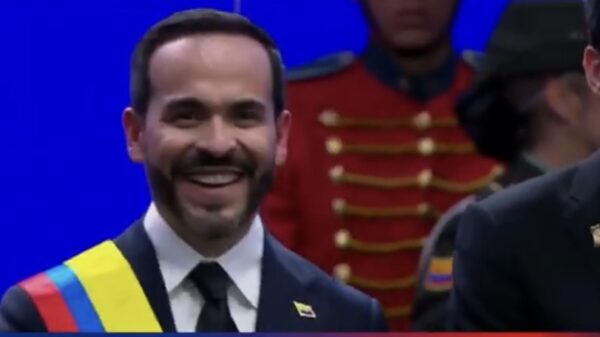
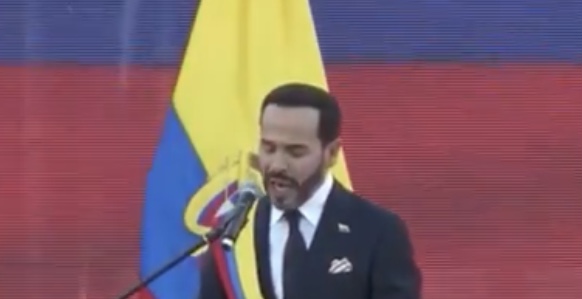
Colombia has entered a new political and geopolitical chapter following the inauguration of President Abelardo De La Espriella, whose government represents a decisive shift away from the left-wing administration of Gustavo Petro and toward a markedly closer strategic relationship with Washington.
De La Espriella was sworn in on August 7 in Cali, rather than Bogotá, in a powerful symbolic statement about security and the restoration of state authority in one of Colombia’s most troubled regions. The move comes as his administration confronts narcotics trafficking, expanding armed groups, illegal mining, economic stagnation and persistent territorial insecurity. The United States has already signalled the importance it attaches to the new relationship, announcing plans for $1 billion in security assistance to Colombia.
The geopolitical implications extend well beyond Colombia’s borders. De La Espriella is openly aligning Bogotá with President Donald Trump’s regional security agenda, including the “Shield of the Americas”, a U.S.-backed initiative designed to strengthen cooperation against drug trafficking and organised crime. Colombia’s participation places one of Latin America’s most strategically important states much closer to Washington’s emerging security architecture in the Western Hemisphere.
Trump had endorsed De La Espriella before the election, and subsequently predicted a “much better relationship” between Washington and Bogotá. The statement is particularly significant given the strained relationship between Trump and outgoing President Gustavo Petro.
De La Espriella has made his own intentions unmistakable. Addressing the Colombian people, he declared: “I have come to close a long chapter of national resignation and, together with the people, embark on the most profound transformation of our destiny.”
He continued: “I send a firm message to the Colombian people: the time has come to restore order, authority and freedom.”
That message was reinforced by the location of his inauguration. As the BBC reported, “De la Espriella chose to take the oath of office not in Colombia’s capital, Bogotá, but in the volatile city of Cali, in the west. The change was intended to signal a tough approach to illegal armed groups operating in the region.”
Security is therefore not simply a domestic policy priority for the new administration; it is becoming the foundation of Colombia’s renewed relationship with the United States.
De La Espriella has explicitly rejected the continuation of negotiations with armed organizations, declaring: “Members of criminal gangs and narco-terrorist groups have two choices: submit to the rule of law or face the determined response of the Colombian state and its security forces.”
He has argued that the possibilities for further compromise have been “completely exhausted.” Such rhetoric marks a profound departure from Petro’s “Total Peace” strategy and raises the possibility of a renewed military confrontation with armed organisations that continue to operate across large parts of the country.
The challenge is formidable. Colombia’s southwest remains contested by dissident factions of the former FARC, while the ELN and Clan del Golfo also maintain significant influence. As Al Jazeera has noted, the region remains a major arena of competition between armed groups and criminal organisations. This means that Bogotá’s struggle is simultaneously a counter-insurgency campaign, a war against organised crime and a battle for territorial sovereignty.
Economics is the second major pillar of De La Espriella’s agenda. Like Argentina’s Javier Milei, he seeks to reduce the size and cost of the state, arguing that excessive bureaucracy and public expenditure are constraining Colombia’s economic potential. His government has proposed reducing the state by as much as 30% to 40%, freezing public spending, reforming taxation and attracting greater private investment. At the same time, he intends to revive Colombia’s oil and gas industries, including exploration and what he describes as responsible and sustainable fracking.
This economic strategy is also geopolitical. Colombia possesses considerable strategic importance because of its energy resources, geographical position and access to both the Caribbean and Pacific. A more market-oriented Bogotá, closely aligned with Washington, could therefore become an increasingly important economic and strategic partner for the United States at a time when Washington is seeking to reinforce its influence across Latin America.
The regional context is equally important. De La Espriella’s victory forms part of a broader rightward movement across Latin America. The political pendulum has moved sharply in several countries as voters increasingly cite insecurity, organised crime, weak economic performance and distrust of established political structures. Reuters similarly identifies Colombia’s election as part of this broader regional shift.
COLOMBIA REMAINS DEEPLY DIVIDED
The country’s political fault lines remain substantial, particularly between supporters of the new conservative government and those aligned with Petro’s left-wing movement. There are also profound regional, social and ethnic divisions, including long-standing tensions involving Indigenous communities and marginalised rural populations. Consequently, the challenge facing De La Espriella is not merely defeating armed groups; it is extending legitimate state authority without deepening the political and social fractures that have historically fuelled Colombia’s internal conflict.
For Washington, however, the strategic calculation is considerably clearer. A Colombia firmly aligned with the Trump administration provides the United States with a major regional partner in the fight against narcotics, criminal organisations and armed groups. The proposed $1 billion security package demonstrates that Washington is prepared to translate political alignment into substantial material support.
De La Espriella’s declaration that Colombia will enter the “Shield of the Americas” consequently carries significance beyond symbolism. It signals the emergence of a closer U.S.–Colombian security partnership and potentially a new phase in Washington’s wider effort to construct a hemispheric coalition against transnational criminal organisations.
The central question now is whether De La Espriella can convert this powerful combination of political mandate, American support, security policy and economic reform into lasting stability.
Colombia has fought narcotics, insurgency and organised crime for decades. The new administration is promising something different: a smaller state, a harder security policy and a much closer alignment with Washington.
Whether this produces greater national stability — or intensifies Colombia’s already profound internal divisions — will be one of the most consequential tests for the country and for the evolving geopolitical balance of Latin America.
https://moderntokyonews.com/category/south-america Past SOUTH AMERICA articles via MODERN TOKYO NEWS
MODERN TOKYO TIMES – MODERN TOKYO NEWS – please check https://moderntokyonews.com
Please check Modern Tokyo News at https://moderntokyonews.com for articles going back over 12 years. Sadly, Modern Tokyo Times got hacked and lost 14 years of articles…

Modern Tokyo News is part of the Modern Tokyo Times group
http://moderntokyotimes.com Modern Tokyo Times
http://sawakoart.com – Sawako Utsumi’s website and Modern Tokyo Times artist
https://moderntokyonews.com Modern Tokyo News
PLEASE JOIN ON TWITTER
https://twitter.com/MTT_News Modern Tokyo Times
PLEASE JOIN ON FACEBOOK
http://facebook.com/moderntokyotimes