
Colombia Earthquake – Many are Sill Missing
Kanako Mita, Michiyo Tanabe, and Hiroshi Saito
Modern Tokyo Times
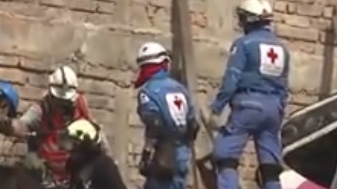
Colombia had barely witnessed the inauguration of its new president, Abelardo de la Espriella, before the nation was plunged into a devastating humanitarian emergency. Only days into his presidency, a powerful 7.4-magnitude earthquake tore through western Colombia, leaving a vast trail of death, destruction and human suffering in its wake.
The earthquake struck at 07:34 local time on August 10, with its epicenter near San José del Palmar in the Chocó region, at a depth of approximately 107 kilometres. The enormous force of the tremor reverberated across a vast swathe of Colombia, collapsing buildings, damaging roads and disrupting vital infrastructure while emergency services struggled to reach some of the most isolated communities.
The human toll has risen with horrifying speed. At least 281 people have died, more than 3,900 have been injured and 379 people remain missing, according to the latest reporting. With rescue teams still searching collapsed structures and remote communities remaining difficult to access, the final death toll may yet rise.
The earthquake struck with particular ferocity across the coffee-growing heartland and western cities. Pereira and Calihave suffered some of the greatest losses of life, while Manizales, Quibdó, Armenia, Chocó and parts of Valle del Cauca have also endured severe destruction. More than 1,600 buildings were initially reported damaged, while dozens collapsed completely. Subsequent assessments indicate that the overall scale of destruction is considerably greater, with thousands of homes destroyed and tens of thousands of families affected.
The plight of communities in Chocó is particularly distressing. The region surrounding the epicenter contains some of Colombia’s most remote and vulnerable communities, including Indigenous populations. Damaged infrastructure, disrupted communications and difficult terrain have made it exceptionally challenging for rescue teams and humanitarian agencies to establish the full extent of the devastation.
The Guardian has drawn a striking comparison with the recent earthquakes in neighbouring Venezuela, observing that Colombia’s response has so far appeared more organised, proactive and transparent. Such a contrast is significant because the effectiveness of the state during the first hours and days of a catastrophe can mean the difference between life and death for people trapped beneath rubble.
The catastrophe has consequently become the first great test of President de la Espriella’s administration. Having only just assumed office, the new president has been confronted with a national emergency demanding enormous resources, rapid coordination and a response extending far beyond the political sphere. His government has moved to mobilise assistance and establish mechanisms for reconstruction as Colombia begins confronting the enormous economic and humanitarian consequences of the disaster.
Remarkably, despite the devastation around the epicentral region, no deaths were initially reported in San José del Palmar itself. Yet such a development offers little reassurance while rescue teams continue attempting to reach isolated settlements and establish contact with communities cut off from the outside world.
More than 160 aftershocks have followed the initial earthquake, adding another layer of fear and danger for survivors and rescue workers. Damaged buildings remain hazardous, while disrupted electricity, communications and essential services have complicated efforts to provide immediate assistance.
Colombia’s tragedy also carries a disturbing regional dimension. Only weeks earlier, neighbouring Venezuela was struck by two devastating earthquakes, measuring 7.2 and 7.5, which occurred within seconds of one another on June 24. Venezuelan authorities subsequently reported a death toll exceeding 6,000. The geographical proximity and extraordinary timing of these disasters have left South America confronting an unsettling sequence of seismic catastrophes.
For Colombia, however, the immediate concern is not geopolitics or political rivalry. It is the desperate search for human beings beneath concrete and twisted metal.
Families continue waiting for news of loved ones. Survivors face the loss of homes, livelihoods and possessions. Remote communities confront the additional burden of isolation. Rescue workers continue entering unstable structures in the hope of finding life where others fear only death.
The earthquake has therefore become much more than a natural disaster. It is a profound test of national solidarity, governmental capacity and humanitarian resolve. President de la Espriella’s administration has inherited a crisis at the very beginning of its political journey, while Colombia’s people are being forced to confront grief on a scale that transcends political divisions.
For the people of Colombia, politics can wait.
Human life cannot.
https://moderntokyonews.com/category/south-america Past SOUTH AMERICA articles via MODERN TOKYO NEWS
MODERN TOKYO TIMES – MODERN TOKYO NEWS – please check https://moderntokyonews.com
Please check Modern Tokyo News at https://moderntokyonews.com for articles going back over 12 years. Sadly, Modern Tokyo Times got hacked and lost 14 years of articles…

Modern Tokyo News is part of the Modern Tokyo Times group
http://moderntokyotimes.com Modern Tokyo Times
http://sawakoart.com – Sawako Utsumi’s website and Modern Tokyo Times artist
https://moderntokyonews.com Modern Tokyo News
PLEASE JOIN ON TWITTER
https://twitter.com/MTT_News Modern Tokyo Times
PLEASE JOIN ON FACEBOOK
http://facebook.com/moderntokyotimes