Japanese Art and Henmi Takashi
Lee Jay Walker
Modern Tokyo Times
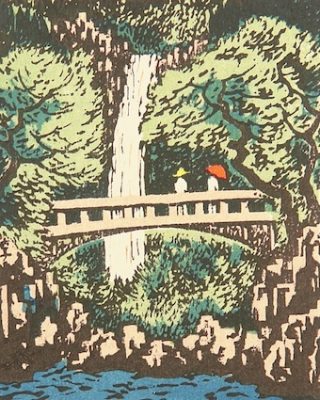
Henmi Takashi was born in 1895 in Wakayama, a corner of Kansai where mountains, temples, and memory breathe together. This was not merely a place of birth—it was a cultural cradle shaped by the spiritual gravity of Kōyasan, the ancient refinement of Kyoto and Nara, and the brooding beauty of Negoro-ji. These landscapes, steeped in ritual and quiet endurance, left an indelible trace on Henmi’s inner world long before he ever touched a printing block.
Though he later journeyed to Tokyo, where artistic circles and modern ideas converged, Henmi never severed himself from the countryside of his youth. His prints—like the one before us—carry the soft ache of remembrance. They do not shout with metropolitan confidence; instead, they whisper with the intimacy of rural lanes, temple shadows, and weathered wooden houses. In them, Wakayama does not fade—it lingers, tender and unresolved.
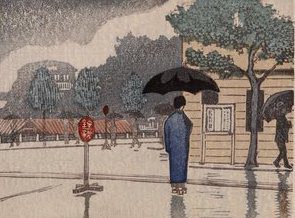
The British Museum captures Henmi’s place within Japan’s modern print renaissance with quiet precision: he was among the “good amateurs” who gave life to the Sōsaku Hanga movement before 1945. This was an art of personal vision rather than commercial replication, and Henmi’s gifts were nurtured by the generosity of the movement’s great spirits, especially Onchi Kōshirō and Hiratsuka Un’ichi. Their encouragement allowed artists like Henmi to transform simple tools—knife, block, paper—into vessels of emotion and thought.
Yet Henmi’s deepest inspiration came closer to home. Tanaka Kyōkichi (1892–1915), a poet and artist also born in Wakayama, became his guiding star. Tanaka had collaborated with Onchi on the literary and artistic magazine Tsukuhae, helping to shape the early voice of the Sōsaku Hanga world. But fate was cruel. Stricken with tuberculosis in 1913, Tanaka was forced to abandon Tokyo and return to Wakayama, where he died just two years later, barely twenty-three.

That early death cast a long shadow. In Henmi’s work, one can sense not only admiration for Tanaka, but mourning—a quiet vow to continue what his friend had barely begun. Thus, Henmi’s prints become more than images: they are acts of remembrance, gentle rebellions against time, and tender offerings to a lost voice from Wakayama.
In this way, Henmi Takashi stands not only as an artist of the Sōsaku Hanga movement, but as a guardian of fragile legacies—where countryside, friendship, and art are bound together in lines of ink and silence.

Modern Tokyo News is part of the Modern Tokyo Times group
http://moderntokyotimes.com Modern Tokyo Times – International News and Japan News
http://sawakoart.com – Sawako Utsumi and Modern Tokyo Times artist
https://moderntokyonews.com Modern Tokyo News – Tokyo News and International News
PLEASE JOIN ON TWITTER
https://twitter.com/MTT_News Modern Tokyo Times
PLEASE JOIN ON FACEBOOK