M23 Advances in the DRC: America Rebukes Rwanda (Burundi)
Noriko Watanabe, Michiyo Tanaka, and Lee Jay Walker
Modern Tokyo Times
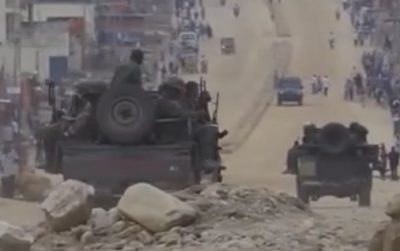
The government of the Democratic Republic of Congo (DRC), alongside the United States, is alarmed by the latest battlefield gains of the Congo River Alliance (AFC), spearheaded by the Tutsi-led M23 insurgency that is widely viewed as being backed by Rwanda. Consequently, fragile peace efforts are rapidly unravelling in the war-scarred east of the DRC—an area already crushed under the weight of multiple armed actors and chronic instability.
M23 forces have now entered Uvira, a strategically vital city in South Kivu province. This development casts a long shadow over the recent US-brokered peace agreement between the DRC and Rwanda, which is already showing signs of collapse. The symbolism is stark: diplomacy celebrated in capitals is being shredded on the ground.
The BBC reported, “Rebel forces have entered the last government-held city in mineral-rich eastern Democratic Republic of Congo, in an offensive that has forced thousands to flee across the border into Burundi, residents say.”
US Secretary of State Marco Rubio was unequivocal, declaring the M23 advance a “clear violation” of the peace deal—an assessment that underscores Washington’s growing frustration.
Uvira fell with alarming speed after Congolese government troops and allied Wazalendo militias fled in anticipation of the M23 assault. Once again, the rapid collapse of DRC defensive lines exposed the chronic weaknesses within the country’s armed forces, which have repeatedly retreated in the face of M23 offensives.
M23 justified its seizure of Uvira by claiming a duty to protect ethnic Tutsi communities in the region. Since the offensive began on December 2, approximately 200,000 people have reportedly been displaced. For those who remain, images from the city show a tense return to daily movement under the watchful presence of M23 fighters—a fragile calm masking deep uncertainty.
Burundi, meanwhile, has issued a sharp warning to Rwanda, stating that its “restraint has its limits.”
Several thousand Burundian troops are currently deployed in eastern DRC, propping up Congolese forces that are overstretched by a multitude of powerful insurgent groups.
The United States, the European Union, and several European governments have condemned Rwanda’s alleged role in facilitating the M23 advance, despite the recently signed peace agreement. Rwanda has countered by accusing Congolese and Burundian forces of bombing villages near its border—claims that further inflame an already volatile regional standoff.
President Félix Tshisekedi of the DRC framed the conflict in stark terms, stating: “This is a proxy war aimed at challenging our sovereignty over a highly strategic area, rich in critical minerals and economic potential that is crucial to the future of our nation.”
Jean-Pierre Lacroix, the United Nations’ head of peacekeeping, warned that the stakes are escalating dangerously. “In recent days, the new offensive launched by the AFC/M23 in South Kivu has revived the spectre of a regional conflagration with incalculable consequences.”
He added bluntly, “The conflict is becoming increasingly regionalised.”
France 24 reported that Uvira’s fall followed earlier M23 seizures of Goma and Bukavu in January and February, marking a sweeping territorial expansion that has reshaped eastern Congo’s military map.
Beyond M23, eastern DRC remains infested with a web of militias, each adding to the humanitarian catastrophe. Millions remain displaced, while ethnic and religious massacres continue unabated. Most recently, Christians were beheaded by Islamist militants linked to the Allied Democratic Forces—another grim reminder of the region’s layered violence.
AP News reports, “The fighting in Congo has connections with a decadeslong ethnic conflict. M23 says it is defending ethnic Tutsis in Congo. Rwanda has claimed the Tutsis are being persecuted by Hutus and former militias responsible for the 1994 genocide of 800,000 Tutsis and others in Rwanda. Many Hutus fled to Congo after the genocide and founded the Democratic Forces for the Liberation of Rwanda militia group. Rwanda says the group is ‘fully integrated’ into the Congolese military, which denies the charges.”
For peace efforts to have any credibility, regional actors and the wider international community must engage Rwanda seriously and acknowledge its historical and security concerns. At the same time, excluding M23 and the AFC from negotiations virtually guarantees failure. Agreements signed without the principal armed actors are little more than diplomatic theatre.
Only a comprehensive framework—one that includes the DRC, Rwanda, Burundi, and M23 itself—stands a chance of halting the spiral toward wider regional war. Without such engagement, eastern Congo’s suffering will deepen, and peace agreements will continue to collapse under the weight of reality.

Modern Tokyo News is part of the Modern Tokyo Times group
http://moderntokyotimes.com Modern Tokyo Times – International News and Japan News
http://sawakoart.com – Sawako Utsumi and her website – Modern Tokyo Times artist
https://moderntokyonews.com Modern Tokyo News – Tokyo News and International News
PLEASE JOIN ON TWITTER
https://twitter.com/MTT_News Modern Tokyo Times
PLEASE JOIN ON FACEBOOK