
Pakistan Tested by Saudi Arabia and Houthi Tensions – Iran Geopolitical Angle
Murad Makhmudov, Noriko Watanabe, and Lee Jay Walker
Modern Tokyo Times
Pakistan and Turkey have joined Saudi Arabia in the Mecca Joint Defence Agreement at a time when Riyadh faces renewed military pressure from the Iran-aligned Houthis in Yemen. The agreement, signed in August 2026, establishes a collective defence framework under which an armed attack against one member is to be regarded as an attack against all. This development reflects growing concerns among regional powers about security guarantees, shifting alliances and the reliability of traditional Western partners. Saudi Arabia has also faced attacks linked to the wider confrontation involving Iran, the United States and Israel, raising further questions about the future of Gulf security and the limits of existing defence arrangements.
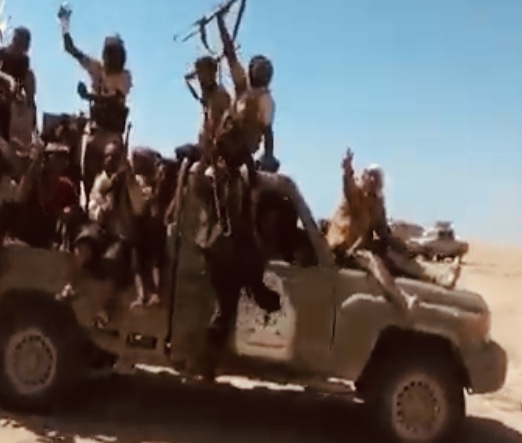
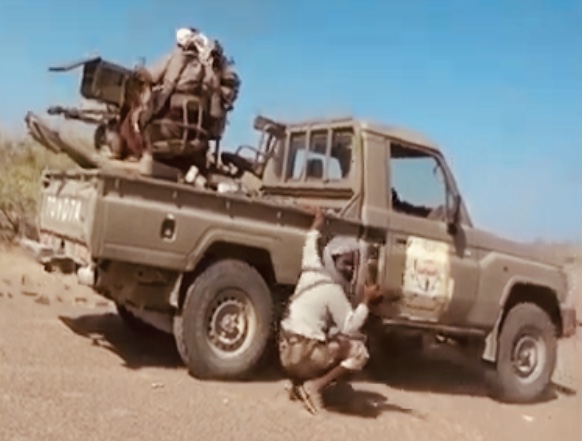
The immediate crisis in Yemen has intensified following major Houthi territorial gains along the Red Sea coast. In September, the movement seized the strategically important port city of Mokha (Mocha) and positions around the Bab el-Mandeb Strait, one of the world’s most important maritime chokepoints. These advances represented a serious setback for Yemen’s internationally recognized government and its regional supporters. However, the military picture is changing rapidly: government forces have since reported gains in counteroffensives along the western coast. The competing claims over territorial control underline the fluid nature of the conflict and the difficulty of translating battlefield advances into a lasting political settlement.
Saudi Arabia and its regional partners are particularly concerned about the strategic implications of these developments. The proximity of the Houthi-controlled coastline to vital international shipping routes gives the movement considerable leverage over regional trade and maritime security. At the same time, the wider confrontation involving Iran and the United States has disrupted traffic through the Strait of Hormuz, adding another layer of pressure to energy markets and international commerce. The prospect of simultaneous instability around Hormuz and Bab el-Mandeb raises the stakes for Saudi Arabia, whose economic ambitions depend on secure energy exports, reliable shipping routes and a measure of regional stability.
The military situation between Saudi Arabia and the Houthis has now deteriorated sharply. On October 8, Houthi missile attacks struck Riyadh’s King Khalid International Airport and a Saudia aircraft, killing three Saudi citizens and injuring others, according to reporting by Reuters and the Associated Press. Saudi-led forces responded with airstrikes against Houthi positions in Yemen. The escalation follows the collapse of the relative calm established by the UN-brokered truce of 2022 and the renewal of major fighting along Yemen’s western coast. Also, the Houthis have also threatened to make Saudi airspace a theatre of military operations.
Consequently, the confrontation is no longer simply a question of containing Houthi territorial advances inside Yemen; it now directly concerns the security of Saudi population centres, aviation infrastructure, energy facilities and regional maritime corridors. Nevertheless, the extent to which Riyadh will expand its operations, and whether the new defence agreement will translate into a wider military campaign, remain important unanswered questions. (Reuters, October 9, 2026; Associated Press, October 9, 2026.)
Since the escalation, Saudi Arabia has sought support from Pakistan, Turkey and other partners to strengthen its defensive capabilities and deter further Houthi attacks. Turkey has begun providing technical and defensive assistance, while Pakistan’s role must be understood within the broader framework of its longstanding military relationship with Riyadh. The distinction between defensive cooperation and direct participation in offensive operations is essential. Although the Mecca agreement strengthens the principle of collective security, it does not automatically settle how the three countries will respond to every development in Yemen. Each government must weigh its treaty commitments against its own strategic interests, domestic pressures and the risk of a wider regional war.
For Pakistan, the geopolitical calculations are especially delicate. The country shares a long and sensitive border with Iran, while continuing to face serious security challenges along its border with Afghanistan. Renewed military tensions with Kabul, alongside persistent instability in Balochistan, place additional demands on Pakistan’s security establishment. Any direct confrontation with Iran could therefore open another dangerous front at a time when Islamabad has compelling reasons to preserve strategic flexibility. Pakistan must also consider China’s strong economic and political relationships with both Iran and Pakistan. Beijing has an interest in regional stability, secure commercial routes and avoiding a confrontation that could undermine its wider economic and diplomatic interests.
Pakistan is also confronted by Sunni Islamist militant groups, separatist violence in Balochistan and continuing domestic political difficulties. These challenges limit its room for manoeuvre. Although its defence partnership with Saudi Arabia is substantial, Islamabad has strong reasons to avoid being drawn into an open-ended conflict with Iran. Tehran, for its part, must consider the costs of further regional escalation while already facing intense military and economic pressure. The possibility of a direct confrontation between Iran and Pakistan would carry consequences far beyond Yemen, potentially affecting border security, energy cooperation, regional trade and China’s diplomatic calculations.
The Houthis have warned Saudi Arabia that its airspace “will be the theatre of operations of our armed forces” if Riyadh intensifies its military pressure. Hence, subsequent attacks on the Saudi capital demonstrate the seriousness of the threat, although the movement’s statements should be distinguished from independently established military capabilities and intentions. Also, the use of missiles and drones against Saudi targets also illustrates how a conflict rooted in Yemen’s internal political and territorial divisions can acquire a much wider regional dimension.
Radio Free Europe/Radio Liberty (RFE/RL) provides important historical context: “Saudi Arabia launched a military intervention in Yemen in March 2015, after Houthi rebels seized the capital, Sanaa, and forced the internationally recognized government to flee the country.” The report also notes that the conflict is widely understood through the broader rivalry between Saudi Arabia and Iran, which support opposing sides. Major fighting subsided following a UN-brokered truce in 2022, but the underlying conflict remained unresolved and has now escalated again. The significance of this history is that military intervention, even when accompanied by substantial resources, has not produced a durable political settlement in Yemen.
Iran has also warned against renewed intervention. Esmaeil Baqaei, spokesperson for Iran’s Foreign Ministry, pointedly said that “new intervention” in Yemen would further complicate the situation. Tehran’s position reflects its opposition to another Saudi-led military campaign, although Iran’s relationship with the Houthis remains an important factor in the regional balance of power. Any renewed offensive risks reinforcing the perception that Yemen has become an arena for competing regional powers rather than a country whose internal political divisions require a negotiated settlement.
Until the latest escalation between Saudi Arabia and the Houthis, Pakistan’s leaders had sought to maintain a balanced position in the wider confrontation involving the United States and Iran. This approach became more difficult as attacks on Gulf states increased and the security interests of Saudi Arabia came under greater pressure. Islamabad must reconcile its commitments to Riyadh with the practical necessity of maintaining workable relations with Tehran. The Mecca agreement strengthens Pakistan’s obligations to its Saudi partner, but it does not eliminate the geographical realities or the strategic costs of confrontation with a neighbouring state.
Turkey’s participation adds another important dimension. As a NATO member with its own regional ambitions, Ankara brings diplomatic influence, military expertise and defence-industrial capabilities to the new arrangement. Its involvement also illustrates the desire among influential regional states to develop security mechanisms that are not entirely dependent on Washington. Nevertheless, Turkey must balance its commitment to collective defence against the risk of becoming entangled in a prolonged conflict whose consequences could extend across the Red Sea, the Gulf and the wider Middle East.
Overall, Pakistan is seeking to honour its commitments to Saudi Arabia while preserving sufficient diplomatic flexibility to avoid a direct confrontation with Iran. The Mecca Joint Defence Agreement provides a framework for collective deterrence, but its long-term significance will depend on how its members interpret their obligations as the crisis develops. For Riyadh, the immediate priority is to protect its territory, restore security along its southern approaches and prevent the Houthis from consolidating their position around strategically important maritime routes. For Islamabad and Ankara, the challenge is to provide meaningful support without allowing defensive cooperation to become an automatic commitment to an expanding war.
The wider danger is that military escalation could transform Yemen’s conflict into a more extensive regional confrontation, threatening international shipping, energy security and the stability of neighbouring states. Yet a purely military response cannot, by itself, resolve the political divisions that have sustained Yemen’s war. A combination of credible deterrence, regional diplomacy and negotiations involving appropriate intermediaries offers a route towards reducing the immediate danger.
For now, Pakistan’s central strategic challenge remains clear: to support Saudi Arabia, uphold its defence commitments and preserve cordial relations with Iran despite the geopolitical convulsions reshaping the region.
https://moderntokyonews.com/category/middle-east-west-asia Past articles about WEST ASIA (MIDDLE EAST) via MODERN TOKYO NEWS
MODERN TOKYO TIMES – MODERN TOKYO NEWS – please check https://moderntokyonews.com
Please check Modern Tokyo News at https://moderntokyonews.com for articles going back over 12 years. Sadly, Modern Tokyo Times got hacked and lost 14 years of articles…

Modern Tokyo News is part of the Modern Tokyo Times group
http://moderntokyotimes.com Modern Tokyo Times – International News and Japan News
http://sawakoart.com – Sawako Utsumi personal website and Modern Tokyo Times artist
https://moderntokyonews.com Modern Tokyo News – Tokyo News and International News
PLEASE JOIN ON FACEBOOK
https://www.facebook.com/moderntokyotimes