PM Keir Starmer Evades Responsibility for Epstein Crisis (Mandelson)
Kanako Mita, Sawako Utsumi, and Lee Jay Walker
Modern Tokyo Times
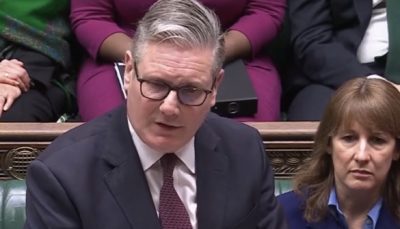
Prime Minister Keir Starmer now stands exposed, not by conjecture but by his own admission. He knowingly appointed Peter Mandelson as UK ambassador to the United States despite being fully aware of Mandelson’s long-term association with Jeffrey Epstein, one of the most notorious child sex offenders of the modern era. This is not an oversight. It is a conscious decision taken with full knowledge of the reputational, ethical, and moral implications.
Predictably, Starmer has since sought refuge in deflection. Once again, the Labour government has reached for foreign confrontation—escalating rhetoric against the Russian Federation over the war in Ukraine—as though warmongering abroad might bury accountability at home. Grand speeches overseas cannot erase moral failure in Downing Street.
Starmer has attempted to evade responsibility by claiming Mandelson “lied repeatedly” to his team. Yet this defence collapses entirely under Starmer’s own words. He has confirmed that official security vetting did flag Mandelson’s relationship with Epstein and that he personally knew of it before the appointment. A man cannot be deceived about what he already admits he knew. This was not a failure of process; it was a failure of judgment—and of conscience.
This pattern is not isolated. Starmer’s record already reveals a disturbing detachment from the suffering of vulnerable girls: his muted response to the Pakistani Muslim grooming gang scandals that devastated mainly native working-class communities; his reluctance to confront the well-documented harms associated with first-cousin marriage; and his willingness to release prisoners early under the banner of a prison crisis. Each episode reflects the same moral hollowness now laid bare by the Mandelson affair.
As reported by The Guardian, Starmer acknowledged for the first time that he knew of Mandelson’s longer-term relationship with Epstein before the appointment, while still attempting to shift blame onto Mandelson’s alleged dishonesty. That contradiction alone is damning.
It took opposition leader Kemi Badenoch to extract a straight answer. She asked whether official vetting had mentioned Mandelson’s ongoing relationship with Epstein. Starmer replied unequivocally: “Yes, it did.” That admission obliterates any remaining defence. He knew after Epstein’s crimes were exposed—and he acted anyway.
When Starmer attempted to block the release of documents by invoking “national security,” the move was swiftly condemned. Badenoch correctly dismissed it as “a red herring,” stating bluntly: “The national security issue was appointing Mandelson.”
Even Ed Davey asked whether Starmer had spared a thought for Epstein’s victims before handing Mandelson such power—an exchange reported by the BBC.
However much Starmer now writhes in retrospective regret, the reality remains stark: he knowingly elevated a man linked to Epstein into one of the most sensitive diplomatic roles in the British state. This decision mirrors a broader indifference—to grooming-gang victims, to exploited girls, and to communities repeatedly ignored when their suffering proves politically inconvenient.
Among the British public, few are surprised. The Mandelson scandal fits seamlessly into a wider pattern: a prime minister disconnected from native working-class pain (Pakistani Muslim grooming gang scandal), evasive when challenged, and instinctively protective of elite networks.
The implications extend far beyond Westminster. As the Epstein scandal continues to convulse institutions across America, France, the United Kingdom, and other nations, it is becoming ever clearer that many in positions of power—across politics, business, and even the British Royal Family—have long behaved as though they are above moral decency and the law.
Starmer did not merely make a bad call. He made a knowing one. And in doing so, he revealed precisely where his priorities lie—and, more importantly, where they do not.

Modern Tokyo News is part of the Modern Tokyo Times group
http://moderntokyotimes.com Modern Tokyo Times – International News and Japan News
http://sawakoart.com – Sawako Utsumi’s website and Modern Tokyo Times artist
https://moderntokyonews.com Modern Tokyo News – Tokyo News and International News
PLEASE JOIN ON TWITTER
https://twitter.com/MTT_News Modern Tokyo Times
PLEASE JOIN ON FACEBOOK