Prince Ōtsu (663–686) and Japanese Poetry: Sadness Awaits
Lee Jay Walker
Modern Tokyo Times
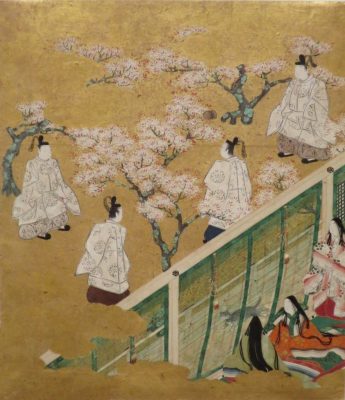
Prince Ōtsu (663–686) was born into a world steeped in elegance, ritual, poetry, and imperial splendor. The court of Asuka shimmered with silk and incense, music and calligraphy, and for a time his destiny seemed to glow with promise. He was not merely a prince, but a cultivated soul, shaped by refinement and a deep sensitivity to beauty. Everything suggested that a radiant future lay before him.
Yet, as in all courts where power and blood intertwine, shadows gathered. Beneath the lacquered surfaces of harmony stirred jealousy, ambition, and fear. In 686, when his father, Emperor Tenmu, died, the fragile architecture of trust collapsed. The political cosmos tilted, and Prince Ōtsu found himself suddenly standing in the path of ruthless intrigue. False accusations of treason were woven around him like a silken net, beautiful in appearance, deadly in purpose.

Knowing that death was no longer a distant possibility but an imminent certainty, Prince Ōtsu turned inward. In the final quiet before his execution, he wrote what is now one of Japan’s earliest surviving jisei — a farewell poem to life:
Today, taking my last sight of the mallards
Crying on the pond of Iware,
Must I vanish into the clouds!
These lines are not filled with protest or rage. Instead, they are luminous with stillness. The mallards cry upon the water; the pond reflects the sky; and the poet himself prepares to dissolve into the clouds. It is as if Ōtsu, standing on the threshold between being and nothingness, chooses not to grasp at the world, but to release it gently.
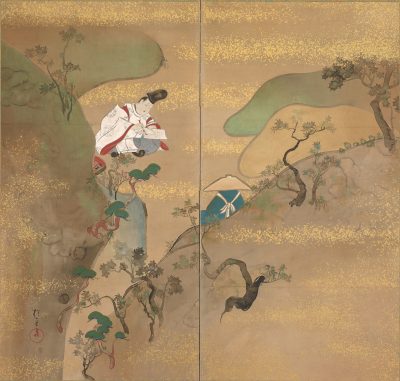
Outwardly, the poem breathes serenity. Yet beneath its surface must have churned a storm of human feeling — fear of oblivion, sorrow for what was lost, and the ache of leaving behind those he loved. He had a consort and a child; he knew too well how cruel the world of palace politics could be. His calm, therefore, is not naïve — it is the stillness of someone who has looked into the abyss and chosen dignity over despair.
His consort, unable to endure a world without him, took her own life almost immediately after Ōtsu was torn away. Two souls, bound by love and tragedy, passed into darkness together, victims of a court that prized power above compassion.

When Prince Ōtsu gazed upon the mallards for the last time, he was not merely watching birds upon a pond. He was seeing, in that fleeting image, everything he was about to lose — his child, his beloved, the courtly world of poetry and beauty, the fragile miracle of existence itself. The mallards became symbols of all that was living, moving, and free.
And so, as he vanished “into the clouds,” Prince Ōtsu left behind not bitterness, but a haunting, delicate trace — a poem that still ripples across the centuries like water disturbed by the wings of birds taking flight.
https://fineartamerica.com/featured/transcendental-skyline-sawako-utsumi.html
https://fineartamerica.com/featured/bleak-midwinter-and-the-buddhist-tree-of-life-sawako-utsumi.html

Modern Tokyo News is part of the Modern Tokyo Times group
http://moderntokyotimes.com Modern Tokyo Times
http://sawakoart.com – Sawako Utsumi and Modern Tokyo Times artist
https://moderntokyonews.com Modern Tokyo News – Tokyo News and International News
PLEASE JOIN ON TWITTER
https://twitter.com/MTT_News Modern Tokyo Times
PLEASE JOIN ON FACEBOOK