
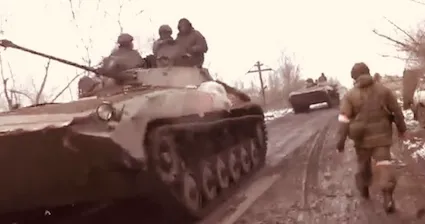
Russia’s Border Security Belt: Belgorod, Bryansk and Kursk (Ukraine Conflict)
Kanako Mita, Sawako Utsumi, and Lee Jay Walker
Modern Tokyo Times
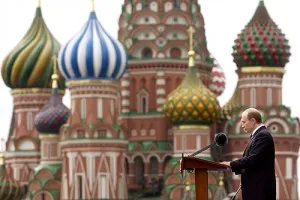
Russian President Vladimir Putin’s policy of establishing a security buffer along Russia’s western frontier has become an increasingly important geopolitical dimension of the Ukraine conflict. Belgorod, Bryansk, and Kursk are no longer merely border regions; from Moscow’s perspective, they constitute a strategic security belt that must be protected from Ukrainian military and drone attacks.
The origins of this policy became particularly pronounced following the Ukrainian incursion into Russia’s Kursk region. After Russian forces announced that Ukrainian troops had been driven from Kursk, Moscow increasingly emphasized the creation of a security zone inside adjoining Ukrainian territory, particularly in Sumy and Kharkiv.
Putin has repeatedly framed the policy around protecting civilians living close to the frontier. In 2025, he said that residents of settlements and villages had suffered from shelling and hostilities, accusing Ukrainian formations and foreign mercenaries of employing what he described as “terrorist methods.”
He further accused them of targeting areas “that have no military significance, such as civilian infrastructure, residential buildings, and non-combatants.”
More recently, Putin stated: “The establishment of a security buffer zone in the border areas of Ukraine’s Kharkiv, Sumy and Dnipropetrovsk regions is progressing as planned.”
Putin also issued a particularly direct warning concerning Ukrainian attacks deeper inside Russia: “The more such attempts the enemy makes, the larger the security buffer zone we will have to establish in the adjacent territory.”
The geography of this policy is particularly important. Belgorod Oblast borders Ukraine’s Sumy and Kharkiv oblasts; Kursk Oblast borders Sumy Oblast; while Bryansk Oblast borders Ukraine’s Chernihiv and Sumy oblasts. Consequently, Sumy occupies an unusually important position in Moscow’s security calculations because it lies opposite both Kursk and Bryansk, while its southern and southeastern geography connects directly to the wider security concerns surrounding Belgorod and Kharkiv.
The Russian concept of a buffer zone should therefore not be understood as one continuous belt facing Ukraine. Rather, it concerns several interconnected border sectors. Around Belgorod, the immediate Ukrainian-facing areas are Sumy and Kharkiv. Around Kursk, the principal Ukrainian-facing area is Sumy. Around Bryansk, the frontier runs principally against Chernihiv and Sumy.
The importance of Sumy is consequently difficult to overstate. The oblast sits immediately across the border from Russia’s Kursk and Bryansk regions and extends southward toward Kharkiv Oblast. Any Russian military presence in northern Sumy would therefore have direct implications for the security environment of both Kursk and Bryansk, while Russian operations around the northern Kharkiv frontier would have particular relevance for Belgorod.
The strategic logic from Moscow’s perspective is one of distance and depth. Instead of attempting to defend Belgorod, Kursk and Bryansk directly against attacks launched from immediately across the international border, Russia seeks to push the effective military frontier farther westward into adjoining Ukrainian territory.
Kremlin spokesman Dmitry Peskov has expressed this logic bluntly: “Given the aggressive nature of the Kyiv regime, in order to ensure the safety of our citizens, we will have to create a security zone, or buffer zone…It is being created, and it is being created systematically.”
This geography also explains why the Russian military focus on the northeastern Ukrainian border cannot be separated from the wider conflict. The objective is not simply control of isolated villages. It concerns the relationship between Sumy–Kursk, Sumy–Bryansk, and Kharkiv–Belgorod — three interconnected border sectors whose military developments can directly affect Russia’s frontier regions.
Accordingly, when Moscow speaks of a security buffer, the geopolitical meaning is clear: create greater strategic depth between Ukrainian forces and the Russian population centres of Belgorod, Kursk and Bryansk. The further the fighting can be pushed away from those Russian regions, the greater the security margin Moscow believes it possesses.
The significance has increased as Ukrainian long-range drone attacks have reached deeper into Russian territory, including attacks affecting energy infrastructure. For Moscow, attacks far beyond the immediate battlefield reinforce the argument that the existing international border does not provide sufficient security for Russia’s western regions.
For Ukraine and its European supporters, however, the same geography creates the opposite calculation. Any Russian advance into northern Sumy or northeastern Kharkiv potentially removes Ukrainian territory from which Russia’s border regions can be directly threatened, while simultaneously creating a deeper Russian military position inside Ukraine.
Thus, the map itself helps explain the dispute. Belgorod faces Sumy and Kharkiv; Kursk faces Sumy; Bryansk faces Sumy and Chernihiv. These are not interchangeable borderlands. Each has its own strategic relationship with Russia, but Sumy is the critical geographical link connecting several of Moscow’s border-security concerns.
The wider battlefield also matters. Moscow has claimed major territorial advances, including the full liberation of the Luhansk People’s Republic, while Kyiv has disputed aspects of Russia’s battlefield assessments. Such claims remain contested and should therefore be treated cautiously. Nevertheless, the broader strategic objective is increasingly visible: Russia wants to transform vulnerable borderlands into a deeper defensive perimeter.
For Moscow, this is also about deterrence. If Ukrainian forces can repeatedly strike across the international border, Russia has a strong incentive to move the point of military contact farther away from its own population centres. Putin’s increasingly forceful rhetoric reflects precisely this logic.
This is why Belgorod, Bryansk and Kursk should be viewed as more than three Russian regions on a map. They form part of the central security equation of the war. The struggle over neighbouring Ukrainian territories is, from Moscow’s perspective, directly connected to the protection of Russia’s western frontier.
Ultimately, a durable settlement will have to address this security dilemma rather than merely impose a temporary ceasefire. The question is not simply where troops stop fighting, but where the effective security frontier between Russia and Ukraine will ultimately lie.
The fundamental geopolitical reality is therefore stark: the closer the battlefield remains to Russia’s border, the greater Moscow’s incentive to establish strategic depth inside Ukraine.
Conversely, the deeper that Russian security belt extends, the harder it becomes for Kyiv and its European supporters to accept the resulting territorial reality. Without resolving this geographical-security dilemma, a ceasefire could merely postpone another confrontation.
However, in recent months, it appears that the Russian Federation is optimistic that the dynamics of the war is tilting firmly in the direction of Moscow (America is caught up in a complex geopolitical conflict with Iran).
https://moderntokyonews.com/?s=Russia Past RUSSIAN FEDERATION articles via MODERN TOKYO NEWS
MODERN TOKYO TIMES – MODERN TOKYO NEWS – please check https://moderntokyonews.com
Please check Modern Tokyo News at https://moderntokyonews.com for articles going back over 12 years. Sadly, Modern Tokyo Times got hacked and lost 14 years of articles…

Modern Tokyo News is part of the Modern Tokyo Times group
http://moderntokyotimes.com Modern Tokyo Times – International News and Japan News
http://sawakoart.com – Sawako Utsumi’s website and Modern Tokyo Times artist
https://moderntokyonews.com Modern Tokyo News – Tokyo News and International News
https://www.facebook.com/moderntokyotimes/ Facebook