Taiwan Military Package from America Valued at $10 Billion
Noriko Watanabe, Kanako Mita, and Lee Jay Walker
Modern Tokyo Times
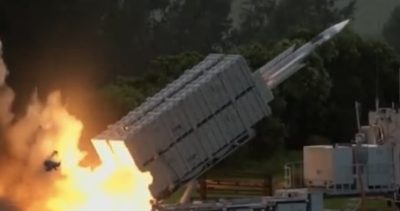
President Lai Ching-te of Taiwan has signaled a decisive escalation in the island’s military posture by approving a new $10 billion defense procurement from the United States, underscoring Taipei’s determination to prepare for a worst-case contingency involving China. This move is not symbolic—it is strategic, calculated, and rooted in a rapidly deteriorating regional security environment.
The announcement follows confirmation that Taiwan’s expanded defense budget now stands at $40 billion, a dramatic figure that aligns seamlessly with Washington’s insistence that Taiwan shoulder a greater share of its own defense burden. Unsurprisingly, the administration of U.S. President Donald Trump has welcomed Lai’s earlier pledge to raise defense spending to 5% of GDP, viewing it as tangible proof of Taiwan’s seriousness in deterring coercion.
According to AP News, the newly announced arms agreements encompass 82 HIMARS launch systems and 420 ATACMS missiles, mirroring the advanced strike capabilities supplied to Ukraine to blunt Russian aggression. The total value exceeds $4 billion. The package further includes 60 self-propelled howitzers and associated equipment, also valued at more than $4 billion, alongside drone systems exceeding $1 billion.
Additional purchases include Javelin and TOW anti-tank missile systems worth $700 million, significantly enhancing Taiwan’s battlefield flexibility and layered defense capabilities.
Taiwan’s Foreign Minister Lin Chia-lung praised the United States for its “long-term support for regional security and Taiwan’s self-defense capabilities,” a statement reflecting both gratitude and strategic alignment rather than mere diplomatic courtesy.
In November, President Lai warned bluntly that “China’s threats to Taiwan and the Indo-Pacific region are escalating.” He pointed to persistent military incursions, maritime gray-zone operations, and coordinated disinformation campaigns affecting Japan, the Philippines, and the Taiwan Strait, developments that are steadily eroding regional confidence and stability.
While China and Taiwan remain locked in fundamentally different geopolitical narratives, prolonged confrontation serves neither side. Escalating military expenditures and sharpening political rhetoric will not resolve the core dispute—yet they will empower external actors who benefit from sustained friction across the Taiwan Strait.
If Chinese leaders genuinely seek to undermine the strategic justification for AUKUS, the Quad, and broader containment architectures, the path forward lies not in coercion but in measured accommodation toward Taiwan. Persistent threats only harden the resolve of China’s rivals and reinforce the strategic agendas of Washington and Tokyo, particularly under their current leadership.
At the same time, hardline political forces within Taiwan must recognize that provocation accelerates the very instability they claim to resist. Deterrence without diplomacy is unsustainable.
A durable future requires realism on both sides: Taiwan engaging China with restraint and strategic maturity, and China responding with confidence rather than intimidation. Absent this balance, the region will continue drifting toward a security dilemma where arms accumulation replaces dialogue—and miscalculation becomes the greatest threat of all.

Modern Tokyo News is part of the Modern Tokyo Times group
http://moderntokyotimes.com Modern Tokyo Times – International News and Japan News
http://sawakoart.com – Sawako Utsumi’s website and Modern Tokyo Times artist
https://moderntokyonews.com Modern Tokyo News – Tokyo News and International News
PLEASE JOIN ON TWITTER
https://twitter.com/MTT_News Modern Tokyo Times
PLEASE JOIN ON FACEBOOK