
Hagiwara Hideo (1913–2007): Nature, Memory, and Hope in Post-War Japan
Lee Jay Walker
Modern Tokyo Times
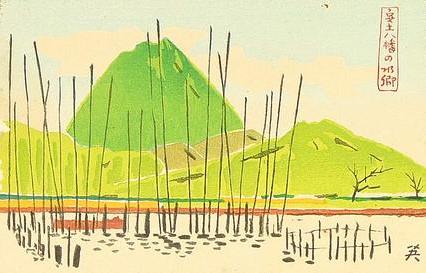
Hagiwara Hideo (1913–2007) was born during the early Taisho Period (1912–1926), a formative era when Japan was experiencing profound social, political, and cultural change. Accordingly, he came of age during the internal political convulsions of the 1930s, when nationalist and socialist movements competed amid growing instability. This turbulent atmosphere would ultimately contribute to the rise of militarism and a war on a scale that would leave an indelible mark on Japan.
Yet the three art pieces highlighted here were created in the late 1940s, during the fragile years following the devastation of the Second World War. Their visual beauty makes the contrast all the more striking. It is difficult to imagine the years of destruction and death that had so recently engulfed Japan, followed by widespread poverty and uncertainty, when looking at these serene and captivating works. Instead, nature appears to open another world: spacious, contemplative, and removed from the ruins of the immediate past.
The British Museum states, “He was conscripted in 1943 into the army, where his health was so badly affected that he was bedridden for three years from 1945.” Hagiwara had also lost his house, atelier, and most of his early works in the May 1945 Tokyo air raids. Yet, during his illness, he turned towards the study of creative woodblock printing. There is something deeply poignant in this artistic development. From personal loss, physical suffering, and the destruction of his earlier artistic world emerged a renewed engagement with the possibilities of the woodblock.
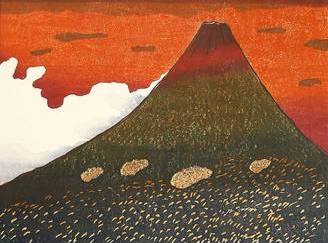
It is easy to understand why the landscapes of Hagiwara Hideo possess such an expansive presence when considering his birthplace of Yamanashi Prefecture. Nature occupies an almost spiritual dimension in his art. Mountains, trees, open spaces, and the changing atmosphere of the natural world become more than subjects to be represented; they provide a sense of distance from the human turmoil that had so recently shaped his life and country.
His father was a police officer who served in Korea and Manchuria, meaning that Hagiwara spent part of his childhood outside Japan. He returned to his homeland in 1929 to continue his education in Tokyo. Thus, his formative experiences extended across different geographical and cultural landscapes before his artistic identity developed fully in post-war Japan.
Perhaps this helps explain the distinctive feeling within his late-1940s works. They do not simply document a landscape; they seem to contemplate what remains after destruction. The devastation of war is largely absent, replaced by an artistic language in which nature commands the eye and quietness replaces turmoil. In this sense, Hagiwara’s art can be viewed as a gentle passage between memory and renewal.
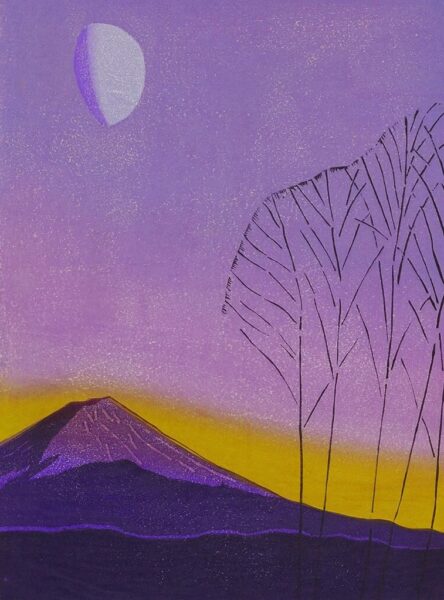
The world he depicted had changed profoundly, but nature continued. Trees remained, mountains endured, and the rhythms of the seasons offered a continuity that human conflict could not erase. His woodblock prints therefore possess a particular poignancy: behind their beauty lies the experience of a generation that had witnessed extraordinary suffering.
Ultimately, Hagiwara Hideo’s art from the late 1940s conveys something beyond aesthetic beauty. It suggests the possibility of renewal after catastrophe. Nature becomes a refuge from the uncertainties of history, while the spaciousness of his compositions allows the viewer to breathe beyond the confines of war, poverty, and destruction.
https://moderntokyonews.com/?s=Art Past articles about ART via MODERN TOKYO NEWS (Modern Tokyo Times group)
MODERN TOKYO TIMES – MODERN TOKYO NEWS – please check https://moderntokyonews.com
Please check Modern Tokyo News at https://moderntokyonews.com for articles going back over 12 years. Sadly, Modern Tokyo Times got hacked and lost 14 years of articles…

Modern Tokyo News is part of the Modern Tokyo Times group
http://moderntokyotimes.com Modern Tokyo Times – International News and Japan News
http://sawakoart.com – Sawako Utsumi and Modern Tokyo Times artist
https://moderntokyonews.com Modern Tokyo News – Tokyo News and International News
PLEASE JOIN ON FACEBOOK
https://www.facebook.com/moderntokyotimes