
Saudi Arabia: Houthi Airport Attack Raises Stakes for Regional Security
Noriko Watanabe, Murad Makhmudov, and Lee Jay Walker
Modern Tokyo Times
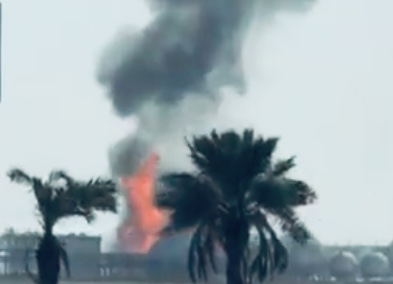
Saudi Arabia’s King Khalid International Airport in Riyadh has been struck again amid a sharp escalation in Houthi attacks originating from Yemen. According to reports, at least 12 people have been killed and more than 300 injured. The attack represents a serious escalation in the conflict, extending the immediate consequences of Yemen’s war into the heart of Saudi Arabia and raising further questions about regional deterrence, international security guarantees and the future of Gulf stability.
Individuals killed and injured reportedly come from several nations, underlining the international dimension of an attack against a major civilian aviation hub. Flights at King Khalid International Airport were suspended following the strike. Beyond the immediate human cost, the attack exposes the vulnerability of civilian infrastructure and international transport networks to missile and drone warfare. For Saudi Arabia, which is investing heavily in economic diversification and international connectivity, repeated attacks on its aviation infrastructure threaten both public confidence and wider economic ambitions.
Saudi Arabia’s coalition forces denounced the attack against civilians as a “war crime.” Irrespective of the competing narratives advanced by the parties to the wider conflict, attacks on civilians and civilian infrastructure raise fundamental questions under international humanitarian law. Civilian deaths can occur unintentionally during armed conflict, but this does not remove the obligation of all parties to distinguish between civilian populations and military objectives. If an airport is deliberately targeted without regard for civilian lives, the legal and humanitarian implications are particularly grave. The circumstances of the strike, including the intended target and the precautions taken, remain central to any definitive legal assessment.
United Nations Secretary-General António Guterres responded to the attack, stating that he was “deeply shocked” by the Houthi attacks. Guterres described the attack as a clear “violation of international law” and declared that the Houthis “must cease immediately.”
His response highlights the international community’s concern about the widening conflict and the danger of further attacks against civilian targets. The challenge for the United Nations, however, is to translate condemnation into meaningful diplomatic pressure and measures capable of reducing the immediate threat to civilians.
Saudi Arabia’s ruling monarchy is also likely to be concerned by the limits of direct American and British military involvement in defending the kingdom. The United Kingdom has a longstanding relationship with Saudi Arabia, encompassing defence cooperation, security interests and economic ties. Nevertheless, historical partnerships do not automatically guarantee the level of military assistance a country may expect during a rapidly escalating crisis. The present situation therefore raises questions about the changing role of Britain on the international stage, particularly regarding its ability to combine diplomatic influence, economic capacity and military commitments. For Riyadh, the central issue is whether established partners can provide sufficiently credible and sustained support when Saudi security comes under direct pressure.
US President Donald Trump has hinted at possible military strikes against the Houthis. He said: “We just found out about the recent attack, so we’ll make a decision. We move very quickly.”
His remarks leave open the possibility of greater American military involvement. However, a decision to strike Houthi positions would carry wider strategic implications, particularly given the existing confrontation involving Iran, the United States and Israel. Washington would need to consider not only the immediate objective of deterring further attacks against Saudi Arabia, but also the potential for retaliation against regional partners, shipping and other strategic infrastructure.
It remains to be seen how Pakistan and Turkey (Türkiye) will respond militarily, diplomatically or through additional defensive assistance. Both countries joined Saudi Arabia in the Makkah Joint Defence Agreement in August 2026, establishing a framework under which an armed attack against one member is to be regarded as an attack against all. The agreement reflects growing concern among regional powers about security guarantees, shifting alliances and the reliability of established external partners. It also signals an ambition to strengthen regional defence cooperation rather than depend entirely on traditional Western security relationships. The three governments have subsequently taken steps to institutionalise their cooperation, although the practical military consequences of the agreement will depend on the capabilities, commitments and decisions of its members.
Modern Tokyo Times recently reported: “The agreement, signed in August 2026, establishes a collective defence framework under which an armed attack against one member is to be regarded as an attack against all. This development reflects growing concerns among regional powers about security guarantees, shifting alliances and the reliability of traditional Western partners. Saudi Arabia has also faced attacks linked to the wider confrontation involving Iran, the United States and Israel, raising further questions about the future of Gulf security and the limits of existing defence arrangements.”
The significance of this agreement now faces a practical test. Pakistan has longstanding strategic and defence ties with Saudi Arabia, while Türkiye possesses an expanding defence industry and considerable regional military experience. Nevertheless, a collective defence commitment does not automatically determine the precise form of a military response. The three countries must weigh their respective national interests, operational capabilities and diplomatic relationships. Pakistan, in particular, has sought to maintain cordial relations with Iran despite its security partnership with Riyadh. This creates a delicate strategic balance, given Tehran’s support for the Houthi movement and the wider danger of the conflict spreading across the region.
The BBC reports that, since the collapse of the truce in July, “The Houthis announced a ‘maritime embargo’ against Saudi Arabia and began missile and drone attacks on Saudi airports, oil facilities and tankers in the Red Sea.”
The BBC continues: “They said they were retaliating against what they described as a years-long Saudi blockade and for an air strike on the airport in Yemen’s capital Sanaa, which is controlled by the Houthis.”
These statements illustrate the competing narratives surrounding the conflict. The Houthis present their actions as retaliation against Saudi military pressure and the longstanding restrictions affecting Yemen. Saudi Arabia and its partners, meanwhile, regard the attacks as a direct threat to their sovereignty, civilian populations and economic infrastructure. Understanding the stated motivations of the parties does not mean accepting attacks on civilians as legitimate. Rather, the opposing narratives demonstrate why military escalation cannot be separated from the political grievances, territorial disputes and regional rivalries that have sustained Yemen’s conflict.
The immediate crisis has intensified following major reported Houthi territorial gains along Yemen’s Red Sea coast. In September, the movement reportedly seized the strategically important port city of Mokha (Mocha) and positions around the Bab el-Mandeb Strait, one of the world’s most important maritime chokepoints. These advances threatened the position of Yemen’s internationally recognised government and its regional supporters. However, the military situation is changing rapidly, with subsequent reports of government-aligned forces making gains during counteroffensives along the western coast. Competing claims over territorial control underline the fluid nature of the conflict and the difficulty of converting battlefield advances into a durable political settlement.
For Saudi Arabia and its regional partners, the strategic implications extend far beyond Yemen’s borders. The proximity of Houthi-controlled territory to vital international shipping routes gives the movement considerable potential leverage over maritime commerce. Bab el-Mandeb connects the Red Sea to the Gulf of Aden and the wider Indian Ocean, making it essential to shipping moving between Europe and Asia through the Suez Canal. Sustained insecurity in this corridor could force commercial vessels to take longer alternative routes, increasing transport costs and adding pressure to international supply chains.
At the same time, the wider confrontation involving Iran and the United States has disrupted traffic through the Strait of Hormuz, adding another layer of uncertainty to energy markets and international commerce. Instability around both Hormuz and Bab el-Mandeb would create a particularly serious challenge for Saudi Arabia and other Gulf economies. Their prosperity depends not only on energy production, but also on reliable export routes, secure maritime infrastructure and investor confidence. The simultaneous disruption of two critical waterways could therefore transform a regional military confrontation into a much wider economic and geopolitical crisis.
The Houthis have warned Saudi Arabia that its airspace “will be the theatre of operations of our armed forces” if Riyadh intensifies its military pressure. Subsequent attacks on the Saudi capital demonstrate the seriousness of the threat, although public declarations must be distinguished from independently established military capabilities and intentions. The use of missiles and drones against Saudi targets also illustrates how a conflict rooted in Yemen’s internal political and territorial divisions can acquire a much wider regional dimension. Such weapons can place civilian infrastructure, energy installations and international transport networks at risk without requiring the attacking side to achieve conventional military superiority.
The latest attack could trigger a further escalation involving Saudi Arabia, the Houthis and their respective regional partners. Direct American intervention would add another dimension to an already dangerous confrontation, while any significant involvement by Pakistan or Turkey would test the practical meaning of the Makkah Joint Defence Agreement. The outcome would depend on the nature of the response, the objectives pursued and the willingness of the parties to avoid a cycle of retaliation. A broader conflict could threaten international shipping, energy security and the stability of neighbouring states, while increasing the danger to civilians already suffering from years of war in Yemen.
Yet a purely military response cannot, by itself, resolve the political divisions that have sustained Yemen’s conflict. Credible deterrence may be necessary to protect civilian populations and discourage further attacks, but it must be accompanied by regional diplomacy, humanitarian considerations and negotiations involving appropriate intermediaries. Any lasting settlement will need to address Yemen’s internal political fragmentation while reducing the scope for regional powers to use the country as an arena for wider strategic competition.
History repeatedly demonstrates how governments can underestimate the long-term consequences of decisions taken in the name of immediate security. Military action may appear to offer a quicker solution than difficult negotiations, particularly after a devastating attack. However, an initial exchange of strikes can develop into years of retaliation, wider regional involvement and immense human suffering. Soldiers and civilians alike pay the price, while economic insecurity and political fragmentation can endure long after the immediate fighting subsides.
For Saudi Arabia, Pakistan, Turkey, the United States and their regional counterparts, the challenge is therefore to establish credible security without allowing deterrence to become an open-ended cycle of escalation. The protection of civilians, the security of international shipping and the prevention of a wider regional war require more than military declarations. They demand strategic restraint, sustained diplomacy and a recognition that the short-term appeal of force can carry consequences lasting for generations.
https://moderntokyonews.com/category/middle-east-west-asia Past articles about WEST ASIA (MIDDLE EAST) via MODERN TOKYO NEWS
MODERN TOKYO TIMES – MODERN TOKYO NEWS – please check https://moderntokyonews.com
Please check Modern Tokyo News at https://moderntokyonews.com for articles going back over 12 years. Sadly, Modern Tokyo Times got hacked and lost 14 years of articles…

Modern Tokyo News is part of the Modern Tokyo Times group
http://moderntokyotimes.com Modern Tokyo Times – International News and Japan News
http://sawakoart.com – Sawako Utsumi personal website and Modern Tokyo Times artist
https://moderntokyonews.com Modern Tokyo News – Tokyo News and International News
PLEASE JOIN ON FACEBOOK
https://www.facebook.com/moderntokyotimes