
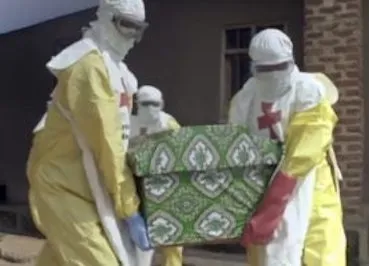
DRC Ebola Deaths reach 4,400
Michiyo Tanabe, Kanako Mita, and Sawako Utsumi
Modern Tokyo Times
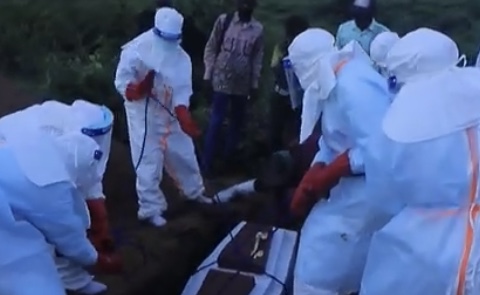
The ongoing Ebola crisis continues in the Democratic Republic of Congo (DRC), with deaths now reaching approximately 4,400 as of October 13, 2026, according to the European Centre for Disease Prevention and Control (ECDC). This is happening in one of the world’s most fragile humanitarian environments, where insecurity, weak institutions, and competing regional interests continue to undermine the response to deadly infectious diseases.
Accordingly, the DRC confronts the lethal convergence of epidemic disease, armed conflict involving ethnic, religious, regional, and political dimensions, hunger, and institutional breakdown. In the country’s troubled east, decades of ethnic, political, and religious violence have repeatedly shattered communities, displaced populations, weakened healthcare systems, and created conditions in which infectious diseases can spread with terrifying speed. The Ebola crisis has therefore added another layer to an already profound catastrophe in a nation battered by interconnected humanitarian, security, and political challenges.
The European Centre for Disease Prevention and Control reports: “As of 13 October 2026, the Democratic Republic of the Congo (DRC) reported a total of 9 144 confirmed cases, including 4 410 related deaths (from data up until 12 October). A total of 899 patients are hospitalised in isolation. On 12 October, 79 new confirmed cases and 11 deaths were reported. The 79 new cases have been reported from Ituri (40 cases), North Kivu (27 cases), and Haut-Uele (8 cases). Among the individuals who tested positive for Bundibugyo virus, 2 418 have recovered. In total, 77.6% of identified case contacts are under follow-up in the affected provinces.”
More than 4,400 people have reportedly lost their lives in the current outbreak, with little indication that the epidemic is approaching containment. Just as fresh hope emerges, further deaths and the spread of the virus into new areas threaten to reverse progress, with cases also reported in Kenya. The scale and speed of the outbreak underline an uncomfortable reality: Ebola does not require a vacuum of humanity to spread — it requires a vacuum of security, healthcare capacity, resources, and political stability.
The BBC reports: “There is currently no approved vaccine available for the Bundibugyo species that has caused the current epidemic but several are in development, including one based on technology used to develop the AstraZeneca Covid-19 vaccine.”
Lee Jay Walker, Modern Tokyo Times analyst, reports: “The absence of an approved vaccine for the Bundibugyo species presents an especially formidable challenge. In a region already struggling with insecurity and limited medical infrastructure, the ability to rapidly identify cases, trace contacts, isolate patients, protect healthcare workers, and sustain public-health surveillance is indispensable. Every weakness in that chain potentially becomes another opening for the virus.”
Thus, the ongoing Ebola emergency cannot be separated from the wider security crisis and the geopolitical interests of external powers, notably Rwanda and, to a lesser extent, Uganda. Regional rivalries, porous borders, and the movement of people through conflict-affected territories complicate efforts to contain the outbreak. Consequently, the epidemic is not simply a domestic public-health emergency; it also exposes the wider regional consequences of prolonged instability in eastern Congo.
Tensions with neighbouring Rwanda remain acute amid persistent allegations that Kigali continues to support the Tutsi-led M23 insurgency fighting the Congolese state — allegations Rwanda has repeatedly denied. Meanwhile, eastern Congo remains fragmented by a complex constellation of ethnic, political, religious, and armed groups, alongside wider regional rivalries and competing national interests. These overlapping conflicts place additional pressure on the Congolese authorities and humanitarian organisations attempting to maintain essential services and protect vulnerable communities.
Of the 4,400 deaths already recorded, the vast majority have reportedly occurred in Ituri province. With 3,177 deaths reported in the province, where war, numerous armed groups, and regional rivalries have compounded the humanitarian emergency, 28 out of 36 health zones have reportedly recorded Ebola deaths. The death toll in North Kivu is currently reported at 1,102 according to the European Centre for Disease Prevention and Control. These provincial figures require reconciliation with the overall national total before publication.
In early October, Kenya announced its first case. Authorities traced the movements of an individual who re-entered Kenya after leaving the DRC and passing through Uganda. Uganda had also reported cases earlier this year linked to the outbreak in the DRC. However, following strict measures, no new cases have reportedly been recorded there since the initial cases emerged in May. These developments underline the importance of cross-border cooperation, timely information-sharing, and coordinated surveillance, particularly when national borders intersect with established routes of movement across the Great Lakes region.
AP News reports: “The outbreak unfolding in one of Congo’s most vulnerable regions is the fastest-growing Ebola outbreak ever…”
The warning from Doctors Without Borders (MSF) is equally stark. Trish Newport, MSF’s Emergency Coordinator, said: “We rapidly need to scale up to be able to prevent more deaths from happening, more families and communities from being impacted.”
Those words capture the urgency of the moment. Ebola cannot be defeated through medical intervention alone when the very infrastructure required to deliver that intervention is being weakened by conflict, poverty, hunger, and political instability. The effectiveness of international assistance also depends on access to affected communities, the security of medical personnel, and the ability of humanitarian organisations to operate without interruption.
Healthcare workers in Ebola-ravaged Ituri province continue to face severe financial problems. Consequently, strikes over unpaid salaries have occurred in Bunia and elsewhere. Their plight represents another devastating paradox: those entrusted with protecting communities from one of the world’s most dangerous infectious diseases are themselves struggling to survive.
When healthcare workers cannot be paid, hospitals cannot function properly, surveillance systems weaken, and frightened communities lose access to trusted medical personnel, an epidemic can acquire even more dangerous momentum. In a conflict-affected region, these failures also undermine public confidence in state institutions and weaken the capacity of authorities to respond to emergencies beyond the immediate outbreak.
Meanwhile, hunger is deepening the crisis in this country.
The World Food Programme warns: “In eastern DRC, nearly 10 million people are already facing crisis or emergency levels of hunger. Ituri remains one of the country’s most severe hunger hotspots with 1.9 million people facing crisis levels of food insecurity or worse.”
This is where the Ebola emergency becomes inseparable from the wider humanitarian catastrophe. The crisis reflects not only the consequences of armed conflict but also the prolonged failure to provide sufficient security, essential services, and sustainable economic opportunities to vulnerable populations.
Malnutrition weakens already vulnerable populations. Conflict displaces families from farms and livelihoods. Displacement overcrowds communities. Poverty restricts access to healthcare. Disease further undermines household survival. Hunger then makes populations more vulnerable to infection and makes recovery increasingly difficult.
It becomes a vicious circle in which war feeds hunger, hunger magnifies disease, disease overwhelms healthcare, and the collapse of healthcare leaves communities even more exposed to war and deprivation.
Beyond Ebola, eastern DRC is simultaneously confronting a cascade of other deadly diseases, including cholera, malaria, measles, mpox, tuberculosis, and numerous additional infectious illnesses. The cumulative burden is immense. For families already living amid insecurity and food shortages, another outbreak can be the difference between survival and tragedy. The consequences extend beyond individual communities, placing further strain on national resources and making regional cooperation increasingly important.
Lee Jay Walker says: “Eastern DRC has endured conflict for decades, and repeated humanitarian emergencies risk becoming background noise to an international community confronted by crises across the globe. But the people of Ituri and neighbouring provinces cannot afford to become another forgotten population.”
The DRC is confronting a humanitarian catastrophe in which war, epidemic disease, hunger, displacement, poverty, and institutional fragility reinforce one another. Yet the crisis also has a wider geopolitical dimension: persistent regional mistrust, competing security interests, and unresolved armed conflicts continue to shape the environment in which humanitarian assistance must operate.
Without sustained regional diplomacy, stronger international engagement, reliable financing, protection for healthcare workers, and a substantial expansion of humanitarian assistance, millions of Congolese remain at risk of being abandoned to this deadly convergence. Containing Ebola requires immediate medical intervention, but preventing further emergencies also demands a more sustained commitment to security, accountable institutions, and cooperation across national borders.
Yet the greatest danger may be the normalisation of suffering.
https://moderntokyonews.com/?s=DRC Past DRC articles via MODERN TOKYO NEWS
MODERN TOKYO TIMES – MODERN TOKYO NEWS – please check https://moderntokyonews.com
Please check Modern Tokyo News at https://moderntokyonews.com for articles going back over 12 years. Sadly, Modern Tokyo Times got hacked and lost 14 years of articles…

Modern Tokyo News is part of the Modern Tokyo Times group
http://moderntokyotimes.com Modern Tokyo Times – International News and Japan News
http://sawakoart.com – Sawako Utsumi and her website – Modern Tokyo Times artist
https://moderntokyonews.com Modern Tokyo News – Tokyo News and International News
PLEASE JOIN ON FACEBOOK
http://facebook.com/moderntokyotimes
.