
El Salvador Warns Haiti Gangs after Technicians Kidnapped
Kanako Mita, Sawako Utsumi, and Noriko Watanabe
Modern Tokyo Times

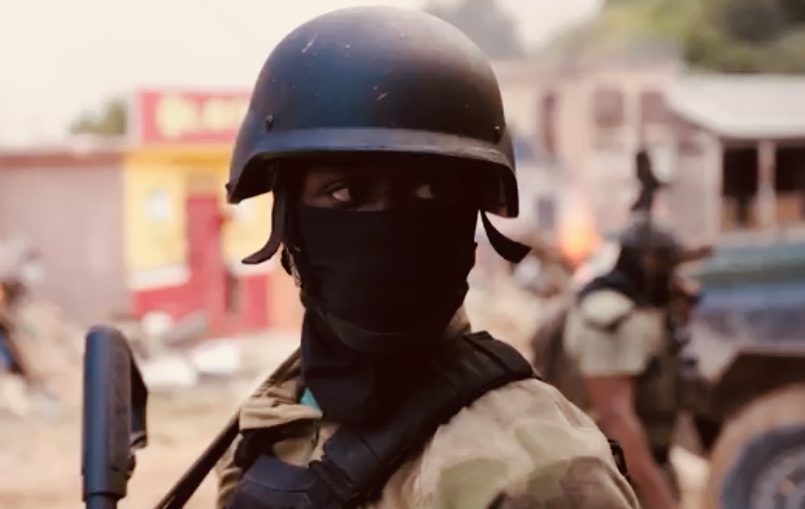
President Nayib Bukele of El Salvador has warned Haiti’s gangs to release four Salvadoran aviation technicians who went missing after an attack on an armoured vehicle. Bukele has announced a military operation to rescue the men and warned that, if they are not returned alive and unharmed, El Salvador will intensify its response. His message is uncompromising: the consequences for those responsible could be far more severe if the four men are not released safely.
Under Bukele’s leadership, El Salvador’s state apparatus has detained vast numbers of people accused of gang-related and other serious criminal activity as part of an extensive security crackdown. His reputation for confronting organised crime will therefore be understood by Haiti’s armed gangs. However, Haiti presents a very different challenge from El Salvador. Its fragmented security environment, weakened institutions, entrenched criminal networks, and difficult operational conditions make any attempt to suppress the gangs far more complex than a forceful political declaration might suggest.
The Associated Press reports, “The announcement comes three days after gangs in Haiti opened fire on an armored vehicle over the weekend, marking the first major attack since an international gang suppression force began operations in the violence-wracked Caribbean country.” The report adds that, after fleeing the burning vehicle in the Santo area of Croix-des-Bouquets, Port-au-Prince, the four men went missing.
Haiti has become one of the world’s most devastating humanitarian emergencies. Year after year, deaths, displacement, and extreme violence have eroded ordinary life, while political paralysis and institutional breakdown have allowed armed gangs to expand their power. The authority of the Haitian state has steadily receded in the face of criminal organisations that intimidate communities, attack security personnel, and exploit the absence of effective governance. United Nations-designated human rights expert William O’Neill has described conditions as “hell on earth” — a devastating phrase that remains painfully relevant to the reality endured by millions of Haitians.
Bukele’s warning has become more forceful following the launch of El Salvador’s operation. Addressing those responsible for holding the four men, he declared: “Today’s attack is nothing compared to what is coming if they do not release the four hostages alive. And do not take our words as empty threats.” The language signals a determination to escalate if the hostages are not returned safely. However, the precise scope of any further military action remains uncertain, and the immediate priority must be establishing the men’s whereabouts and securing their safe release.
The government of Haiti, which struggles to exercise effective authority across large parts of its own capital, has informed the international community and El Salvador that the abduction is an “absolute priority.” Haitian authorities stated: “The release of the abducted soldiers is an absolute priority, and all necessary resources are being mobilized to achieve this goal.” Such assurances are necessary, but the deeper question is whether the Haitian authorities and their international partners possess the operational capacity to translate their declarations into results.
El Salvador has recently expanded its commitment to the United Nations-backed Gang Suppression Force (GSF), including authorisation for the deployment of “…civilian and military personnel according to the mission’s needs.” The Salvadoran contribution has included aviation and technical personnel supporting functions such as medical evacuations. The current crisis therefore raises serious questions about the protection of international personnel, the operational security of the mission, and the extent to which participating countries may become more directly involved in confronting heavily armed criminal groups.
Lee Jay Walker, Modern Tokyo Times analyst, says: “The UN reports a harrowing reality marked by extrajudicial killings, human trafficking, murder, child exploitation, gang rape, and other severe human rights abuses. Haiti has also experienced grave abuses involving international personnel in previous UN missions. These scandals, together with the cholera disaster, have left a deep legacy of mistrust among ordinary Haitians.”
The history of international intervention in Haiti demands particular care. External security assistance is necessary to help protect civilians and restore order, but it must also operate with accountability, transparency, and respect for human rights. Previous failures and abuses have undermined public confidence. Any new operation must therefore demonstrate that international involvement can deliver tangible security improvements without repeating the mistakes that have damaged earlier missions.
Reuters has reported that several nations, including Chad and Sri Lanka, have deployed personnel as part of the international security effort, which has faced serious difficulties in reaching its intended strength and has had a limited impact on Haiti’s security. The force is intended to grow to 5,500 personnel, but its deployment has been gradual. The United Nations Security Council renewed its mandate in September 2026, while concerns about funding, manpower, and effectiveness remain. These limitations are central to understanding why Haiti’s gangs continue to operate with such devastating consequences.
Haiti today is therefore more than a country in crisis: it is a society under relentless siege. Armed gangs have supplanted public institutions across extensive areas, while civilians face murder, kidnapping, extortion, and sexual violence. Hunger and displacement compound the suffering, and the state’s authority continues to erode. Recent estimates indicate that nearly 1.5 million Haitians have been internally displaced, while gangs retain control over large portions of Port-au-Prince. The violence has also spread beyond the capital, threatening communities that had previously offered refuge to those fleeing insecurity.
The consequences extend beyond immediate public safety. Persistent gang control undermines economic activity, obstructs humanitarian assistance, weakens confidence in government, and threatens the possibility of restoring democratic institutions. Haiti is preparing for elections after a prolonged period of political instability, but credible elections cannot be secured through a timetable alone. Citizens must be able to travel, work, organise, and vote without intimidation. Unless security improves substantially, the gangs will continue to undermine both the state and the prospect of meaningful political renewal.
It remains to be seen whether El Salvador will intensify its military involvement in Haiti beyond the operation already announced, particularly if the four missing technicians are not found alive. Whatever Bukele’s reputation for confronting gangs at home, Haiti’s criminal networks retain substantial advantages through their local knowledge, entrenched territorial influence, and ability to exploit the weakness of public institutions. A more forceful response may be necessary, but military pressure alone cannot repair the structural failures that have allowed organised crime to become so powerful.
Ultimately, the safe return of the four Salvadorans must remain the immediate priority. Beyond this crisis, Haiti requires sustained international commitment, effective security operations, humanitarian assistance, and credible political leadership. The international community must do more than announce new initiatives or paper over the cracks in a collapsing system. Equally, Haiti’s own political leadership must be held accountable for its continuing failure to protect the population. The people of Haiti deserve far more than another cycle of promises followed by disappointment; they deserve security, dignity, and a genuine opportunity to rebuild their country.
https://moderntokyonews.com/category/north-america/ Past NORTH AMERICA articles via MODERN TOKYO NEWS (Modern Tokyo Times group)
MODERN TOKYO TIMES – MODERN TOKYO NEWS – please check https://moderntokyonews.com
Please check Modern Tokyo News at https://moderntokyonews.com for articles going back over 12 years. Sadly, Modern Tokyo Times got hacked and lost 14 years of articles…

Modern Tokyo News is part of the Modern Tokyo Times group
http://moderntokyotimes.com Modern Tokyo Times – International News and Japan News
http://sawakoart.com – Sawako Utsumi and her website – Modern Tokyo Times artist
https://moderntokyonews.com Modern Tokyo News – Tokyo News and International News
PLEASE JOIN ON FACEBOOK
http://facebook.com/moderntokyotimes