
Japan Art and Buddhism (Passages of Time)
Lee Jay Walker
Modern Tokyo Times
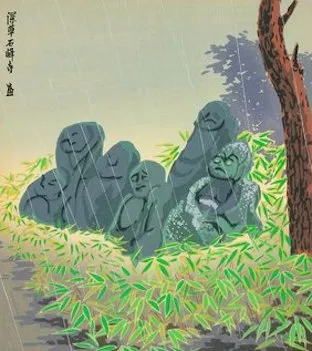
The art above is by Tomikichiro Tokuriki (1902–1999), who was born in Kyoto, a city renowned for its profound cultural heritage and enduring artistic traditions. Growing up in this historic setting, Tokuriki understood the richness of Japanese Buddhism, reflected in the sacred landscapes and temples of Koyasan, Kyoto, Nara, Negoro-ji, and other esteemed places across this part of Japan. These spiritual centres preserve centuries of religious devotion, artistic expression, and cultural memory.
The British Museum beautifully captures his significance, stating, “Tokuriki was born in Kyoto, where he has always worked. The last of a long line of traditional-style painters, he turned early to woodblock prints and became a leader of the Kyoto ‘Sosaku Hanga’…” His artistic journey reflects the enduring relationship between Japan’s traditional painting heritage and the evolving world of woodblock printing, where established techniques could be reinterpreted through individual creativity.
Going further back into Japanese history, the passage of centuries never diminishes the beauty of the thirteenth-century calligrapher Sugawara Mitsushige. His work evokes a cultural world in which the written word, Buddhist teachings, and artistic expression were closely intertwined. Just as the words of the Buddha continue to resonate across generations, the images associated with Chapter 25, the “Universal Gate” chapter of the Lotus Sutra, remain timeless in their spiritual and artistic significance. Through its presentation of Bodhisattva Kannon, this sacred chapter celebrates compassion, the alleviation of suffering, and the possibility of deliverance from the fears and difficulties of human existence.
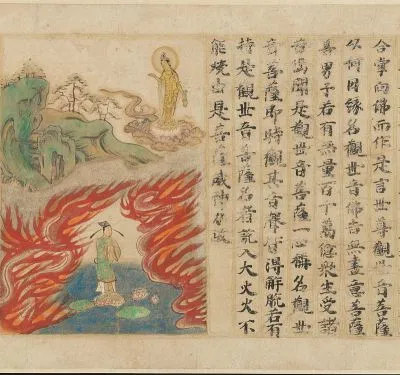
In Japan, Bodhisattva Kannon and Bodhisattva Jizō (known as Bosatsu in Japanese) occupy an especially cherished place in popular religious devotion. Kannon embodies compassion and the aspiration to deliver sentient beings from suffering and ignorance. Across Japanese temples, sacred images, and artistic traditions, Kannon has inspired generations of worshippers and artists alike. In representations of Kannon and other aspects of the Universal Gate, one can appreciate the devotion and artistic sensitivity associated with Sugawara Mitsushige, whose work helps preserve this enduring conversation between Buddhist spirituality and Japanese culture.
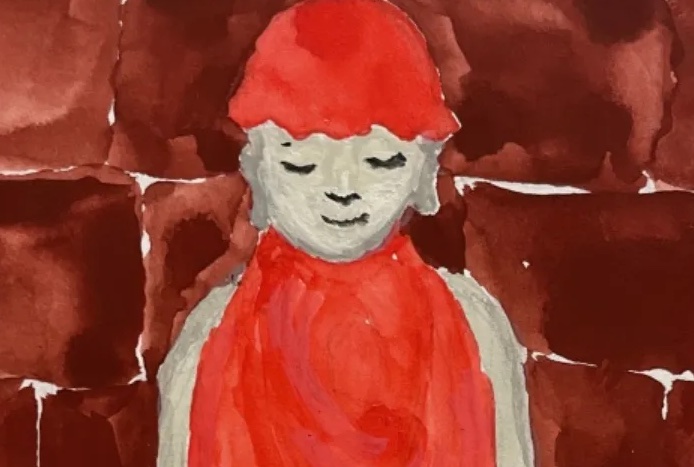
The final art pieces are by Sawako Utsumi, a contemporary artist from northern Japan. Her work explores different aspects of culture, religion, and nature, alongside themes connecting Japan and Europe. Through her artistic perspective, traditional Japanese beliefs and cultural symbols continue to find expression in the modern world, demonstrating how inherited spiritual traditions can remain meaningful to contemporary audiences.
In this article, Utsumi focuses on the significance of Jizō, affectionately known in Japan as Ojizō-sama. Frequently encountered beside roads, in temple grounds, and at quiet village crossroads, Jizō occupies a deeply familiar place in Japanese cultural and spiritual life. Often associated with the protection of children and travellers, Jizō is also revered for his compassionate guidance of beings through suffering and the uncertainties of existence. These humble stone figures, sometimes adorned with red bibs or knitted coverings, form part of Japan’s living cultural landscape, connecting everyday life with centuries of Buddhist devotion.
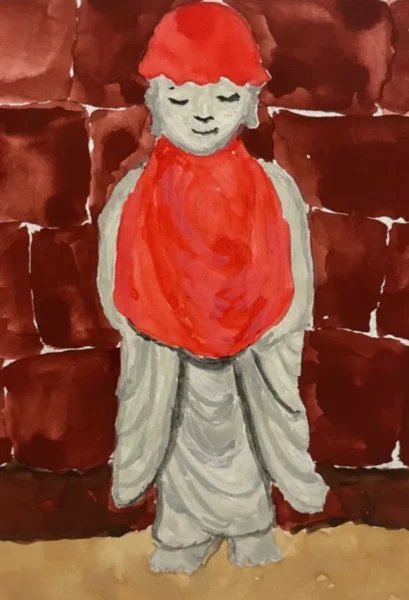
The Metropolitan Museum of Art beautifully expresses this spiritual significance, stating, “Jizō’s compassionate presence illuminates the righteous way from hell to paradise, and he saves from harm those who call out to him.”Such imagery reflects the enduring Japanese understanding of compassion as a guiding presence, offering reassurance amid the fragility of human life.
The Buddhist priest and poet Henjō (816–890) beautifully captures a different dimension of this human experience:
On his way to leave the world, a man
Comes to rest
Beneath the trees
But he finds no shade
For every Autumn leaf has fallen.
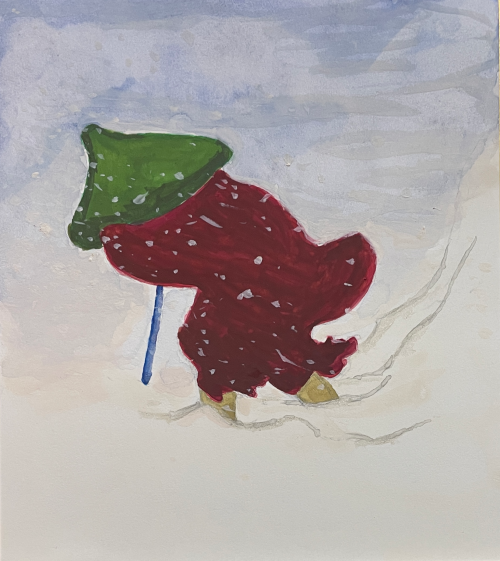
In these evocative lines, the changing seasons become a reflection on impermanence, loss, and the passing of life. The fallen leaves recall a central theme of Buddhist thought: all things are subject to change. Yet, across the centuries, Japanese art and poetry continue to find beauty and meaning within this transience. From Tokuriki’s artistic inheritance and Sugawara Mitsushige’s sacred imagery to Utsumi’s contemporary interpretations of Jizō, the conversation between humanity, nature, artistic expression, and the spiritual world remains alive.
https://fineartamerica.com/featured/jizo-and-the-buddhist-half-open-door-sawako-utsumi.html?newartwork=true Jizo and the Buddhist Half Open Door
https://fineartamerica.com/featured/jizo-and-the-buddhist-lantern-of-life-sawako-utsumi.html Jizo and the Buddhist Lantern of Life
https://moderntokyonews.com/?s=Art Past ART articles via MODERN TOKYO NEWS (Modern Tokyo Times group)
MODERN TOKYO TIMES – MODERN TOKYO NEWS – please check https://moderntokyonews.com
Please check Modern Tokyo News at https://moderntokyonews.com for articles going back over 12 years. Sadly, Modern Tokyo Times got hacked and lost 14 years of articles…

Modern Tokyo News is part of the Modern Tokyo Times group
http://moderntokyotimes.com Modern Tokyo Times – International News and Japan News
http://sawakoart.com – Sawako Utsumi and Modern Tokyo Times artist
https://moderntokyonews.com Modern Tokyo News – Tokyo News and International News
PLEASE JOIN ON FACEBOOK
https://www.facebook.com/moderntokyotimes