
Sahel Crisis: Mali’s Counteroffensive, Russian Support, and the Islamist Threat
Murad Makhmudov, Noriko Watanabe, and Lee Jay Walker
Modern Tokyo Times
The Sahel has long endured cycles of upheaval, yet the continuing convulsions in Burkina Faso, Mali, and Niger threaten to erode the very fabric of these states. Questions of democracy and military rule now intersect with Islamist insurgency, ethnic tensions, and entrenched patronage, creating a volatile and deeply layered crisis. The consequences extend far beyond the region, affecting neighbouring countries, regional security arrangements, and wider international interests.
These three nations have distanced themselves from the authority of the Economic Community of West African States (ECOWAS) while pushing back against France’s lingering influence. In a bid to assert sovereignty and reshape their security partnerships, they established the Alliance of Sahel States (AES) and called for the withdrawal of French forces. Yet the initial momentum behind this realignment has been tempered by a harsher reality: Islamist insurgents and armed separatist movements continue to exploit insecurity, weak state institutions, and longstanding grievances.
In Mali, both the Islamic State Sahel Province (ISSP) and the more entrenched Jama’at Nusrat al-Islam wal-Muslimin (JNIM) have intensified their operations. JNIM has also maintained pressure on vital fuel and economic supply routes, contributing to shortages and insecurity affecting Bamako and other critical centres. Once largely concentrated in northern and central Mali, these forces have demonstrated an increasingly dangerous capacity to strike across the country, challenging the military government’s claims that its revised security strategy can restore stability.
The influence of JNIM, in particular, has extended from its northern and central strongholds into Mali’s southern and western regions. By targeting vital trade and fuel corridors linking Mali with Senegal and Côte d’Ivoire, the group has exacerbated economic pressures and threatened the movement of essential supplies. Public hardship deepens as transport, commerce, and everyday livelihoods come under pressure, further testing the authority of the central state. The fuel crisis also illustrates how an insurgency can undermine a government without having to occupy the national capital.
RUSSIA SUPPORTS MALI’S COUNTEROFFENSIVE IN THE NORTH
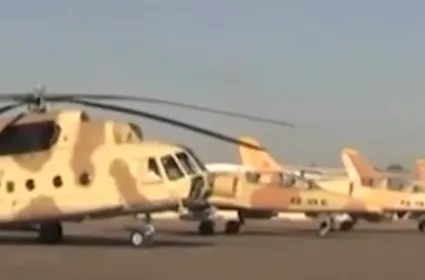
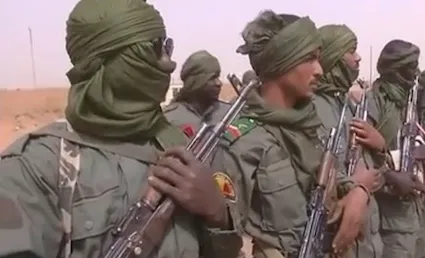
The Russian Federation has become an increasingly important military partner for Mali, with its Africa Corps providing support to the Malian Armed Forces through combat operations, air power, and other forms of military assistance. This partnership became particularly significant during the renewed fighting in northern Mali, where Russian-backed operations helped government forces recover ground from Tuareg separatists and Islamist militants. In October 2026, Malian forces, supported by Russia’s Africa Corps, re-entered the strategically important northern town of Kidal after an offensive forced separatist fighters to withdraw.
This development represented a significant symbolic and military gain for Bamako and Moscow, demonstrating that the Malian government retains the capacity to mount counteroffensives despite the mounting insurgent threat. Nevertheless, the recovery of territory does not necessarily mean that it can be secured permanently. The continuing ability of armed groups to coordinate attacks, ambush military convoys, and threaten supply routes exposes the limits of battlefield gains without more durable political and security arrangements. Russia’s assistance may strengthen Mali’s immediate military position, but the longer-term outcome will depend on whether government forces can maintain control, protect civilians, and address the grievances that continue to fuel the conflict.
In territories under their control, Islamist insurgents increasingly seek to function as a state within a state, imposing austere interpretations of Sharia law while displacing local governance and established traditions. Mali’s diverse Islamic heritage and long-standing religious practices face mounting pressure from the hard-line doctrines promoted by JNIM and ISSP. Yet the conflict cannot be understood through religious ideology alone. Weak institutions, economic marginalisation, insecurity, and the treatment of local communities also contribute to the conditions in which extremist movements recruit and expand.
BEYOND BURKINA FASO, MALI, AND NIGER – CONCERN IS GROWING
Benin, Ghana, Togo, Senegal, and Mauritania are watching developments with increasing unease, while the Lake Chad basin remains another volatile epicentre of regional insecurity. Groups operating from Nigeria, notably Boko Haram and the Islamic State West Africa Province (ISWAP), have extended their reach into Cameroon, Chad, and Niger. Together, these conflicts form a wider arc of instability across national borders, placing additional pressure on governments and communities already struggling with poverty, displacement, and limited public services.
Meanwhile, in northern Mali, the Coordination of Azawad Movements and its successor political and armed formations reflect longstanding Tuareg grievances over political representation, autonomy, and the distribution of power. The Azawad Liberation Front (FLA) has emerged as a significant separatist force. Its confrontation with the Malian government highlights the fact that northern Mali’s tensions are not solely ideological. Political exclusion, historical grievances, local identity, and competition over territory remain central to the conflict. The growing convergence of separatist forces and JNIM in military operations has further complicated the security landscape, even though their underlying political and ideological objectives differ considerably.
In this fraught landscape, it is incumbent upon international actors, including the United States, European Union, ECOWAS, and the Group of Seven (G7), to engage constructively with Sahelian states. Economic partnerships, development assistance, and carefully calibrated security cooperation remain essential. However, these efforts must be grounded in genuine dialogue and respect for regional priorities rather than an assumption that external pressure alone can determine the Sahel’s future.
The Russian Federation’s growing role also illustrates how the changing security landscape has become part of a wider geopolitical realignment. For Mali’s military leadership, cooperation with Moscow offers an alternative to former Western security partnerships and additional support in the fight against insurgent groups. Yet neither Russian military assistance nor Western diplomatic pressure can independently resolve the region’s underlying problems. Lasting progress requires security forces capable of protecting civilians, functioning institutions, economic opportunities, and political arrangements that give local communities a meaningful stake in the future.
Only by listening carefully and responding to the region’s distinct security and developmental needs can the international community hope to contain extremism and arrest further decline. Mali’s recent counteroffensive demonstrates that territorial reversals are possible, but the challenge of maintaining control remains formidable. Without a broader recalibration—within the Sahel and among its international partners—the trajectory remains deeply concerning: prolonged instability, expanding poverty, and the continued displacement of populations in search of safety.
https://moderntokyonews.com/?s=Mali+and+Sahel Past articles on MALI and the SAHEL REGION via MODERN TOKYO NEWS
MODERN TOKYO TIMES – MODERN TOKYO NEWS – please check https://moderntokyonews.com
Please check Modern Tokyo News at https://moderntokyonews.com for articles going back over 12 years. Sadly, Modern Tokyo Times got hacked and lost 14 years of articles…

Modern Tokyo News is part of the Modern Tokyo Times group
http://moderntokyotimes.com Modern Tokyo Times – International News and Japan News
http://sawakoart.com – Sawako Utsumi and Modern Tokyo Times artist
https://moderntokyonews.com Modern Tokyo News – Tokyo News and International News
PLEASE JOIN ON FACEBOOK
https://www.facebook.com/moderntokyotimes