European Nations and Greenland: Tensions Over Trump Threat
Kanako Mita, Sawako Utsumi, and Lee Jay Walker
Modern Tokyo Times
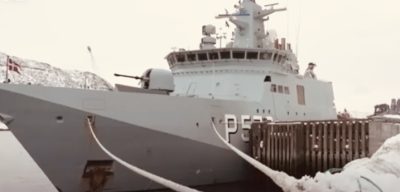
France and other European nations are increasingly showing solidarity with Denmark and Greenland following recent threats by President Donald Trump. Accordingly, despite a population of just 57,000 people, Greenland now finds itself unexpectedly positioned at the center of an intensifying geopolitical debate involving two NATO nations, with European states gradually pushing back against the Trump administration.
After France and other European nations sent small numbers of military personnel to Greenland in support of Denmark, and issued stronger verbal rebukes against the Trump administration, the leader of the United States has once more begun playing the “tariff card.”
Trump announced the threat of tariffs against eight European nations in connection with the dispute over Greenland. This escalation relates directly to Trump’s stated desire to take control of Greenland.
The BBC reports, “The comments came after Trump announced a 10% tariff on goods from Denmark, Norway, Sweden, France, Germany, the UK, the Netherlands and Finland would come into force on 1 February, but could later rise to 25% — and would last until a deal was reached.”
Hence, the Trump administration is straining NATO cohesion through outlandish statements suggesting that the United States will control Greenland irrespective of the wishes of the people of Greenland and Denmark. Therefore, the long-viewed remote Arctic territory of Greenland has been drawn into global strategic calculations that once seemed unimaginable.
France recently announced that it will open a consulate in Greenland on February 6 to underscore its support for Denmark. This follows a pledge by President Emmanuel Macron, who announced this intention last year. Therefore, France is sending a clear “political signal” to the Trump administration by asserting that it will “be more present” in the autonomous Danish territory of Greenland.
Macron denounced the threat of tariffs as being “unacceptable.”
Macron said, “Tariff threats are unacceptable in this context… We will not be swayed by any intimidation.”
European Commission President Ursula von der Leyen stated, “Territorial integrity and sovereignty are fundamental principles of international law… Tariffs would undermine transatlantic relations and risk a dangerous downward spiral.”
Ulf Kristersson, the Prime Minister of Sweden, said, “We won’t let ourselves be blackmailed.”
He further declared, “Sweden is currently having intensive discussions with other EU countries, Norway, and the United Kingdom to find a joint response.”
Claims by the Trump administration that China and the Russian Federation seek to expand their geopolitical influence in Greenland at the expense of the United States are currently unfounded.
Despite upsetting fellow NATO nations, Trump declared that America would take Greenland “the easy way” or “the hard way.”
Jean-Noël Barrot, the French foreign minister, remains adamant that “Greenland does not want to be owned, governed, or integrated into the United States. Greenland has made the choice of Denmark, NATO, and the (European) Union.”
Danish Prime Minister Mette Frederiksen has openly warned of the potential consequences for the alliance should intimidation or military considerations enter the equation. She cautioned that any armed action against a NATO member would fundamentally undermine the post-Second World War security architecture.
Many international observers argue that it is incumbent upon political institutions within the United States, alongside the European Union and NATO partners, to prioritize dialogue, restraint, and respect for international norms. A collective reaffirmation of support for Denmark and Greenland — grounded in law, alliance solidarity, and democratic choice — would help prevent unnecessary escalation and preserve the foundations of transatlantic cooperation.
However, the Trump administration remains unpredictable, and its determination to take Greenland appears to be intensifying rather than diminishing. This increasingly confrontational posture risks deepening fractures within NATO at a time when alliance unity is already under strain from multiple global crises.
If the Greenland issue is not resolved swiftly through diplomacy and respect for international law, it may trigger further convulsions within NATO, weakening trust among allies and undermining the credibility of collective security commitments. Ultimately, the episode serves as a stark reminder that coercion, tariffs, and intimidation cannot substitute for dialogue, consent, and adherence to the principles that have underpinned transatlantic stability since the end of the Second World War.

Modern Tokyo News is part of the Modern Tokyo Times group
http://moderntokyotimes.com Modern Tokyo Times – International News and Japan News
http://sawakoart.com – Sawako Utsumi and her website – Modern Tokyo Times artist
https://moderntokyonews.com Modern Tokyo News – Tokyo News and International News
PLEASE JOIN ON TWITTER
https://twitter.com/MTT_News Modern Tokyo Times
PLEASE JOIN ON FACEBOOK