Japanese Art and Rinpa (Rimpa)
Lee Jay Walker
Modern Tokyo Times
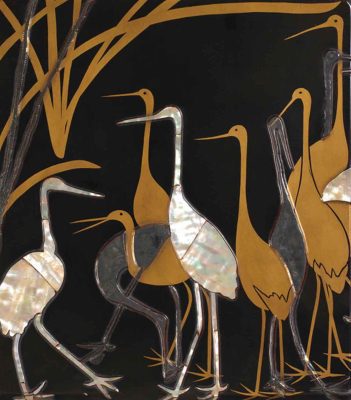
Rinpa art is distinctive because it stands among the rare indigenous artistic traditions intimately bound to Japan’s high culture. Alongside the Kanō and Tosa schools, Rinpa occupies a central place in the classical canon. Together, these schools established enduring lineages of artists who carried forward their respective aesthetic philosophies, each generation deepening and reinterpreting inherited traditions while remaining rooted in cultural continuity.
As the Cleveland Museum of Art explains, “Rinpa is a style of Japanese art focused on abstracted natural motifs and allusions to classical literature. Coined in the early 1900s, Rinpa means ‘Rin School,’ after painter Ogata Kōrin (1658–1716), whose work was critical to the later transmission of the tradition. Three techniques associated with Rinpa are tarashikomi, horinuri, and mokkotsu. In tarashikomi (dripping-in), the artist drips ink or color onto wet surfaces, creating pools and unpredictable flows. Horinuri (painting-by-carving) leaves initial ink outlines uncovered after shapes are filled, giving the surface the appearance of having been carved. Mokkotsu (boneless) dispenses with outlines altogether, allowing forms to emerge without defined contours.”

Kamisaka Sekka (1866–1942) is widely regarded as the last great Rinpa artist to sustain the tradition in its classical sense. Yet Sekka was far from a mere custodian of the past. He possessed a fiercely independent spirit, and this individuality animated his atmospheric and innovative approach to Rinpa, infusing it with modern sensibilities while preserving its poetic core.
The MOA Museum of Art notes, “The Rinpa School is unique in that, unlike other schools such as Kanō and Tosa, the heritage was perpetuated not through familial lines or clan-retainership, but by those who had an affinity with the style. It came about in the early Edo period, with Hon’ami Kōetsu and Tawaraya Sōtatsu as forerunners, and it flourished during the Genroku era (1688–1704) through the work of Ogata Kōrin and his brother Kenzan.”
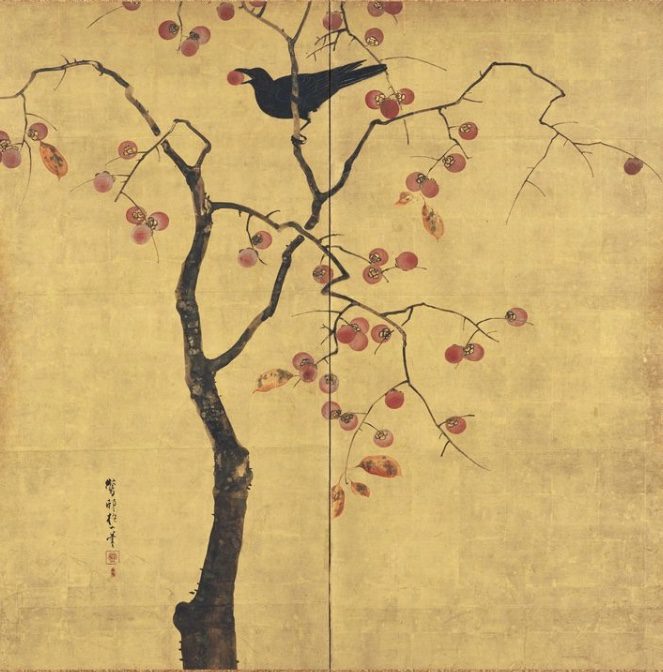
Rinpa emerged in Kyoto during the early Edo period of the seventeenth century, a city already steeped in courtly refinement, literary tradition, and religious patronage. There, its two founding figures—Hon’ami Kōetsu and Tawaraya Sōtatsu—set in motion an artistic legacy that would become a cultural treasure, continuing to nourish Japanese aesthetics into the modern age.
Notably, the working-class origins of Sōtatsu mattered little to the affluent Nichiren Buddhist merchants who supported the movement. What captivated them was not pedigree, but beauty itself—the shimmering gold grounds, rhythmic abstractions of nature, and poetic echoes of classical literature that elevated Rinpa beyond social boundaries and into the realm of timeless art.

Modern Tokyo News is part of the Modern Tokyo Times group
http://moderntokyotimes.com Modern Tokyo Times – International News and Japan News
http://sawakoart.com – Sawako Utsumi’s website and Modern Tokyo Times artist
https://moderntokyonews.com Modern Tokyo News – Tokyo News and International News
PLEASE JOIN ON TWITTER
https://twitter.com/MTT_News Modern Tokyo Times
PLEASE JOIN ON FACEBOOK