Taiwan Seeks Peace Through Strength and Diplomacy with China
Noriko Watanabe, Kanako Mita, and Lee Jay Walker
Modern Tokyo Times
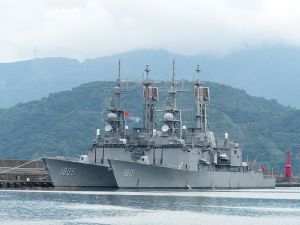
President Lai Ching-te of Taiwan announced a special $40 billion defense budget in late 2025, dedicated to military procurement aimed at strengthening the island’s capacity to respond to potential security contingencies involving China. The military modernization plan includes the development of an advanced air-defense system with enhanced detection and interception capabilities designed to address China’s missile forces—an initiative Lai has described as “Taiwan Dome.”
Taiwan’s expanded defense budget—encouraged by the administration of U.S. President Donald Trump—will be allocated over eight years (2026–2033). This follows Lai’s earlier pledge to raise Taiwan’s defense spending to 5% of GDP.
The Taiwanese leader stated, “China’s military pressure on Taiwan and the wider Indo-Pacific region continues to intensify.”
He added, “In recent years, a range of military activities, maritime gray-zone operations, and disinformation campaigns have been reported in Japan, the Philippines, and around the Taiwan Strait, contributing to heightened concern across the region.”
The United States continues to urge Taiwan to expand its defense capabilities, regardless of whether a Democrat or Republican occupies the White House. This bipartisan consistency highlights what some analysts see as a tension within U.S. foreign policy, particularly in balancing calls for stability with policies that reinforce strategic competition.
Both recent American presidents have called on China to limit its economic support for the Russian Federation, especially in the energy sector amid the ongoing conflict in Ukraine. At the same time, Washington has pursued policies aimed at strengthening military partnerships in the Indo-Pacific, including closer defense cooperation with Taiwan—an approach that Beijing views with concern.
According to AP News, “Taiwan has set its defense budget to rise to 3.3% of GDP in 2026, allocating 949.5 billion Taiwan dollars ($31.18 billion). U.S. President Donald Trump has urged Taiwan to raise defense spending to as much as 10% of GDP, a level significantly higher than that of the United States or most of its major allies.”
Last year, China’s Ministry of Foreign Affairs stated, “The U.S. repeatedly emphasizes respect for territorial sovereignty, yet on the Taiwan question it has tested boundaries and departed from its stated commitments. The U.S. has supplied advanced weapons to China’s Taiwan region while asserting a desire for peace, even as it has been involved in conflicts and confrontations worldwide.”
China and Taiwan have coexisted—and prospered through deep economic interdependence—for decades. This long-standing record of practical engagement suggests that both sides would benefit from moving beyond the weight of historical grievances. China, in particular, could consider allowing Taiwan greater international participation that reflects the reality of their extensive economic and societal ties.
At the same time, Taiwan must remain mindful of China’s core strategic concern: the expanding U.S.-led security architecture in the region, reinforced by partnerships such as the Quad and AUKUS. From Beijing’s perspective, these frameworks contribute to a perception of growing strategic pressure, which inevitably shapes cross-strait calculations.
If Chinese leaders wish to reduce the strategic justification for initiatives such as AUKUS, the Quad, and broader regional balancing efforts, a policy of measured accommodation toward Taiwan—rather than reliance on pressure—could prove more effective. Persistent military signaling risks reinforcing the resolve of regional actors and strengthening the hand of those advocating deeper external involvement.
Likewise, political forces in Taiwan that favor uncompromising positions should recognize that escalatory rhetoric and actions can entrench the very risks they seek to avoid. A durable and peaceful future depends on Taiwan engaging China with pragmatism and restraint, and on China responding with confidence and reassurance rather than coercion.
The alternative—a Northeast Asian replay of the Ukraine–Russia tragedy—would be catastrophic for all involved. Preventing such an outcome requires courage, creativity, and compromise from both Beijing and Taipei. At present, however, the prevailing signals remain deeply concerning.

Modern Tokyo News is part of the Modern Tokyo Times group
http://moderntokyotimes.com Modern Tokyo Times – International News and Japan News
http://sawakoart.com – Sawako Utsumi’s website and Modern Tokyo Times artist
https://moderntokyonews.com Modern Tokyo News – Tokyo News and International News
PLEASE JOIN ON TWITTER
https://twitter.com/MTT_News Modern Tokyo Times
PLEASE JOIN ON FACEBOOK