Japanese High Culture and Nara
Lee Jay Walker
Modern Tokyo Times
The Nara Period (710–794 CE) occupies a sacred and formative place in the cultural history of Japan, representing one of the earliest golden ages in which the foundations of Japanese civilization were consciously shaped and refined. Long before Kyoto emerged as the celebrated center of imperial elegance and artistic sophistication, Nara served as the cradle of Japanese high culture, where religion, literature, architecture, statecraft, and artistic expression converged to create a lasting cultural legacy.
During this remarkable era, Japan witnessed an extraordinary flowering of court-sponsored culture. Monumental temples rose across the landscape, Buddhist sculpture reached new heights of spiritual expression, and the earliest chronicles and poetic anthologies were compiled, preserving the nation’s emerging identity. Inspired by the great civilizations of Tang China and the Korean kingdoms, Japanese elites eagerly absorbed foreign ideas, technologies, and artistic traditions. Yet these influences were never merely copied. Instead, they were transformed through Japanese sensibilities, giving birth to cultural forms that would eventually become uniquely and unmistakably Japanese.
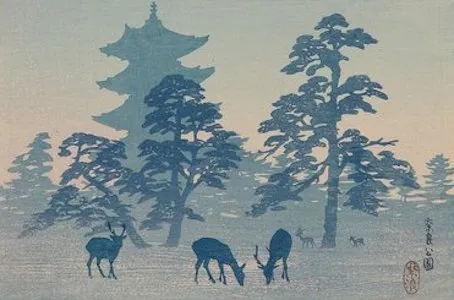
At the heart of Nara’s cultural achievement stood Buddhism. Although the faith had arrived in Japan centuries earlier, it was during the Nara Period that Buddhism became deeply embedded within the political and spiritual fabric of the state. Emperor Shōmu (701–756) viewed the Buddhist faith not only as a source of personal devotion but also as a means of securing national harmony and protection. In 741, he ordered the establishment of a network of provincial temples, known as the kokubunji system, throughout the realm. These temples became symbols of both religious piety and imperial authority, illustrating how governance and spiritual life were profoundly intertwined during this luminous age of cultural formation.
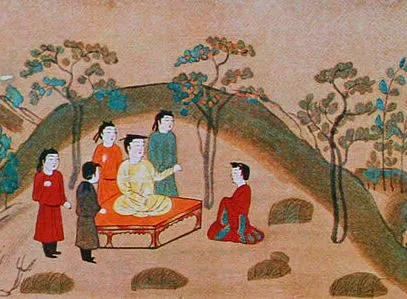
The Metropolitan Museum of Art notes concerning the artwork illustrated below: “The sutra to which this section of text and images once belonged narrates the life of the historical Buddha, known in Japanese as Shaka and in Sanskrit as Shakyamuni. Here the Buddha has already achieved enlightenment, demonstrated by the halo (mandorla) framing his head. He is preaching a message to King Bimbisara (558–491 B.C.), who became emperor of the Magadha Empire, in northern India, and an ardent supporter of Buddhist teachings.”
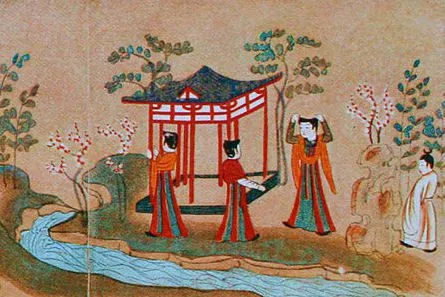
This artistic fragment also reminds us that the cultural horizons of Nara extended far beyond the Japanese archipelago. The spiritual lineage that nourished Japanese Buddhism originated in the ancient landscapes of India and Nepal before traveling through Central Asia, China, and the Korean Peninsula. Across centuries, monks, scholars, pilgrims, and artisans carried sacred texts, artistic styles, and philosophical teachings along the great networks of Asia, creating one of history’s most remarkable exchanges of culture and faith.
The influence of China and Korea upon Nara Japan is therefore unmistakable, their cultural and religious legacies woven into the very fabric of the age. Yet many of the Buddhist civilizations that once flourished across the Asian continent would later experience profound upheavals. Political transformations, invasions, religious change, and shifting centers of power altered the spiritual map of Asia. In regions stretching from Afghanistan to parts of Central Asia and present-day Pakistan, many ancient Buddhist centers gradually disappeared, leaving only fragments of their former grandeur.
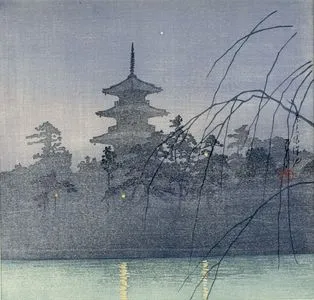
Viewed through this wider historical lens, Nara assumes an even deeper significance. Together with sacred centers such as Mount Kōya, it preserves a living connection to a vast Buddhist world that once stretched across much of Asia. Within its temple precincts, ancient wooden halls, treasured sutras, and serene Buddhist images, echoes of that broader civilization continue to endure. Nara is therefore more than an ancient capital; it is a cultural sanctuary where the artistic, spiritual, and intellectual currents of Asia were preserved, adapted, and ultimately transformed into something uniquely Japanese.
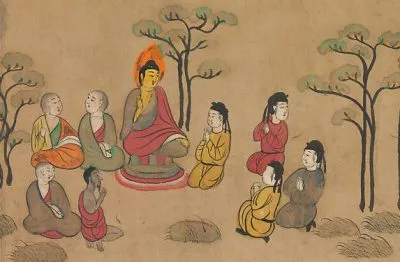
Even today, as visitors walk beneath the great temple roofs, gaze upon centuries-old Buddhist masterpieces, or listen to the quiet resonance of temple bells drifting across the landscape, they encounter not merely the memory of a distant age but the enduring spirit of one of the most important cultural chapters in Japanese history.
MODERN TOKYO TIMES – MODERN TOKYO NEWS – please check https://moderntokyonews.com
Please check Modern Tokyo News at https://moderntokyonews.com for articles going back over 10 years. Sadly, Modern Tokyo Times got hacked and lost 14 years of articles…

Modern Tokyo News is part of the Modern Tokyo Times group
http://moderntokyotimes.com Modern Tokyo Times – International News and Japan News
http://sawakoart.com – Sawako Utsumi’s website and Modern Tokyo Times artist
https://moderntokyonews.com Modern Tokyo News – Tokyo News and International News
PLEASE JOIN ON TWITTER
https://twitter.com/MTT_News Modern Tokyo Times
PLEASE JOIN ON FACEBOOK