Israel Responds to Iran Missile Attack (Trump Urges Restraint)
Kanako Mita, Sawako Utsumi, and Lee Jay Walker
Modern Tokyo Times
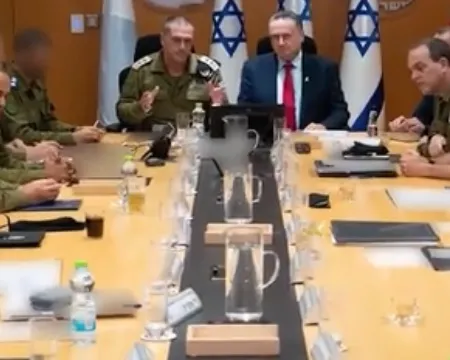
President Donald Trump continues to urge Israel to exercise restraint, whether concerning deeper military operations against Hezbollah in Lebanon or retaliatory strikes following Iran’s latest missile attack. Consequently, many within Israel’s security establishment view the Trump administration’s policies as increasingly contradictory, with Washington effectively restraining the operational freedom of the Israel Defense Forces (IDF) at a critical moment.
At the same time, Iran is steadily recovering from the initial shock generated by the recent American and Israeli military campaign. The assassination of Iran’s Supreme Leader, Ali Khamenei, alongside other senior military and intelligence figures, initially sent shockwaves through the Islamic Republic. Yet that period of uncertainty is now receding, with Tehran appearing increasingly emboldened by what many perceive to be the inconsistent and hesitant policies emanating from Washington.
Prior to Trump’s renewed emphasis on dialogue, the IDF and Mossad had exposed profound weaknesses within Iran’s security apparatus. Israel demonstrated a remarkable ability to penetrate hostile networks and conduct highly precise intelligence-driven operations against senior figures connected to Hamas, Hezbollah, the Houthis, and Iran itself. The cumulative effect of these operations, extending deep into Iran’s leadership structure, was placing Tehran under unprecedented pressure. That momentum, however, appears to have slowed as the Trump administration pursues negotiations that have reportedly dismayed many within Israel.
Frustration is also mounting regarding Hezbollah’s continued activities in Lebanon. A senior IDF official recently expressed growing anger over the limitations imposed on Israel’s responses: “We need to do much more. Israeli sovereignty is being violated every day. The IDF is exercising significant restraint because we are operating under understandings with the United States and the Lebanese government. We cannot accept the current reality without the ability to respond.”
Likewise, Trump’s instruction that Israel should not retaliate following Iran’s latest direct missile attack has been met with bewilderment in some Israeli military circles. If the administration intended to pursue a cautious diplomatic path, many ask why Washington initially unleashed such overwhelming military force against Iran before abruptly pivoting toward restraint and negotiations.
As reported by the Times of Israel: “Iran fired a volley of missiles at northern Israel Sunday night, catapulting the region back to the cusp of all-out war after two months of a shaky ceasefire, with Israel initially vowing to respond before US President Donald Trump attempted to limit the fallout and keep truce negotiations with Tehran on track.”
Israel is not alone in its concerns. Several Gulf Arab states are similarly perplexed by Washington’s messaging. Iran continues to threaten regional stability while simultaneously facing calls for restraint from the White House. Attacks against American military facilities and Iran’s persistent efforts to pressure neighboring states have generated growing unease in Bahrain, Kuwait, Saudi Arabia, and the United Arab Emirates. While Qatar has traditionally maintained cordial relations with Tehran and Oman continues to position itself as a diplomatic bridge, many regional actors question whether deterrence is being replaced by ambiguity.
Reflecting Israel’s readiness to act, IDF Chief of Staff Lt. Gen. Eyal Zamir declared: “The IDF will strike the enemy with force the moment the green light is given.”
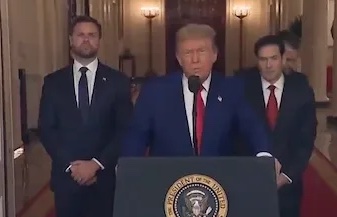
Trump, however, adopted a markedly different tone, stating: “The Iranian strikes didn’t hurt anybody… Hopefully, Israel is not going to retaliate. If Bibi (Prime Minister Netanyahu) strikes them back, it’s just gonna keep going like the last 47 years, or the last 3,000 years.”
Such remarks inevitably raise a fundamental question: why did the Trump administration open what many view as a strategic “can of worms” only to step back at the very moment pressure on Tehran appeared to be producing tangible results?
Meanwhile, ordinary Iranians remain largely invisible in the calculations of regional power politics. Thousands have been killed over the years by the Shia clerical regime, yet their aspirations and suffering continue to receive limited attention in the corridors of power. To be fair, the Trump administration has demonstrated greater concern toward Iran than the often detached positions adopted by the European Union and the United Kingdom. Nevertheless, Washington’s frustration is increasingly evident, particularly given the limited support offered by allies—from NATO powers to Japan and South Korea—regarding the strategic importance of the Strait of Hormuz.
Trump recently told the Financial Times that Israel’s leader “won’t have any choice” but to accept whatever agreement Washington may ultimately reach with Tehran’s ruling establishment.
Against this backdrop, Iran’s recent attacks against Bahrain and Kuwait appear to underscore a widening vacuum in American policy. For Israel and several Gulf Arab states, the central concern is that Tehran increasingly perceives inconsistency rather than resolve. As a result, Iran continues to challenge regional adversaries while betting that Washington’s desire for de-escalation will outweigh its willingness to impose meaningful consequences. Whether that perception proves correct may ultimately shape the next phase of the Middle East’s increasingly volatile geopolitical landscape.
MODERN TOKYO TIMES – MODERN TOKYO NEWS – please check https://moderntokyonews.com
Please check Modern Tokyo News at https://moderntokyonews.com for articles going back over 10 years. Sadly, Modern Tokyo Times got hacked and lost 14 years of articles…

Modern Tokyo News is part of the Modern Tokyo Times group
http://moderntokyotimes.com Modern Tokyo Times – International News and Japan News
http://sawakoart.com – Sawako Utsumi’s website and Modern Tokyo Times artist
https://moderntokyonews.com Modern Tokyo News – Tokyo News and International News
PLEASE JOIN ON TWITTER
https://twitter.com/MTT_News Modern Tokyo Times
PLEASE JOIN ON FACEBOOK