
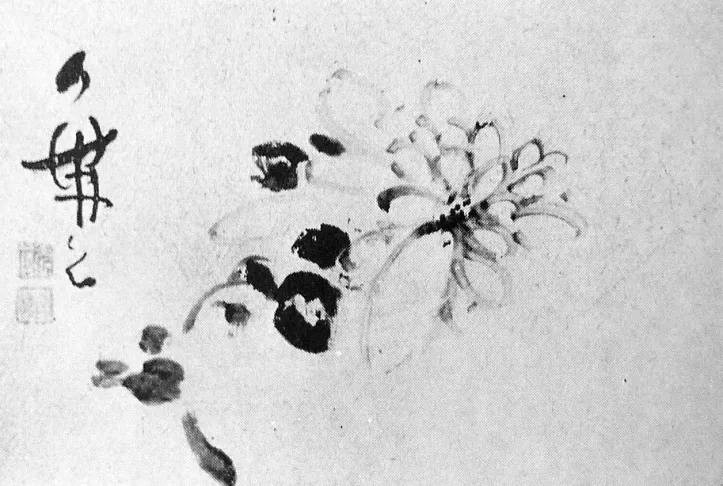
Ike no Taiga and Japanese Art: China, Edo, and Cultural Identity
Lee Jay Walker
Modern Tokyo Times
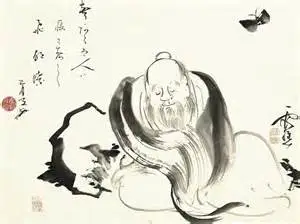
The Edo Period is often cast in the shadow of isolation and rigid hierarchy—a time when Japan appeared sealed from much of the outside world, with people bound by birth, status, and convention. Yet the life of Ike no Taiga (1723–1776)quietly unsettles such a simple interpretation. A kindred spirit drawn deeply toward the beauty and refinement of Chinese culture, Taiga moved through the world with a painter’s soul and a poet’s heart, emerging from modest circumstances rather than privilege. His life reveals the hidden cultural currents beneath Edo society—currents of artistic inspiration, intellectual curiosity, spiritual reflection, and an enduring conversation with civilizations beyond Japan’s shores.
Throughout history, China and Korea left an extraordinary imprint upon Japan, while Japanese monks, scholars, artists, and spiritual leaders travelled across Northeast Asia in search of learning, wisdom, and religious understanding. Buddhism, Confucianism, literature, calligraphy, philosophy, and the visual arts created cultural bridges that could survive political boundaries and changes in dynasties. Thus, even when political circumstances narrowed Japan’s external contacts, the intellectual and artistic inheritance of East Asia remained deeply embedded within Japanese civilization.
The Kyoto National Museum says, “Eighteenth-century Kyoto produced some of the most distinctive and original painters in Japanese history, including big names such as Maruyama Ōkyo (1733–1795) and Itō Jakuchū (1716–1800). But even amongst this star-filled lineup, the artist Ike no Taiga (1723–1776), stands with fellow painter Yosa Buson (1716–1783) as the leader of the Chinese-influenced literati style of painting known as Nanga (‘Southern painting’).”
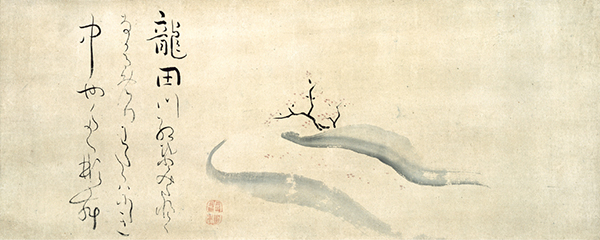
This reality is important because it demonstrates that, regardless of the political restrictions imposed during the Edo Period, the currents of high culture had already flowed far too deeply into Japan to be sealed away. Chinese civilization, together with the cultural legacy of Korea, had become part of Japan’s own intellectual and artistic landscape. Ike no Taiga therefore did not represent an isolated curiosity; rather, he belonged to a much longer Japanese tradition of absorbing, transforming, and cherishing the highest achievements of neighbouring civilizations.
Indeed, there is an intriguing paradox here. Although Edo Japan maintained highly restricted relations with much of the outside world, the narrow windows through which foreign learning entered could possess an extraordinary cultural intensity. Chinese painting, poetry, philosophy, literature, and calligraphy were not merely passing curiosities. They could become objects of profound study, admiration, imitation, and eventually transformation into something distinctly Japanese. The scarcity of access could, in some circumstances, heighten appreciation. What arrived through a narrow cultural doorway could therefore be treasured more deeply than that which is available everywhere and at all times.
This raises a wider question about the meaning of cultural openness itself. Modern societies possess unprecedented access to the civilizations of the world. Yet abundance does not automatically produce depth. When almost everything is immediately available, relatively little may be studied patiently, contemplated deeply, or transmitted faithfully from one generation to another. The paradox is that a society with fewer cultural windows may sometimes look through them with greater attention than a society surrounded by innumerable windows.
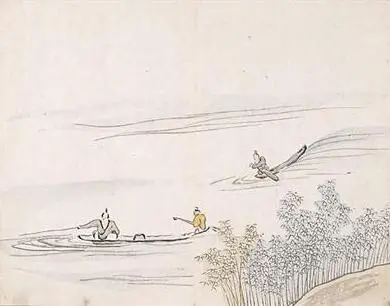
This is particularly interesting when comparing the cultural atmosphere of Edo Japan with aspects of the modern world. Contemporary Japan, despite its extraordinary technological achievements and enormous cultural influence, can appear increasingly detached from the deeper classical foundations that once informed its artistic and intellectual life. Classical Chinese and Japanese literature, Buddhist thought, Confucian learning, traditional poetry, painting, and the philosophical meanings contained within ancient customs can easily become something encountered in fragments—during festivals, holidays, exhibitions, or as attractive symbols of an increasingly distant past.
A similar concern can be raised in Britain. Figures such as Bede, Cuthbert, Tyndale, and the great literary, religious, and intellectual traditions of the British Isles remain enormously important, yet they often struggle for cultural prominence in an age dominated by material consumption, celebrity culture, professional entertainment, sporting fame, and the rapidly changing world of social media. The issue is not that modern Britain has abandoned its past entirely, but that the cultural authority once possessed by its classical, religious, literary, and philosophical inheritance has been considerably weakened.
Consequently, there is an irony worth contemplating. Edo Japan, often remembered primarily as a closed society, could sometimes demonstrate a remarkable openness of the mind toward the cultures it valued most. The limited cultural channels available to scholars and artists did not necessarily diminish appreciation; in certain circumstances, they intensified it. Chinese civilization, in particular, could be approached with an intellectual seriousness and artistic devotion that went far beyond superficial admiration.
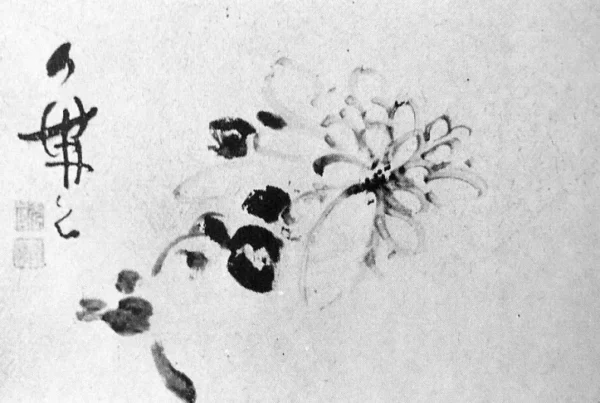
The lesson is therefore not that isolation was inherently desirable, nor that modern openness is inherently destructive. Rather, Ike no Taiga’s world reminds us that cultural openness means little without cultural depth. A civilization may possess countless connections to the outside world and yet understand very little of what lies beyond its immediate cultural horizon. Conversely, a society with narrow geographical and political horizons may possess an astonishingly deep conversation with the civilizations it reveres.
In the world of Ike no Taiga, a painting could become a dialogue with China, a poem a bridge across centuries, and artistic study a form of cultural pilgrimage. Perhaps this is one reason the Edo Period continues to fascinate: behind the political restrictions and apparent isolation existed a vibrant inner universe in which art, literature, philosophy, religion, and inherited wisdom were still treated as treasures. The windows may have been few, but those who looked through them often looked with extraordinary intensity.
https://moderntokyonews.com/?s=Art Past articles about ART via MODERN TOKYO NEWS (Modern Tokyo Times group)
MODERN TOKYO TIMES – MODERN TOKYO NEWS – please check https://moderntokyonews.com
Please check Modern Tokyo News at https://moderntokyonews.com for articles going back over 12 years. Sadly, Modern Tokyo Times got hacked and lost 14 years of articles…

Modern Tokyo News is part of the Modern Tokyo Times group
http://moderntokyotimes.com Modern Tokyo Times – International News and Japan News
http://sawakoart.com – Sawako Utsumi’s website and Modern Tokyo Times artist
https://moderntokyonews.com Modern Tokyo News – Tokyo News and International News
PLEASE JOIN ON FACEBOOK
http://facebook.com/moderntokyotimes