
Japan Art and Yokoyama Taikan: Beauty and the Mirror of a Bleak World
Lee Jay Walker
Modern Tokyo Times
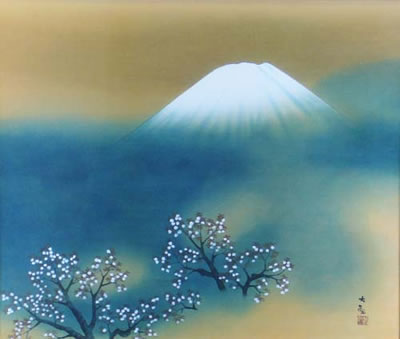
Yokoyama Taikan (1868-1958) was a child of the Meiji Restoration (1868-1912). Throughout his lifetime, he witnessed Japanese militarism, profound political upheaval, and the dramatic changes that followed World War Two. Japan, like all nations, experienced deep political divisions. Accordingly, some supported the prevailing motives and ideologies of their time, while others opposed them.
It is almost impossible for younger generations in developed nations to comprehend the magnitude of colonialism, authoritarian communism, extreme nationalism, Arab Muslim slavery – which continued into the 1960s in the land of Mecca – and the immense socio-economic convulsions experienced by countless nations during modernization in the late nineteenth and first half of the twentieth century. Vast numbers of children during the early decades of Taikan’s lifetime were also forced into work from a very young age, while disease, poverty, and inadequate living conditions took an enormous toll.
Similarly, in modern times, people living in comparatively privileged societies – from America to South Korea, and France to Japan – can remain distant from the brutality of ethnic massacres in the Democratic Republic of the Congo and elsewhere, the persecution and killing of homosexuals by the Islamic regime in Iran, the grinding poverty of Philippine slums, and countless other ills that continue to blight humanity. For individuals with considerable opportunities and choices, such realities can appear remote, even when they are unfolding in the contemporary world.
This is not to diminish the serious problems that persist within developed nations themselves. Gender discrimination, homelessness, sexual abuse of women, the presence of female genital mutilation in certain communities, and profound economic disparities remain realities, from the world’s wealthiest nations to its poorest. No society is entirely removed from injustice, and prosperity does not automatically translate into equality or human dignity.
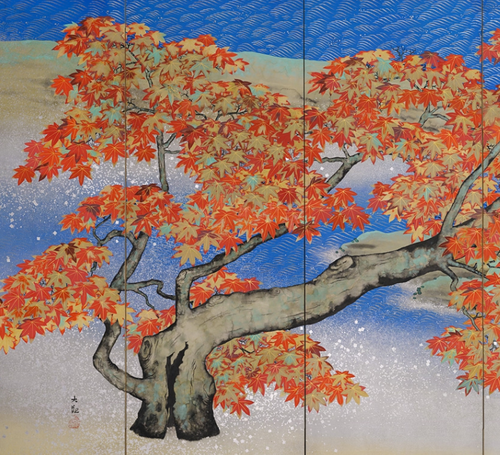
Consequently, Taikan could not escape the immense and often rapid convulsions that transformed Japan throughout his lifetime. If some of his artistic activities and associations reflected the nationalist sentiments of the period, this must be understood within the historical environment in which he lived. Understanding that environment, however, does not mean overlooking the consequences of the ideologies and political forces that shaped it.
Concerning the art of Taikan, the Adachi Museum of Art says, “Yokoyama Taikan was born in Ibaraki Prefecture. After studying Japanese painting at the Tokyo Fine Art School, he helped establish the Japan Art Institute. He dedicated himself to the creation of new Japanese painting techniques. Making full use of his English skills, Taikan actively held exhibitions in many foreign countries, in India, Europe and the United States. Through the experience, in 1914, he renewed the Japan Art Institute. He received the first Order of Culture, and was a leader of the Japanese art world for a long time.”
The Yamatane Museum of Art says, “Taikan established a reputation as an artist of national stature in a career as an artist that overlaps the period during which, with Japanese, East Asian, and Western cultures competing with each other, nihonga developed from the Meiji period on. Indeed, Taikan himself symbolizes modern nihonga.”
The Princeton University Art Museum – concerning the Japanese militarist and nationalist era – reports, “One artist who thrived in the ultra-nationalist pre-war environment was Yokoyama Taikan… In 1931, he was appointed as artist to the imperial household… In 1943, Taikan became the chair of the Japan Art Patriotic Society (Nihon Bijutsu Hokokukai), which was set up by the Ministry of Education in an attempt to control the creative output of the country’s artists and put it in the service of its war-time ideology. Taikan in fact joined a number of other prominent artists in choosing to demonstrate his patriotism by contributing the profits from the sale of his works to the military effort.”
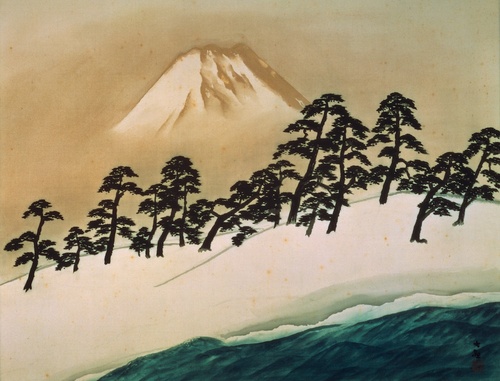
However, Taikan was hardly unique in becoming involved in the political and ideological currents of his time. Actors, artists, educationalists, politicians, sportspeople, and other prominent figures in the United States, Soviet Union, Nazi Germany, the United Kingdom, and elsewhere were similarly drawn into propaganda and state-sponsored narratives. National identity, loyalty, political conviction, and the prevailing ideologies of ruling elites influenced cultural life across the world. Taikan, therefore, was also a product of the political and social environment in which he lived.
Arab Muslims continued enslaving black Africans into the 1960s and 1970s in several nations, including in the land of Mecca. During Taikan’s lifetime, America dropped two nuclear bombs on Hiroshima and Nagasaki; Japan committed horrendous massacres in China, including the Nanjing Massacre; the United Kingdom continued to deny many indigenous poor people the right to vote in the early twentieth century while imposing untold misery across countless colonies (without overlooking the use of concentration camps against Afrikaners during the South African War); tens of millions perished through starvation in the communist Soviet Union, while vast numbers were imprisoned in camps; the Turks perpetrated the Armenian Christian genocide, alongside the Assyrian and Pontic Greek genocides which lead to the complete Islamization of society built on the ashes of Christians; and the Nazis exterminated Jews, Roma, and countless others. Regardless of where Taikan was born, the major powers of his lifetime were implicated in atrocities on an immense scale.
Taikan lived in an age when all the leading powers were prepared to involve themselves in brutal wars, pursue imperial ambitions, and justify immense human suffering through national interests. Today, major powers continue to participate in proxy wars, support destructive political forces, and sometimes directly bomb less-developed nations. Yet people living in wealthy societies often remain insulated from the consequences of these actions. The suffering takes place elsewhere, far removed from the everyday comforts and choices enjoyed by many.
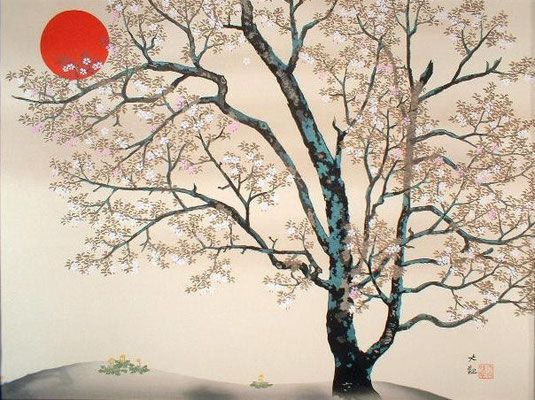
The language may have changed, but the brutal calculations of power remain familiar. Geopolitics and national interests continue to provide convenient justifications for actions that devastate ordinary people, often those with the least influence over the decisions that determine their fate.
Accordingly, Taikan, like all people, was a person of his time. He was influenced by the extraordinary political pressures, nationalist sentiments, and ideological propaganda that permeated societies from East to West. Recognising this historical reality does not require overlooking his associations with wartime nationalism, nor does it diminish the importance of examining the darker aspects of his legacy.
Yet there is another dimension to Taikan that deserves attention. Against the backdrop of imperial ambitions, militarism, human suffering, and the immense political darkness of his lifetime, his artistic legacy also offers images of beauty. His work reminds us that art can preserve a different vision of humanity, even when the world beyond the artist’s canvas is consumed by conflict and destruction.
https://moderntokyonews.com/?s=Art Past ART articles via MODERN TOKYO NEWS (Modern Tokyo Times group)
MODERN TOKYO TIMES – MODERN TOKYO NEWS – please check https://moderntokyonews.com
Please check Modern Tokyo News at https://moderntokyonews.com for articles going back over 12 years. Sadly, Modern Tokyo Times got hacked and lost 14 years of articles…

Modern Tokyo News is part of the Modern Tokyo Times group
http://moderntokyotimes.com Modern Tokyo Times – International News and Japan News
http://sawakoart.com – Sawako Utsumi and Modern Tokyo Times artist
https://moderntokyonews.com Modern Tokyo News – Tokyo News and International News
PLEASE JOIN ON FACEBOOK
https://www.facebook.com/moderntokyotimes