Hezbollah Endangers Lebanon: State Within A State
Kanako Mita, Sawako Utsumi, and Lee Jay Walker
Modern Tokyo Times
Several years ago, enormous demonstrations swept across Lebanon as citizens from all communities protested mounting economic collapse, political paralysis, and deep-rooted social grievances. The anger was not confined to one sect or ideology; rather, it reflected a national cry against entrenched cronyism and a sectarian political system that continues to suffocate hope for prosperity and renewal.
Compounding these structural weaknesses is the immense demographic and economic pressure created by decades of mass migration—from long-displaced Palestinians to more recent refugees from Syria. Together, these realities have strained an already fragile state. Consequently, many Lebanese—across religious lines and including those who reject sectarian identity altogether—have grown increasingly disillusioned with a stagnant political order and with the persistent reality of Hezbollah operating as a “state within a state,” whereby the strategic priorities of Iran often eclipse the national interests of Lebanon itself.
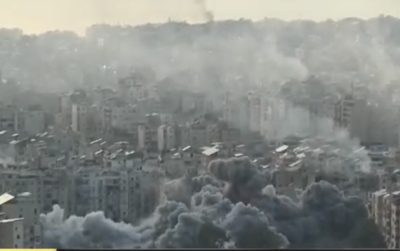
Hezbollah—at once a military force, political party, religious movement, and social network—was recently dealt severe blows by Israel. Yet the organization continues to draw Lebanon into renewed instability by aligning its strategic posture with Tehran rather than the broader aspirations of the Lebanese population.
Hezbollah, despite years of confrontation with Israel, continues to operate from a position of diminished strength within Lebanon. The 2024 killing of Hassan Nasrallah — alongside numerous senior Hezbollah officials — dealt a profound blow to the organization’s command structure. Yet the group persists in aligning itself closely with Tehran’s strategic objectives. Therefore, Lebanon is once more witnessing war based on Hezbollah endangering the fragile nation on behalf of Iran.
Contrary to the simplistic narratives often promoted in international media, Hezbollah is a deeply complex movement. Unlike Sunni Takfiri extremist factions that exhibit hostility toward all outside their rigid worldview, Hezbollah’s armed presence in Syria, for example, helped protect several vulnerable religious minorities, including embattled Christian communities during the worst phases of the Syrian conflict. Inside Lebanon itself, Hezbollah’s political leadership maintains working relationships across the country’s diverse religious landscape—engaging with Christians, Druze, Sunnis, and others within the delicate framework of Lebanese politics.
For this reason, Hezbollah’s position within Lebanon’s body politic is markedly different from many Islamist movements that refuse compromise or coexistence. Yet this complexity does not erase the central dilemma: when strategic loyalty to Iran prevails, Hezbollah’s actions often places the Lebanese state, its economy, and its people in grave danger. Meanwhile, the Lebanese Armed Forces often appear constrained and politically weakened—mirroring a government unwilling or unable to curtail Hezbollah’s independent military power.
The growing confrontation between the United States and Israel on one side and Iran on the other once again places Lebanon’s sovereignty in jeopardy. In reality, Lebanon’s sovereignty remains deeply compromised as long as Hezbollah’s military capabilities operate beyond full state authority while simultaneously serving the strategic calculus of Iran. This persistent reality continues to act as a dagger at the heart of the Lebanese state. For Lebanon to secure a stable future, it must eventually address the armed dimension of Hezbollah and pursue a durable political understanding with Israel that removes the perpetual specter of war.
Lebanon, already beset by profound economic collapse, political dysfunction, and institutional paralysis, cannot afford to be drawn repeatedly into wider geopolitical confrontations between Washington, Israel, and Tehran. The country’s relatively small population and delicate religious mosaic demand restraint, consensus, and national cohesion. No single community should unilaterally risk military confrontation with external powers on behalf of regional ambitions. Simply put, Lebanon must ultimately belong to the Lebanese people rather than serve as an extension of Iranian strategic influence through Hezbollah.
Therefore, Lebanon cannot endure endless cycles of military convulsions triggered by external geopolitical agendas. Hezbollah faces a historic choice: to fully anchor itself within Lebanon’s national framework and contribute to solutions addressing the country’s economic devastation, political paralysis, and social fragility—or continue along a path that risks perpetual instability.
Without such a recalibration, Lebanon may face an accelerating brain drain, recurrent conflicts tied to Iran’s regional struggles, deepening economic collapse, and the ongoing erosion of state authority under the shadow of a “state within a state.”

Modern Tokyo News is part of the Modern Tokyo Times group
http://moderntokyotimes.com Modern Tokyo Times – International News and Japan News
http://sawakoart.com – Sawako Utsumi’s website and Modern Tokyo Times artist
https://moderntokyonews.com Modern Tokyo News – Tokyo News and International News
PLEASE JOIN ON TWITTER
https://twitter.com/MTT_News Modern Tokyo Times