Vance Says No Agreement with Iran (Nuclear Angle and Strait of Hormuz)
Kanako Mita, Sawako Utsumi, and Lee Jay Walker
Modern Tokyo Times
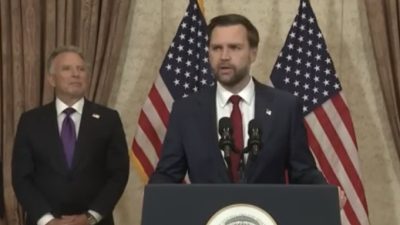
The diplomatic façade between America and Iran cracked after 21 hours of tense deliberation, as U.S. Vice President JD Vance swiftly pointed to “shortcomings” in the talks with Iran — an assessment that underscored not just disappointment, but a widening strategic gulf. Central to this rupture was Iran’s refusal to commit to abandoning its nuclear ambitions, a stance that continues to threaten to redraw the geopolitical contours of West Asia.
Vance, in blunt terms, framed the collapse as a greater burden for Tehran than Washington: “It’s bad news for Iran much more than it’s bad news for the United States of America. So we go back to the United States having not come to an agreement.”
Yet beyond the immediate failure, Vance sharpened the underlying concern: “The question is, ‘Do we see a fundamental commitment of will for the Iranians not to develop a nuclear weapon not just now, not just two years from now but for the long term?’ We haven’t seen that yet, we hope we will.”
The choice of Pakistan as host added an ironic undertone to the proceedings — Islamabad positioning itself as a mediator while simultaneously entangled in its own military tensions with neighboring Afghanistan.
According to Vance, Iran rejected what Washington described as its “final and best offer,” leaving the fragile two-week ceasefire suspended in uncertainty.
Tehran, for its part, acknowledged that “two or three key issues” remained unresolved, while signaling a hardening stance. The Fars News Agency reported that Iran has “no plan for a next round of negotiations,” casting further doubt over diplomatic momentum.
Still, Pakistan’s Foreign Minister Ishaq Dar sought to keep the door ajar, pledging continued efforts to bridge the divide.
From Tehran, Mohammad Bagher Ghalibaf struck a tone shaped by caution and historical grievance:
“Before the negotiations, I emphasized that we have the necessary goodwill and determination, but due to the experiences of the two previous wars, we do not trust the other side.”
He added pointedly: “America understood our logic and principles, and now it is time for it to decide whether it can gain our trust or not.”
The implications of failure are already reverberating. As BBC noted, “The fact that Saturday’s talks have ended without the two sides making any headway will raise fears of the resumption of the war both among many in Iran, and also among Iran’s southern neighbours.”
Meanwhile, President Donald Trump has escalated the stakes further, asserting that U.S. naval forces are now engaged in clearing mines in the Strait of Hormuz — a critical artery through which roughly 20% of global LNG and oil supplies flow. Any miscalculation here risks immediate and far-reaching consequences, especially as Iran has long declared the strait a non-negotiable red line.
The broader landscape remains perilously complex. Israel continues to pursue the prospect of regime change in Iran, while tensions involving Hezbollah and Israel simmer in Lebanon. Across the Gulf, several states remain deeply unsettled by Iran’s regional posture and repeated confrontations.
In this volatile convergence — nuclear brinkmanship, contested waterways, proxy tensions, and competing visions of regional order—the margin for error is vanishingly thin. The collapse of talks in Pakistan is not merely a diplomatic setback; it is a warning that the fragile balance holding back wider conflict may not endure much longer.

Modern Tokyo News is part of the Modern Tokyo Times group
http://moderntokyotimes.com Modern Tokyo Times – International News and Japan News
http://sawakoart.com – Sawako Utsumi’s website and Modern Tokyo Times artist
https://moderntokyonews.com Modern Tokyo News – Tokyo News and International News
PLEASE JOIN ON TWITTER
https://twitter.com/MTT_News Modern Tokyo Times