
America and Iran Tensions Spiral – Attacks Hit Several Nations
Kanako Mita, Noriko Watanabe, and Lee Jay Walker
Modern Tokyo Times
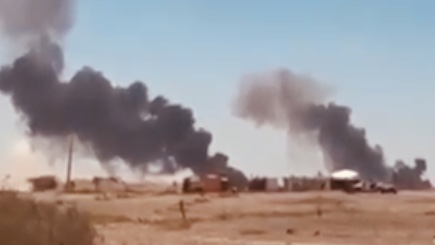
The deaths of three American soldiers in Jordan and Iraq underscore Iran’s continuing ability to threaten U.S. military personnel and installations across the Gulf and wider West Asia. Although previous American and Israeli strikes have degraded elements of Iran’s military infrastructure, Tehran retains significant retaliatory capabilities through both direct action and its network of regional proxy forces.
Responding to the fatalities, President Donald Trump warned that Iran would be hit “very hard” in the coming days, describing the latest U.S. strikes as being carried out “in honor” of the fallen soldiers.
According to U.S. Central Command (CENTCOM), a “new wave” of American airstrikes struck Iran, marking the ninth consecutive night of operations aimed at weakening its military capabilities. Washington also targeted Iranian communications networks to further reduce Tehran’s ability to disrupt shipping in the Strait of Hormuz.
Iran responded by launching attacks against U.S. military assets, including aircraft at Aqaba Airport in Jordan, while also targeting American positions in Syria. Missiles also reached Kuwait and other Gulf states, highlighting the conflict’s widening regional footprint.
Meanwhile, American strikes targeted military and strategic infrastructure in Bandar Imam Khomeini, Bandar Mahshahr, Chabahar, Konarak, Tabriz, and around Tehran. Iran, in turn, warned that the Strait of Hormuz “will not be safe for the transit of petrochemical products, nor even a single drop of oil and gas” while U.S. operations continue, pledging a “punitive operation” to deter further attacks.
The renewed confrontation between Washington and Tehran risks destabilizing the wider Middle East, increasing security concerns for Gulf states and raising the prospect of renewed volatility in global energy markets. While temporary ceasefires may ease immediate tensions, lasting stability will require addressing the deeper strategic disputes surrounding Iran’s regional proxy network, its nuclear ambitions, political freedoms within Iran, freedom of navigation through the Strait of Hormuz, and the extensive U.S. military presence across the Gulf.
Despite the escalating conflict, both sides continue to leave the door open to diplomacy. U.S. Secretary of State Marco Rubio reiterated that Washington “always remains open to a diplomatic solution,” while urging NATO allies, G7 members, and Gulf partners to reject any attempt by Iran to dominate a vital international waterway.
Tehran likewise maintains that diplomatic channels remain available, despite its deep mistrust of the United States. Nevertheless, every new casualty and retaliatory strike further entrenches mistrust, making a negotiated settlement increasingly difficult.
https://moderntokyonews.com/category/middle-east-west-asia Past articles about WEST ASIA (MIDDLE EAST) via MODERN TOKYO NEWS
MODERN TOKYO TIMES – MODERN TOKYO NEWS – please check https://moderntokyonews.com
Please check Modern Tokyo News at https://moderntokyonews.com for articles going back over 12 years. Sadly, Modern Tokyo Times got hacked and lost 14 years of articles…

Modern Tokyo News is part of the Modern Tokyo Times group
http://moderntokyotimes.com Modern Tokyo Times – International News and Japan News
http://sawakoart.com – Sawako Utsumi’s website and Modern Tokyo Times artist
https://moderntokyonews.com Modern Tokyo News – Tokyo News and International News
PLEASE JOIN ON FACEBOOK
https://www.facebook.com/moderntokyotimes