
Japanese Female Novelist and Communist (Miyamoto Yuriko)
Lee Jay Walker
Modern Tokyo Times
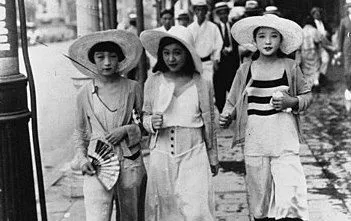
Japanese novelist and short-story writer Miyamoto Yuriko (1899–1951) could easily have disappeared into the comfortable conformity expected of a woman born into privilege. Instead, she chose a far more demanding path. Refusing to be sheltered by wealth or social standing, Miyamoto remained steadfast to her political and social convictions, even when that fidelity exacted a devastating personal cost.
That price was brutally imposed during the rise of Japanese nationalism and militarism in the early Shōwa era. In 1942, while enduring harsh interrogation and torture at the hands of the authorities, Miyamoto suffered a severe heatstroke that permanently damaged her health. The physical consequences never left her, lingering until her death in 1951. Yet she refused to surrender. Her resilience was not simply personal courage; it sprang from an unwavering belief that her communist ideals were inseparable from the broader struggle for justice, equality, and human dignity.
Her social conscience had taken root much earlier during her studies at Ochanomizu Girls’ Middle School in Tokyo, where she became acutely aware of the inequalities woven into everyday life. Economic injustice drew her toward socialism, a commitment reflected in works such as Noson (Farming Village) and Mazushiki Hitobito no Mure (A Crowd of Poor People). Feminism soon became equally central to her outlook. For Miyamoto, the emancipation of women and the liberation of the oppressed formed a single, indivisible cause—one she pursued through both literature and political engagement.
An insatiable reader from adolescence, Miyamoto devoured books as though each volume opened another window onto humanity’s triumphs and tragedies. The literary voices that shaped her imagination were formidable: Chekhov’s quiet melancholy, Dostoevsky’s psychological intensity, Gorky’s revolutionary spirit, Nietzsche’s unsettling provocations, Poe’s darkness, Rolland’s humanism, Tolstoy’s moral grandeur, Turgenev’s social realism, and Shakespeare’s timeless exploration of the human condition. Alongside these towering figures, she immersed herself in the emerging brilliance of Meiji and early Taishō literature, absorbing Japan’s own search for modernity, identity, and social transformation.
Her years in the Soviet Union (1927–1930) profoundly influenced her political outlook. It is easy, with the benefit of hindsight, to argue that she failed to perceive the harsher realities of Soviet life. Yet no visitor fully comprehends the complexities of any nation. Even today, countless travellers leave the United States without understanding the scale of its opioid epidemic, entrenched homelessness, or widening social inequalities. Miyamoto’s impressions were inevitably shaped by the historical moment she encountered. The ambitious drive for industrialization, sweeping programmes of collectivization, and the highly visible participation of women in public life appeared to embody a society striving toward a radically different future. Viewed against an international landscape still scarred by colonial empires, widespread economic collapse during the Great Depression, and entrenched systems of exploitation—including slavery that survived in parts of the Arabian Peninsula into the 1960s—such aspirations carried genuine appeal for many intellectuals of her generation.
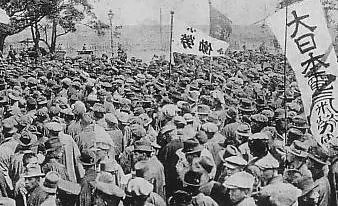
From 1932 to 1942, Miyamoto lived beneath the relentless shadow of state repression. Arrest followed arrest; imprisonment became a recurring chapter of her life. Altogether, she spent roughly two years behind bars, sharing the fate of many Japanese communists who refused to renounce their beliefs despite mounting pressure from the authorities.
Neither prison walls nor repeated interrogations succeeded in breaking her resolve. Miyamoto’s commitment to communism was never a passing political preference; it was the moral compass that guided her life, regardless of the personal sacrifices demanded.
In the fragile years preceding her death in 1951, while still burdened by the lasting injuries inflicted during her 1942 interrogation, Miyamoto continued to write with remarkable determination, as though literature itself sustained her spirit. Even as her health deteriorated, she produced a succession of important works, including Banshū Heiya (The Banshū Plain, 1947), Fūchisō (The Weathervane Plant, 1947), Futatsu no Niwa (The Two Gardens, 1948), and Dohyō (Landmark, 1950).
These final novels stand as quiet acts of resistance. As post-war Japan entered an era increasingly shaped by anti-communism, Miyamoto refused to abandon either her convictions or her literary mission. Even as her body weakened, her pen remained resolute. She confronted political hostility and physical suffering with the same unwavering determination that had defined her entire life.
Miyamoto Yuriko left the world exactly as she had lived within it: intellectually fearless, politically uncompromising, and profoundly committed to those she believed had been denied justice. Whether admired or contested for her ideological convictions, her life remains one of the most compelling examples of a Japanese writer who refused to separate literature from conscience, or artistic expression from the enduring pursuit of social justice.
https://moderntokyonews.com/category/japan-culture/ Past JAPAN CULTURE articles via MODERN TOKYO NEWS
MODERN TOKYO TIMES – MODERN TOKYO NEWS – please check https://moderntokyonews.com
Please check Modern Tokyo News at https://moderntokyonews.com for articles going back over 12 years. Sadly, Modern Tokyo Times got hacked and lost 14 years of articles…

Modern Tokyo News is part of the Modern Tokyo Times group
http://moderntokyotimes.com Modern Tokyo Times
http://sawakoart.com – Sawako Utsumi’s website and Modern Tokyo Times artist
https://moderntokyonews.com Modern Tokyo News
PLEASE JOIN ON TWITTER
https://twitter.com/MTT_News Modern Tokyo Times
PLEASE JOIN ON FACEBOOK
http://facebook.com/moderntokyotimes