
Chittagong Hill Tracts and West Papua (Indigenous Marginalized and Islamization)
Noriko Watanabe, Michiyo Tanabe, and Lee Jay Walker
Modern Tokyo Times
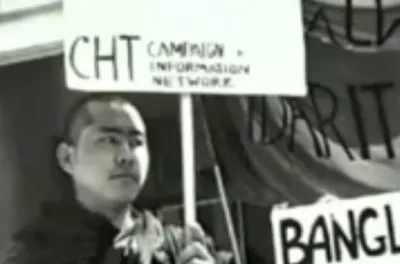
The non-Muslim indigenous peoples of West Papua (Indonesia) and the Chittagong Hill Tracts (Bangladesh) have been abandoned by the international community for decades. The result has been profound demographic transformation, accelerating Islamization, and the consolidation of state control by Indonesia and Bangladesh respectively. Consequently, the predominantly Buddhist ethnic groups of the Chittagong Hill Tracts and the largely Christian indigenous Papuans face a harsh reality: the erosion of their ancestral cultures, the marginalization of their communities, the loss of influence over their natural resources, and increasing pressure from religious and political forces determined to reshape their homelands.
Islam was historically a negligible presence in the Chittagong Hill Tracts. However, the partition of India and the subsequent emergence of Bangladesh following its independence from Pakistan in 1971 transformed the geopolitical landscape. For the indigenous peoples of the Chittagong Hill Tracts, whose religious traditions were overwhelmingly Buddhist alongside other indigenous faiths, the new nation-state gradually initiated a process of Islamization and demographic engineering. This transformation accelerated through relentless Bengali Muslim migration, while military policies reinforced the systematic alteration of the region’s ethnic and religious composition. As a result, the distinct cultural, ethnic, and spiritual identity of the Chittagong Hill Tracts has increasingly been subordinated to the forces of Bengali nationalism and Islamic expansion.
A similar pattern unfolded in West Papua. Islam was historically a minor faith among a population rooted in indigenous beliefs and Christianity. Yet after Indonesia absorbed West Papua, demographic policies and migration programs fundamentally altered the region’s ethnic and religious landscape. Just as the Buddhists of the Chittagong Hill Tracts have faced the dual pressures of Islamization and Bengali nationalism, indigenous Papuans have confronted Islamization alongside the political and cultural dominance associated with Javanization. Consequently, resource-rich West Papua has witnessed the systematic weakening of indigenous influence through various state-driven mechanisms designed to concentrate power and authority in the hands of Jakarta.
The strengthening of the Indonesian central state and the growing dominance of Javanese influence remain relentless realities in West Papua. Likewise, numerous Muslim communities from other parts of Indonesia have settled in the region through transmigration policies. As a consequence, indigenous Papuans face mounting marginalization, rapid demographic change, the expansion of Islam, the exploitation of natural resources by Indonesian and foreign interests, large-scale non-Papuan migration, and political strategies designed to dilute indigenous influence. In effect, many Papuans increasingly find themselves reduced to a subordinate status within their own ancestral homeland.
President Benny Wenda of the United Liberation Movement for West Papua (ULMWP) said: “We are murdered, tortured, and raped, and then our land is stolen for resource extraction and corporate profit when we flee.”
Turning back to the Chittagong Hill Tracts, Al Jazeera noted several years ago: “Indigenous demands for autonomy remain unheeded. And the Hill Tracts remain the most highly militarized region in Bangladesh. Drive around and it feels like an occupation, even if it isn’t being called one.”
The British were fully aware that Buddhists and Hindus living in territories severed from India would face profound uncertainty and vulnerability under the political dominance of newly created Muslim-majority states. They understood the historical realities of the Indian subcontinent, where centuries of religious conflict, conquest, and discrimination had left deep scars. Likewise, British policymakers were well acquainted with the implications of Islamic legal and political traditions, including the historical subordination of non-Muslim communities under various Islamic regimes. Given this knowledge, it is difficult to escape the conclusion that the fate of vulnerable religious minorities was subordinated to broader geopolitical calculations during the final years of the British Empire.
Yet despite these realities, the British partition settlement effectively transferred the predominantly Buddhist peoples of the Chittagong Hill Tracts—and millions of Hindus across what would become Pakistan and later Bangladesh—to political systems in which they would rapidly become marginalized minorities. The decision ignored the clear religious and cultural character of the Chittagong Hill Tracts and disregarded the concerns of its indigenous inhabitants. In the decades that followed, many non-Muslim communities would experience discrimination, displacement, demographic pressure, and the erosion of their historic presence. Consequently, for many Buddhists and Hindus, the combined legacy of successive Islamic conquests and British imperial cartography remains one of the most consequential and painful chapters in the history of the Indian subcontinent and neighboring regions, including Myanmar.
Modern Tokyo Times previously stated: “The international media is negating the serious issue of Bengali Muslims overwhelming the indigenous in Assam (India), the Chittagong Hill Tracts (Bangladesh), Rakhine (Myanmar), and other areas. Indeed, it appears that Buddhists, Christians, Hindus, and Tribal groups don’t even enter the equation. Similarly, the Pope and the Organization of Islamic Cooperation (OIC) appear blinded by their own respective agendas. Hence, the indigenous remain voiceless and at the mercy of endless Bengali Muslim migration, a land grab, and Islamization by stealth.”

The indigenous peoples of West Papua understand these realities all too well. Like the peoples of the Chittagong Hill Tracts, they face relentless migration into their ancestral lands, Islamization by stealth, land appropriation, geopolitical manipulation, cultural dislocation, economic exclusion, and political marginalization. These pressures collectively threaten the survival of their distinct identities and undermine their ability to determine their own future.
The Guardian says, “Indonesia has controlled West Papua since invading in 1963 and formalizing its annexation through the controversial, UN approved, ‘Act of Free Choice’. Security forces are accused of severe human rights violations during the occupation with an estimated 500,000 Papuans killed.”
If the international community continues to remain largely silent—while governments, corporations, and external actors benefit from the exploitation of indigenous lands and resources—then lofty rhetoric concerning democracy, liberty, human rights, religious freedom, and pluralism rings increasingly hollow. Principles that are routinely invoked on the world stage become meaningless when entire indigenous populations are steadily pushed to the margins of their own homelands.
Therefore, it is long past time for Bangladesh and Indonesia to be held accountable for policies and actions that have contributed to the demographic, cultural, religious, and political transformation of the Chittagong Hill Tracts and West Papua. Failure to address these realities amounts to tacit approval of processes that are steadily eroding the indigenous character of both regions. By remaining silent, the international community risks becoming complicit in the continuing alteration of the cultural, ethnic, and religious fabric of the Chittagong Hill Tracts and West Papua.
https://moderntokyonews.com/?s=West+Papua Past WEST PAPUA articles via MODERN TOKYO NEWS
MODERN TOKYO TIMES – MODERN TOKYO NEWS – please check https://moderntokyonews.com
Please check Modern Tokyo News at https://moderntokyonews.com for articles going back over 10 years. Sadly, Modern Tokyo Times got hacked and lost 14 years of articles…

Modern Tokyo News is part of the Modern Tokyo Times group
http://moderntokyotimes.com Modern Tokyo Times – International News and Japan News
http://sawakoart.com – Sawako Utsumi’s website and Modern Tokyo Times artist
https://moderntokyonews.com Modern Tokyo News – Tokyo News and International News
PLEASE JOIN ON TWITTER
https://twitter.com/MTT_News Modern Tokyo Times
PLEASE JOIN ON FACEBOOK
https://www.facebook.com/moderntokyotimes