
DRC Ebola Deaths Mount – Food Insecurity and War
Noriko Watanabe, Michiyo Tanabe, and Kanako Mita
Modern Tokyo Times
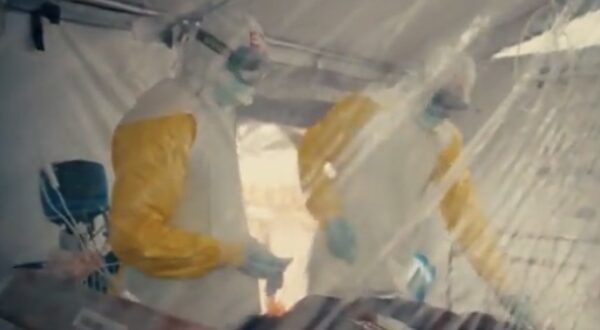
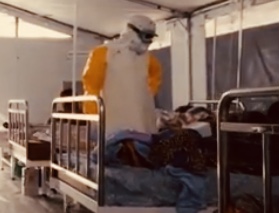
The Democratic Republic of the Congo (DRC) remains gripped by a devastating Ebola crisis, but this is not simply another story of a deadly virus spreading through vulnerable communities. It is a humanitarian catastrophe in which epidemic disease, armed conflict, mass displacement, hunger, fragile healthcare systems and chronic insecurity are colliding with terrifying force. In eastern Congo, particularly in Ituri Province, communities already scarred by years of violence are being asked to withstand yet another potentially lethal blow.
This is precisely why the Ebola crisis must remain in the international headlines.
The current outbreak is caused by the rare Bundibugyo virus and has developed with extraordinary speed. WHO has described it as the largest Ebola outbreak ever reported in the DRC and warned that transmission has expanded across dozens of health zones and several provinces. By 26 August, WHO reported 5,794 confirmed cases and 2,786 deaths. The geographical expansion and almost 50 per cent crude case-fatality ratio underline the enormity of the emergency.
Yet statistics alone cannot convey the depth of the catastrophe.
The World Food Programme (WFP) has placed the outbreak within a much wider humanitarian picture. As the agency has repeatedly stressed, eastern DRC is already facing one of the world’s most severe hunger crises. Nearly 10 million people across the eastern provinces are facing crisis or emergency levels of hunger, while Ituri remains one of the country’s most severe hunger hotspots.
UN News reported that the WFP has been on the frontline since the outbreak was declared on 15 May, confronting an epidemic that has developed with unprecedented speed. The significance of the WFP’s involvement is immense because food assistance, humanitarian logistics and access to vulnerable communities are not peripheral concerns during an Ebola outbreak. They can become part of the frontline response itself.
David Stevenson, WFP Country Director for the DRC, captured the extraordinary complexity of the situation when he said: “… Ebola is in eastern Congo and that area is so tragically affected by conflict, by food insecurity, by displacement, it needs to have a comprehensive approach.”
Those words deserve particular attention.
Ebola is not arriving in an empty landscape. It is arriving among people who have already endured displacement, violence and hunger. The Ituri Province epicentre is therefore not merely a geographical location on an epidemiological map. It is a place where humanitarian suffering has accumulated for years, leaving communities with fewer resources with which to confront another emergency.
Stevenson highlighted the gravity of the hunger crisis, saying: “It’s a place where there are over 500,000 people in IPC 4 of hunger and food insecurity… That’s one notch short of mortality from starvation.”
The implications are profound. A population facing extreme hunger is less able to isolate from disease, less able to travel safely to medical facilities, less able to replace lost livelihoods and more vulnerable to the disruption of markets and essential services. Hunger and epidemic disease can therefore reinforce one another, creating a vicious cycle from which the most vulnerable communities struggle to escape.
Stevenson continued with an unusually direct appeal to the international community: “I’m stunned that we don’t have the response from the international community directly supporting the food assistance that’s needed so that collectively we can end Ebola… Given the level of the challenge that’s out there, it’s really incumbent on me to be very clear with such an appeal, and we’re asking for support now.”
This should not be allowed to become another forgotten humanitarian appeal.
The WFP has warned that “In eastern DRC, nearly 10 million people are already facing crisis or emergency levels of hunger. Ituri remains one of the country’s most severe hunger hotspots with 1.9 million people facing crisis levels of food insecurity or worse.”
The figures are staggering, but the deeper message is even more important: food assistance is part of the Ebola response.
The international community cannot reasonably expect communities to defeat an epidemic while hunger, insecurity and displacement continue to destroy the foundations upon which effective public-health measures depend. The WFP has consequently stressed the importance of food, livelihoods, logistics and humanitarian access in helping contain the outbreak.
There is also a particularly difficult scientific dimension.
Bundibugyo virus presents challenges distinct from the Ebola virus responsible for previous major outbreaks. There is no licensed vaccine specifically for Bundibugyo virus, while WHO continues to evaluate whether the existing Ervebo vaccine can provide meaningful protection. In August, an initial allocation of 70,000 Ervebo doses was made available for the DRC, including doses for a clinical trial and for frontline and healthcare workers. WHO’s latest guidance, however, stresses that evidence of clinical protection against Bundibugyo remains insufficient and recommends use within research protocols.
Consequently, the fundamentals of outbreak control remain indispensable: rapid identification, testing, contact tracing, infection prevention, clinical care, safe burials, community engagement and sustained surveillance. WHO has repeatedly emphasized that insecurity, population movement and difficult access can severely complicate those efforts.
And behind all of this stands the wider security crisis.
Lee Jay Walker (Modern Tokyo Times analyst) reports, “Eastern Congo remains plagued by countless armed groups, political rivalries, Islamists who butcher Christians, ethnic tensions, and regional competition. The continuing confrontation involving M23 and the long-running tensions between Kinshasa and Kigali add another layer of instability. Rwanda has repeatedly denied allegations of supporting M23, while the conflict itself has contributed to displacement and humanitarian insecurity.”
The result is a terrible convergence: war makes humanitarian access harder; displacement makes disease surveillance harder; hunger weakens already vulnerable communities; and disease places further pressure on an overstretched healthcare system.
Healthcare workers themselves have faced enormous pressures, including reported labour disputes over unpaid salaries in Bunia. This is another painful contradiction of the crisis: those expected to stand between Ebola and vulnerable communities are themselves operating within an environment of profound insecurity and economic hardship.
The international community therefore faces a choice.
It can allow Ebola to become another crisis that briefly dominates headlines before being displaced by the next geopolitical emergency. Or it can recognize that the DRC requires sustained attention precisely because the country’s suffering does not fit neatly into one headline.
Ebola is the headline—but hunger is underneath it. Conflict is underneath the hunger. Displacement is underneath the conflict. And beneath all of these layers are ordinary Congolese families attempting to survive conditions that would overwhelm even the strongest of societies.
The World Food Programme’s warning should therefore resonate far beyond the immediate Ebola response. Food is not separate from health. Humanitarian access is not separate from disease control. Peace and security are not separate from public health.
The DRC is confronting an interconnected emergency in which every crisis strengthens another.
This is why the world must keep watching.
The people of eastern Congo cannot afford another cycle in which international attention arrives with urgency, remains briefly, and then disappears when another crisis captures the world’s imagination. They need sustained humanitarian assistance, functioning healthcare, food security, protection and international solidarity.
Above all, they need the world to remember that behind every case number is a human being, behind every death is a family, and behind every statistic lies a community already carrying the unbearable weight of war, hunger and displacement.
Ebola must not be allowed to disappear from the headlines. Neither must the people of the Democratic Republic of the Congo.
https://moderntokyonews.com/?s=DRC Past DRC articles via MODERN TOKYO NEWS
MODERN TOKYO TIMES – MODERN TOKYO NEWS – please check https://moderntokyonews.com
Please check Modern Tokyo News at https://moderntokyonews.com for articles going back over 12 years. Sadly, Modern Tokyo Times got hacked and lost 14 years of articles…

Modern Tokyo News is part of the Modern Tokyo Times group
http://moderntokyotimes.com Modern Tokyo Times – International News and Japan News
http://sawakoart.com – Sawako Utsumi and her website – Modern Tokyo Times artist
https://moderntokyonews.com Modern Tokyo News – Tokyo News and International News
PLEASE JOIN ON FACEBOOK
http://facebook.com/moderntokyotimes