
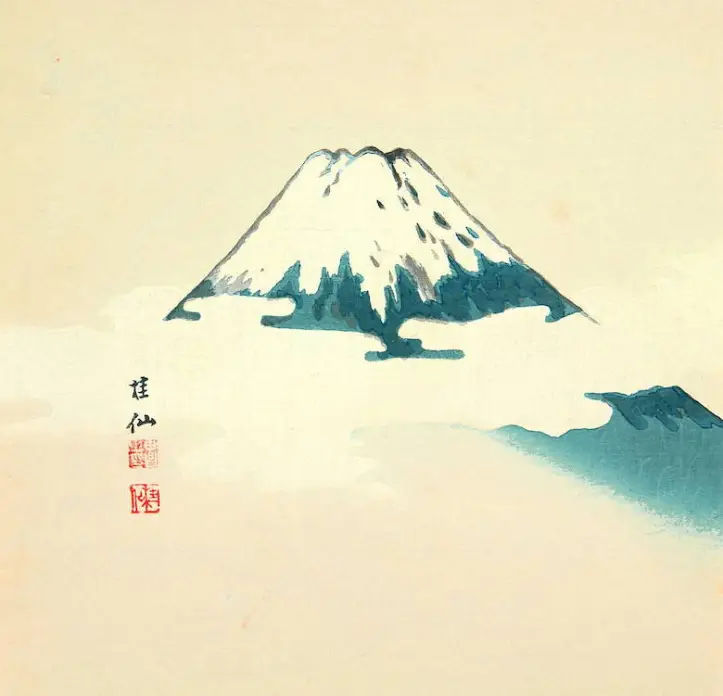
Keisen Ikeda: Japanese Landscape, Spirituality, and the Quiet Elegance of Nanga
Lee Jay Walker
Modern Tokyo Times
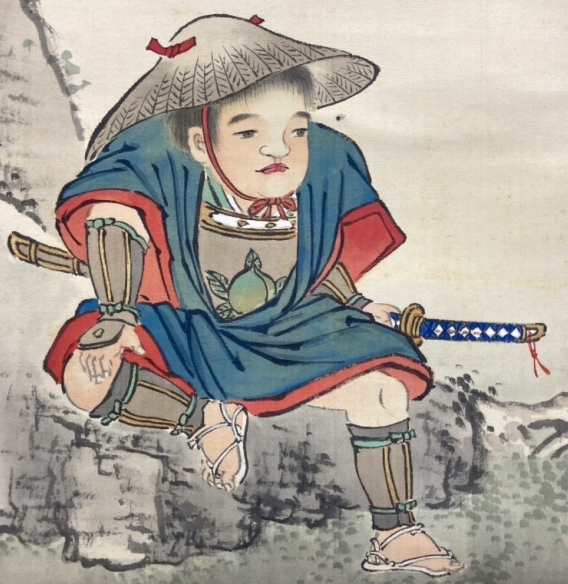
Keisen Ikeda was born in the twilight of the Edo Period in the early 1860s and passed away in 1931. His lifetime therefore crossed several defining chapters of Japanese history: the final years of the shogunate, the Meiji era (1868–1912), the Taishō era (1912–1926), and the opening years of Shōwa. His artistic journey consequently belongs to a fascinating period when Japan was experiencing profound transformation while continuing to preserve the cultural memory of earlier centuries. Within his paintings, the refinement of the classical tradition could therefore coexist with the changing sensibilities of modern Japan.
Keisen first opened his eyes in Ise Province, a region inseparable from the spiritual foundations of Japanese culture. Here stands the Grand Shrine of Ise, the most revered sanctuary of Shintō and a sacred centre dedicated to Amaterasu Ōmikami, the sun goddess and imperial ancestral deity. The cultural landscape surrounding Ise was therefore one in which nature, ritual, ancestry, and spirituality existed in close conversation. For an artist who would later devote himself to landscape, such an environment provides an especially meaningful cultural backdrop: mountains, forests, water, mist, and changing seasons are not merely subjects of visual beauty, but part of a much older Japanese understanding of humanity’s relationship with the natural world.
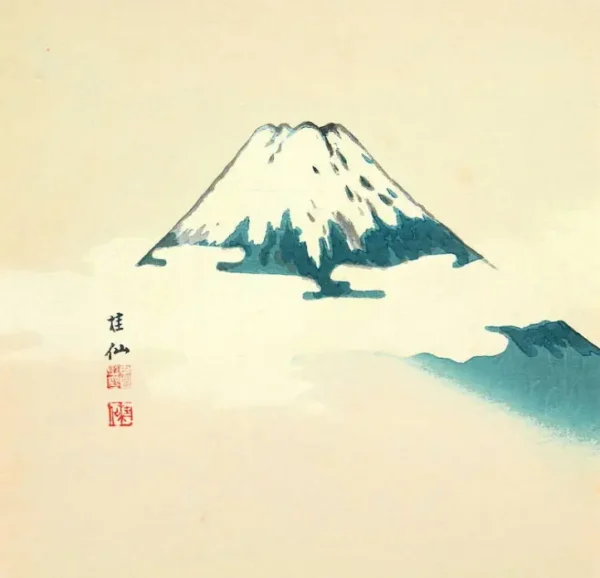
His earliest artistic mentor was his father, Unshō Ikeda. In the early 1870s, father and son moved to Kyoto, a city whose cultural importance is almost impossible to separate from the history of Japanese art (Nara being the cradle of Japanese high culture – then moving in power and influence to Kyoto). Kyoto had been the imperial capital for more than a millennium and remained a centre of painting, poetry, craftsmanship, Buddhism, Shintō traditions, tea culture, and refined aesthetics. For Keisen, growing artistically within such an environment meant entering a world where artistic accomplishment was inseparable from cultural memory. The brush was not simply an instrument for representation; it was part of a long conversation between generations.
Within Kyoto’s artistic circles, Keisen Ikeda gained recognition particularly for his devotion to Nanga painting. Nanga, deeply influenced by the literati painting tradition of China, became an important expression of cultivated artistic individuality in Japan. Its landscapes often favoured suggestion over literal description, allowing a few carefully placed brushstrokes, areas of empty space, and subtle washes of ink and colour to evoke mountains, rivers, mist, distance, and solitude. In this respect, the landscape becomes more than an imitation of nature. It becomes a space for contemplation, imagination, and the meeting of the visible and invisible.
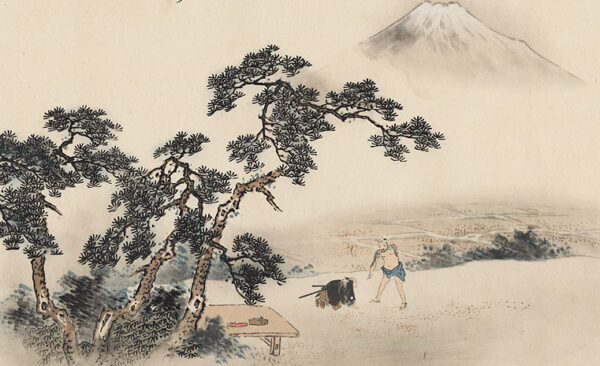
This sensibility can be felt particularly strongly in the Japanese tradition of depicting mountains and distant landscapes. A mountain such as Fuji can simultaneously be physical, cultural, and spiritual: an enduring presence within the Japanese landscape and an image carrying centuries of artistic and religious associations. Keisen’s approach belongs to this wider cultural world, where restraint can possess greater emotional power than abundance and where emptiness itself becomes an active element of composition.
Through brush and ink, Keisen Ikeda therefore participated in a long Japanese artistic tradition in which landscape serves as a vessel for memory, tranquillity, and contemplation. His paintings belong to a Japan undergoing enormous change, yet they retain a sense of continuity with the refined worlds of earlier artistic generations. The mountains, water, mist, and open spaces within such works invite the viewer to slow down and contemplate rather than simply observe.
Keisen Ikeda ultimately left behind a body of evocative art in which cultural continuity and artistic sensitivity meet. His life bridged the final echoes of Edo with Meiji modernity, the Taishō period, and the beginning of Shōwa, yet his artistic language remained deeply connected to the older cultural vocabulary of Japan. In his landscapes, history does not disappear beneath modernity. Instead, it quietly endures through the brush, allowing nature, spirituality, beauty, and human contemplation to remain in conversation across generations.
https://moderntokyonews.com/?s=Art Past articles about ART via MODERN TOKYO NEWS (Modern Tokyo Times group)
MODERN TOKYO TIMES – MODERN TOKYO NEWS – please check https://moderntokyonews.com
Please check Modern Tokyo News at https://moderntokyonews.com for articles going back over 12 years. Sadly, Modern Tokyo Times got hacked and lost 14 years of articles…

Modern Tokyo News is part of the Modern Tokyo Times group
http://moderntokyotimes.com Modern Tokyo Times – International News and Japan News
http://sawakoart.com – Sawako Utsumi’s website and Modern Tokyo Times artist
https://moderntokyonews.com Modern Tokyo News – Tokyo News and International News
PLEASE JOIN ON FACEBOOK
http://facebook.com/moderntokyotimes