
Japan Art and the Beauty of Simplicity (Scroll of Time)
Lee Jay Walker
Modern Tokyo Times
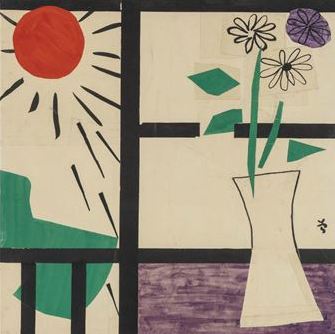
The Japanese artist Yasui Sotaro (1888–1955) witnessed momentous changes throughout his lifetime. These included the dynamic Meiji Period (1868–1912), the greater openness of the Taisho Period (1912–1926), the extreme nationalism of the early Showa Period, and the poverty and gradual recovery that followed the Second World War. Such profound historical transformations formed the backdrop to an era in which Japanese art continued to evolve through encounters between tradition and Western influences.
Yasui Sotaro studied under the acclaimed Japanese artist Asai Chu, who sadly died in 1907, when Yasui was still a teenager. Later, in France, he studied under Jean-Paul Laurens at the highly acclaimed Académie Julian. Through these experiences, Yasui developed an artistic language that reflected the meeting of different cultural traditions while retaining a distinctive personal vision.
The Hiroshima Museum says, “A Western-style painter in Japan. He was active in the Showa period, called ‘The Epoch of Yasui and Umehara’, with his rival, UMEHARA Ryuzaburo. He made a powerful style of painting, called ‘The Yasui Style’, with deformations, omissions, … distinctive colors.” This description highlights the individuality of Yasui’s artistic approach, in which departures from outward appearances and the selective use of form and colour helped create a distinctive visual identity.
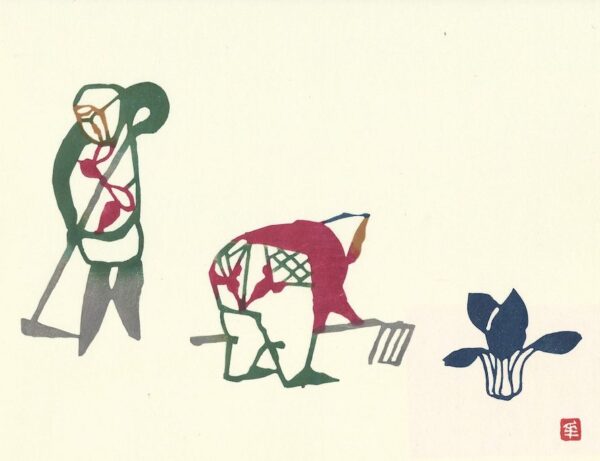
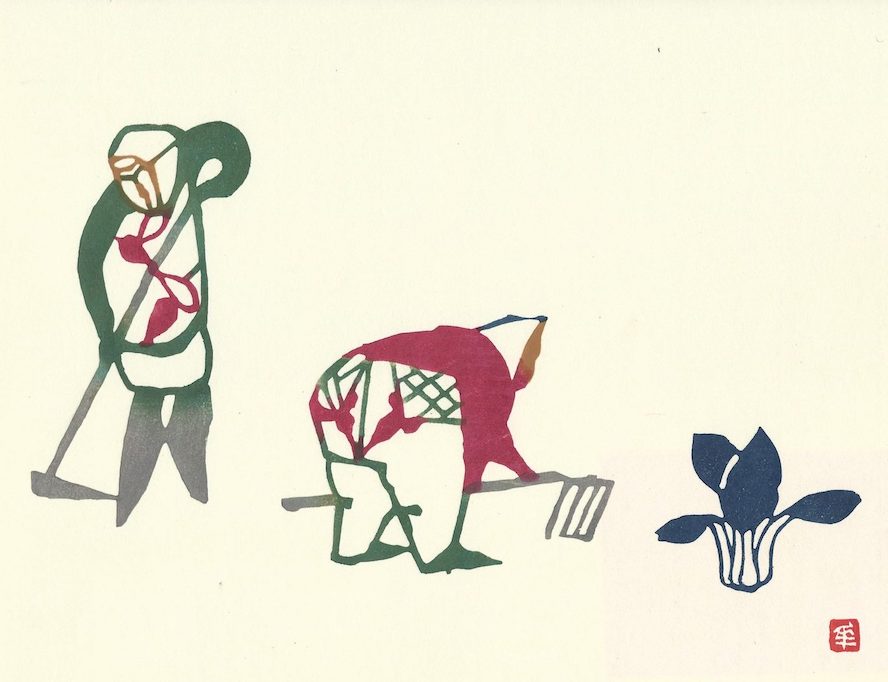
The artist Inagaki Toshijiro (1902–1963) was born in Kyoto, a city renowned for its rich artistic traditions, refined cultural heritage, and enduring influence on Japanese aesthetics. He specialised in Katazome, a traditional Japanese dyeing technique in which resist paste is applied through stencils to create intricate patterns on textiles. Through this delicate interplay of design, colour, and craftsmanship, Katazome embodies the Japanese appreciation of beauty in both artistic expression and everyday objects.
In the early post-war period, Inagaki adopted the Katazome style. Drawing upon Kyoto’s deep cultural atmosphere, he developed an approach that was distinctly personal while remaining boldly innovative. The city’s enduring influence can be seen in his ability to unite tradition with originality, creating works that express both reverence for historical craftsmanship and an openness to modern creativity. His art reflects the continuing dialogue between Japan’s cultural inheritance and the changing sensibilities of the modern age.
The final artwork above is by the contemporary artist Sawako Utsumi and is titled “Still Life Art and the Scroll of Time.”At first glance, the composition appears to be devoid of political, religious, or philosophical meaning. Yet, beneath this apparent simplicity lies a deeper reflection on the scroll, which Utsumi equates with the passage of time and the philosophical and religious wisdom accumulated throughout human existence.
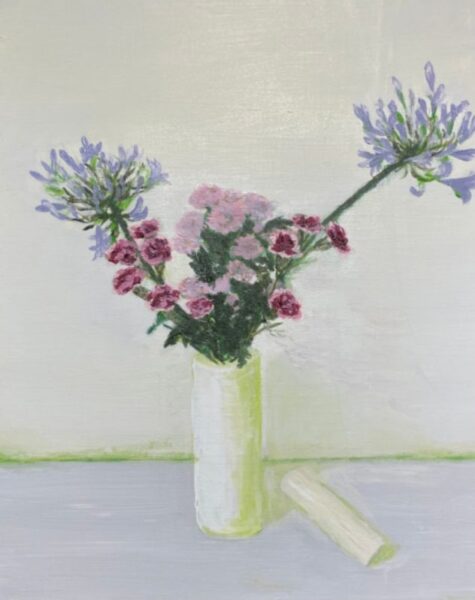
In the realm of art, the words of Aristotle resonate with Utsumi’s worldview. After all, Aristotle pointedly said: “The aim of art is to represent not the outward appearance of things, but their inward significance.” This thought provides a fitting lens through which to approach Utsumi’s work, where the visible image becomes a doorway to meanings that extend beyond the objects themselves.
Utsumi comes from a Shinto background, yet her spiritual outlook is equally shaped by the quiet experience of praying in isolated Buddhist temples or pausing before a passing Jizō while walking through the mountains. Within this personal understanding, the scroll of time represents the wisdom sought by each individual who looks beyond immediate appearances in search of a larger truth. Faith, philosophy, and personal convictions may differ, but the human search for understanding transcends these boundaries.
Thus, the scroll becomes a metaphor for the journey of every individual passing through this world. Its significance is not confined to any single religion or philosophical tradition, but rests in the wisdom, reflection, and experience gathered along the way. Yet this deeper scroll is often overlooked by those who concentrate solely on the more visible realities of life. Through her artwork, Utsumi invites the viewer to look again, to move beyond the surface, and to consider the deeper meaning concealed within the passage of time.
https://fineartamerica.com/featured/still-life-art-and-the-scroll-of-time-sawako-utsumi.html
https://moderntokyonews.com/?s=Art Past ART articles via MODERN TOKYO NEWS (Modern Tokyo Times group)
MODERN TOKYO TIMES – MODERN TOKYO NEWS – please check https://moderntokyonews.com
Please check Modern Tokyo News at https://moderntokyonews.com for articles going back over 12 years. Sadly, Modern Tokyo Times got hacked and lost 14 years of articles…

Modern Tokyo News is part of the Modern Tokyo Times group
http://moderntokyotimes.com Modern Tokyo Times – International News and Japan News
http://sawakoart.com – Sawako Utsumi and Modern Tokyo Times artist
https://moderntokyonews.com Modern Tokyo News – Tokyo News and International News
PLEASE JOIN ON FACEBOOK
https://www.facebook.com/moderntokyotimes