Japan Art and Utamaro (Birds)
Lee Jay Walker
Modern Tokyo Times
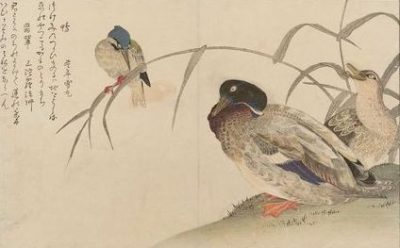
Kitagawa Utamaro (1753–1806) breathed art as if it were the very air of the Edo Period itself — refined, fleeting, and charged with the poetry of impermanence. At the mere mention of his name, the mind drifts toward his celebrated bijin-ga: women rendered with a tenderness that borders on the ethereal, and at times, with an intimacy that feels almost whispered rather than seen.
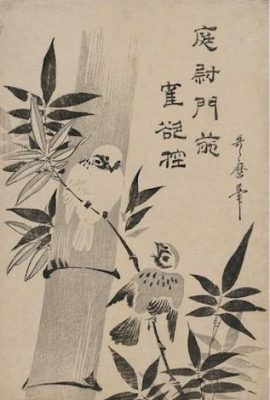
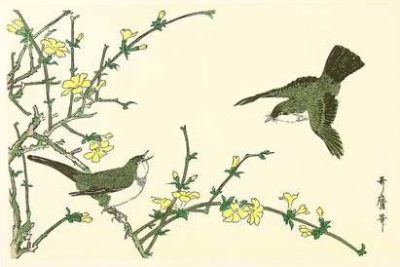
Yet Utamaro’s artistic spirit was never confined. He turned his gaze to nature — birds in particular—capturing their quiet grace and subtle vitality. In this work, the world of feathers and flight becomes his sole focus, revealing an artist attuned not only to human beauty but to the delicate rhythms of the natural world.
The British Museum observes, “He excelled at sensuous depictions, at conveying the sense of the glistening skin of the female body and capturing the most delicate nuances of emotional states, in a very different manner from Torii Kiyonaga. Over-production may have contributed to a gradual slackening and coarsening of design sense from the late 1790s onwards, and Utamaro would never recapture his earlier greatness. He produced many illustrated books, erotic prints and some fine paintings.”
In the early unfolding of his career, Utamaro immersed himself in the playful yet intellectually refined world of kyōka — comic poetry that dances between wit and satire. These commissions, alongside his book illustrations, became the crucible in which his style matured, eventually allowing him to expand into the more ambitious and expressive print formats that defined his legacy.
The MOA Museum of Art notes, “During the period of Kansei (1789–1800), Utamaro published a series of female portraits in a particular style known as ōkubi-e, depicting only the face or upper torso of women. This sensational attempt of drawing women had a significant impact on the genre of bijinga, bringing fame to the painter.”
But the final chapter of Utamaro’s life was marked by shadow. The death of his patron and confidant, Tsutaya Juzaburo, in 1797 severed a vital artistic bond. Not long after, Utamaro’s daring depiction of Toyotomi Hideyoshi consorting with prostitutes brought the heavy hand of authority upon him—culminating in imprisonment.
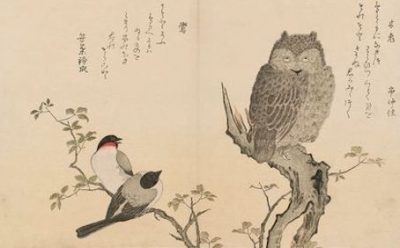
One senses in this closing decade a tightening of the world around him: political pressure, the indignity of restraint, and the quiet erosion of artistic freedom. Utamaro emerges not only as a master of line and form, but as a figure shaped by contradiction—sensuous yet disciplined, celebrated yet constrained — his inner world perhaps as intricate and fragile as the wings of the birds he so delicately portrayed.

Modern Tokyo News is part of the Modern Tokyo Times group
http://moderntokyotimes.com Modern Tokyo Times – International News and Japan News
http://sawakoart.com – Sawako Utsumi and Modern Tokyo Times artist
https://moderntokyonews.com Modern Tokyo News – Tokyo News and International News
PLEASE JOIN ON TWITTER
https://twitter.com/MTT_News Modern Tokyo Times
PLEASE JOIN ON FACEBOOK