
Japanese Art and Nature by Kobayashi Kokei
Lee Jay Walker
Modern Tokyo Times
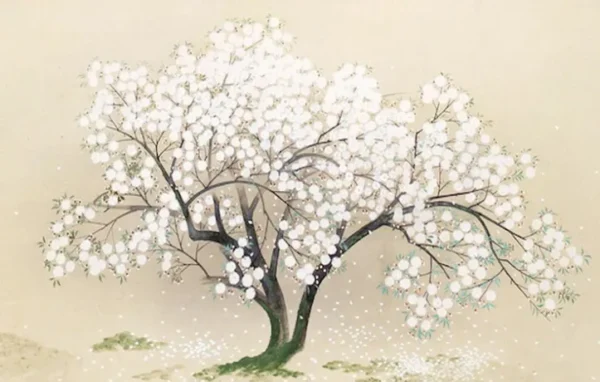
The Japanese painter Kobayashi Kokei (1883–1957) was born amid the snow-laden landscapes of Niigata Prefecture, where long winters and quiet horizons seem to linger within the measured stillness of his mature art. From an early age, he displayed a remarkable affinity for Nihonga — the classical tradition of Japanese painting that prizes elegance, restraint, and spiritual harmony over theatrical display.
Yet Kokei’s childhood unfolded beneath the shadow of profound sorrow. His mother died when he was only four years old, and before long his younger brother and father had also passed away. By the age of thirteen, he and his surviving sister were left to face the world together, sustained only by resilience and mutual devotion. Such early encounters with loss quietly instilled in Kokei an intimate awareness of impermanence — a sensibility that would later infuse his paintings with their distinctive serenity and emotional depth.
At sixteen, Kokei journeyed to Tokyo, carrying little beyond determination and an unwavering commitment to art. The hardships of his youth neither embittered nor defeated him. Instead, they refined his spirit and strengthened his resolve. Painting became both sanctuary and vocation — a place where grief could be transformed into luminous balance, disciplined line, and contemplative form.
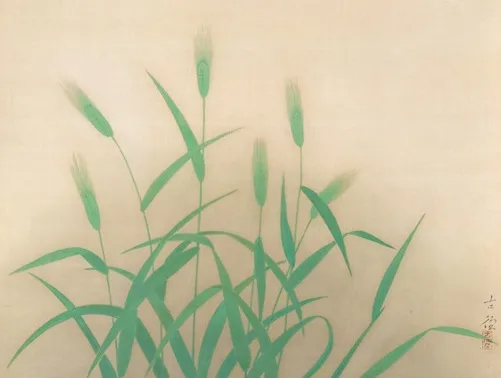
The Hiroshima Museum of Art observes: “A Japanese-style painter. He was one of the representative members in the In-ten (Japanese Visual Arts Academy). He is said to have created ‘Neo-Classicism in Japanese-style painting’ with fresh and crisp spaces in simple compositions, colors, and lines.”
This appraisal eloquently captures the essence of Kokei’s achievement. He neither abandoned tradition nor became captive to nostalgia. Rather, he distilled the timeless spirit of classical Japanese painting into works of extraordinary clarity — compositions that breathe with luminous restraint, refined simplicity, and a quiet modern sensibility.
In 1922, Kokei travelled to England, France, and Italy, where he encountered the artistic and architectural heritage of Europe at first hand. These experiences did not dilute his artistic identity; instead, they broadened and enriched it. Engaging with unfamiliar cultures and visual traditions, he absorbed fresh perspectives while remaining steadfastly faithful to his own aesthetic convictions.
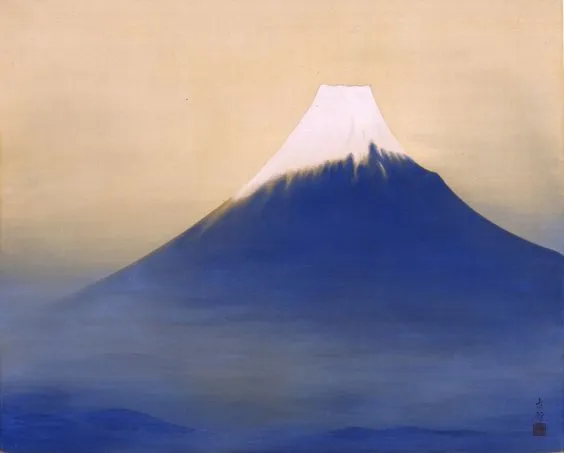
Upon returning to Japan in 1923, Kokei renewed his dialogue with the nation’s classical artistic inheritance, now illuminated by a wider cultural horizon. What emerged was not imitation but synthesis — a body of work rooted deeply in Japanese tradition while invigorated by personal reflection and an informed appreciation of the wider world.
Through adversity, contemplation, and artistic discipline, Kobayashi Kokei forged a vision of remarkable grace and precision. His Neo-Classical style was born not merely from theory or technical accomplishment, but from a life shaped by endurance, solitude, and an abiding faith in the quiet, transcendent power of art. Like the silent snows of his native Niigata, his paintings possess a stillness that conceals immense emotional depth, inviting each generation to discover beauty in simplicity, resilience in suffering, and permanence within the fleeting passage of time.
https://moderntokyonews.com/?s=Art Past articles about ART via MODERN TOKYO NEWS (Modern Tokyo Times group)
MODERN TOKYO TIMES – MODERN TOKYO NEWS – please check https://moderntokyonews.com
Please check Modern Tokyo News at https://moderntokyonews.com for articles going back over 12 years. Sadly, Modern Tokyo Times got hacked and lost 14 years of articles…

Modern Tokyo News is part of the Modern Tokyo Times group
http://moderntokyotimes.com Modern Tokyo Times – International News and Japan News
http://sawakoart.com – Sawako Utsumi and Modern Tokyo Times artist
https://moderntokyonews.com Modern Tokyo News – Tokyo News and International News
PLEASE JOIN ON TWITTER
https://twitter.com/MTT_News Modern Tokyo Times
PLEASE JOIN ON FACEBOOK
https://www.facebook.com/moderntokyotimes