
Saudi Arabia and its Distrust of Iran
Murad Makhmudov, Noriko Watanabe, and Lee Jay Walker
Modern Tokyo Times
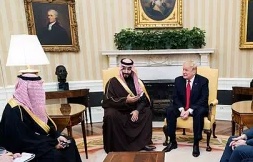
Saudi Arabia has hardened its rhetoric toward Iran while continuing to urge Washington and Tehran to pursue diplomacy. In March, Riyadh warned that it “reserves the right” to respond to any Iranian military threat, whether through ballistic missiles, drones, or proxy attacks. Yet despite adopting a firmer deterrent posture, the Saudi leadership remains reluctant to see the Gulf drawn into a direct regional war.
Like Israel, Saudi Arabia seeks to weaken Iran’s regional network of proxies — particularly the Houthis in Yemen. Riyadh also joined the United States in military strikes against Iran-backed militias in Iraq. The BBC reported: “Saudi Arabia and the US have carried out strikes against Iran-backed militias in Iraq, in a potential escalation of the Middle East conflict.”
According to US Central Command (CENTCOM), the strikes targeted “Iran-aligned terrorists that the Islamic Revolutionary Guard Corps (IRGC) directed to attack US forces and Saudi energy infrastructure.” The operation focused on bases used by Iraq’s Popular Mobilization Forces (PMF), underscoring Riyadh’s willingness to confront Iranian proxies while avoiding direct conflict with Tehran.
Saudi Arabia has nevertheless stressed that deterrence, not escalation, remains its objective. Maj. Gen. Turki al-Maliki, spokesperson for the Saudi Defense Ministry, stated: “The Kingdom of Saudi Arabia reiterates that it does not seek escalation but will respond decisively to any aggression directed against it.”
Regional concerns extend beyond Saudi Arabia. The six members of the Gulf Cooperation Council (GCC) — Bahrain, Kuwait, Oman, Qatar, Saudi Arabia, and the United Arab Emirates—have become increasingly alarmed by Iran’s military posture following earlier US and Israeli strikes on Iranian targets. In a rare display of unity, the bloc pledged to “take all necessary measures” to protect their territories, populations, and critical infrastructure while continuing to leave the door open for diplomacy.
Saudi Foreign Minister Faisal bin Farhan Al Saud signaled a more assertive approach, warning: “This pressure from Iran will backfire politically and morally… and certainly we reserve the right to take military actions if deemed necessary.” His remarks reflect Riyadh’s shift from strategic restraint toward more credible deterrence.
Yemen remains central to Saudi security calculations. The Guardian reported: “The Iran-aligned Houthi movement, which controls northern and western Yemen, declared a naval blockade of Saudi Arabia in the Red Sea… The Houthis struck two Saudi tankers in the Red Sea,” highlighting the growing threat to regional shipping and energy security.
Iran, however, rejects a military solution. Foreign Minister Abbas Araghchi stated: “We believe that there is no military solution to the issue of Yemen, Bab al-Mandab and other regional issues.”
From Riyadh’s perspective, Tehran is employing the Houthis and maritime chokepoints — including the Bab al-Mandab and the wider Gulf maritime network — to exert pressure on Saudi Arabia and its economic lifelines while avoiding direct interstate conflict. Such proxy warfare has reinforced Gulf perceptions that Iran seeks regional influence through asymmetric means.
Even so, Saudi Arabia continues to advocate a diplomatic accommodation between Washington and Tehran. Reports indicate Riyadh has urged the United States to avoid a sustained bombing campaign against Iran and instead pursue a negotiated exit from the crisis, even as many Saudi policymakers would privately welcome political change within Iran.
The geopolitical balance therefore remains delicate. Saudi Arabia is strengthening deterrence, expanding security cooperation with the United States and fellow GCC states, and confronting Iranian proxies, while still seeking to prevent a direct Saudi-Iranian war.
Yet as regional tensions intensify, the space for diplomacy continues to narrow, raising the risk that miscalculation could trigger a far broader Middle Eastern conflict.
https://moderntokyonews.com/category/middle-east-west-asia Past articles about WEST ASIA (MIDDLE EAST) via MODERN TOKYO NEWS
MODERN TOKYO TIMES – MODERN TOKYO NEWS – please check https://moderntokyonews.com
Please check Modern Tokyo News at https://moderntokyonews.com for articles going back over 12 years. Sadly, Modern Tokyo Times got hacked and lost 14 years of articles…

Modern Tokyo News is part of the Modern Tokyo Times group
http://moderntokyotimes.com Modern Tokyo Times – International News and Japan News
http://sawakoart.com – Sawako Utsumi personal website and Modern Tokyo Times artist
https://moderntokyonews.com Modern Tokyo News – Tokyo News and International News
PLEASE JOIN ON TWITTER
https://twitter.com/MTT_News Modern Tokyo Times
PLEASE JOIN ON FACEBOOK
https://www.facebook.com/moderntokyotimes